
Tools
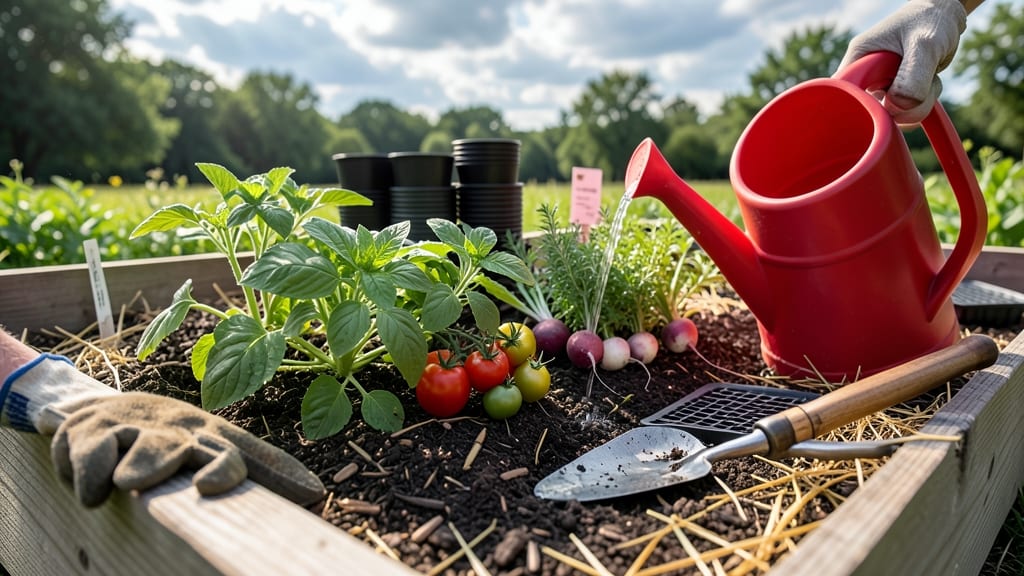
An 8x8 raised garden is your secret weapon for growing more food in less space—without the fuss of sprawling rows or wasted yard real estate.
Picture this: a tiny footprint packed with high-yield crops, no tilling, no weeds, and a layout that actually works for your lifestyle. Whether you’re a city dweller with a balcony or a suburban gardener with limited square footage, this design turns "small space" into "big harvests."
Inside, you’ll find space-saving layouts that maximize every inch, from square-foot gardening grids to vertical trellises for climbing plants. No more guessing—just proven arrangements that fit your 6a zone and keep your garden thriving all season.
Ready to ditch the guesswork? I’ll walk you through the best crops, smart spacing tricks, and even a few design hacks to make your raised bed look as good as it performs.
Optimal 8x8 raised garden layouts for maximum yield
An 8x8 raised garden gives you 64 square feet of prime growing space—enough to produce a surprising amount of food if you plan strategically. The key lies in combining square foot gardening, companion planting, and succession planting to eliminate wasted space while maximizing yields.
For example, tall plants like tomatoes and peppers can share space with shallow-rooted leafy greens, creating vertical layers that work together.
Science-backed layouts prioritize crop compatibility and growth habits. For instance, planting basil near tomatoes improves flavor while deterring pests, while radishes can grow between carrots to mark rows without competing for sunlight. These methods turn a small bed into a high-output ecosystem where every inch counts.
Here’s how three proven layouts compare for your 8x8 raised garden—each designed for a different gardening goal, from maximum yield to ease of maintenance:
For a high-yield layout, I recommend dividing your 8x8 raised garden into four 4x4 sections, each dedicated to a different plant family.
For example, one section for solanaceae (tomatoes, peppers, eggplants), another for brassicaceae (kale, broccoli, radishes), a third for alliums (onions, garlic, chives), and the fourth for leafy greens (lettuce, spinach, Swiss chard). This grouping minimizes cross-pollination risks and makes rotating crops easier.
Vertical space is your secret weapon. Install trellises in one corner for pole beans or cucumbers, freeing up floor space for ground crops. Even strawberries can grow in hanging pockets along the sides, adding 10-15 extra plants without crowding.
Pair this with succession planting—like sowing radishes every 2 weeks—to ensure a steady harvest all season.
Let’s break down a sample high-yield layout for summer planting. Start with two indeterminate tomato plants (like 'Sungold') in the center, surrounded by basil and marigolds for pest control. Flank them with peppers and eggplants along the edges, leaving the outer rows for bush beans and carrots.
This arrangement maximizes sunlight exposure while keeping plants at optimal distances.
Don’t overlook interplanting—the art of tucking fast-growing crops between slower ones. For example, sow lettuce or radishes around tomato seedlings; they’ll mature before the tomatoes need full space. This technique can boost your 8x8 raised garden’s output by 30-40% compared to traditional row planting.
Rotate crops annually to prevent soil depletion and disease buildup. Keep a simple record: solanaceae (tomatoes, peppers) in Section 1 this year? Move them to Section 3 next year.
Replace them with legumes (beans, peas) to fix nitrogen in the soil. This cycle keeps your 8x8 raised garden productive for decades.
Finally, prioritize dwarf or bush varieties to save space. For example, choose 'Patio' tomatoes instead of standard varieties—they produce just as much fruit in half the footprint. Pair them with 'Early Girl' lettuce or 'Baby Bok Choy' to fill gaps.
With these strategies, your 8x8 raised garden could yield enough produce to feed a family of four for months.
Experiment with layouts each season—what works for cool-season greens may not suit heat-loving peppers. Track your progress with a simple sketch or app, and adjust as you learn. The beauty of an 8x8 raised garden is its flexibility—you’re not just growing plants, you’re designing a living system.
Best crops to grow in an 8x8 raised garden by season
An 8x8 raised garden gives you incredible flexibility to grow a variety of crops year-round, but the key is selecting the right plants for each seasonal window. Early spring brings cold-hardy greens, summer thrives with heat-loving vegetables, and fall delivers hearty harvests.
Let’s break down the best crops for each season, including spacing requirements and companion planting tips to maximize your space and yield.
For early spring (March-April), focus on cool-season crops that tolerate light frosts. These include leafy greens like spinach and kale, which mature quickly and thrive in cooler temperatures. Pair them with radishes (harvest in 30 days) and peas to make the most of your square footage.
These crops also deter pests like aphids when planted near onion family plants.
| Season | Crop | Spacing (inches) | Sunlight | Companion Plant |
|---|---|---|---|---|
| Early Spring | Spinach | 4-6 | Partial Sun | Carrots, Radishes |
| Early Spring | Peas | 2-3 | Full Sun | Onions, Lettuce |
| Summer | Tomatoes | 18-24 | Full Sun | Basil, Marigolds |
| Summer | Peppers | 12-18 | Full Sun | Oregano, Spinach |
| Fall | Kale | 12-18 | Full Sun | Beets, Lettuce |
| Fall | Carrots | 2-3 | Full Sun | Onions, Rosemary |
When summer arrives (June-August), shift to heat-tolerant crops like tomatoes, peppers, and cucumbers. These plants need full sun (6+ hours) and consistent moisture. Use vertical trellises for vining crops like cucumbers to save space and improve airflow.
Plant basil near tomatoes to repel pests and enhance flavor, while marigolds deter nematodes.
For fall and winter (September-November), focus on cold-hardy crops like kale, carrots, and garlic. These crops can handle cooler temperatures and even light frosts.
Use row covers to extend the season for delicate greens. Pair onions with carrots to deter carrot flies, and plant rosemary nearby to improve growth and flavor.
To make the most of your 8x8 raised garden, rotate crops annually to prevent soil depletion and disease buildup. For example, plant legumes like peas in spring to enrich the soil with nitrogen, followed by heavy feeders like tomatoes in summer.
This crop rotation strategy keeps your garden productive and healthy year after year.
With the right seasonal lineup, your 8x8 raised garden can produce a bounty of fresh vegetables, herbs, and greens—all while keeping pests at bay and maximizing your space. Start with these seasonal recommendations, and don’t forget to mulch to retain moisture and suppress weeds!