
How To
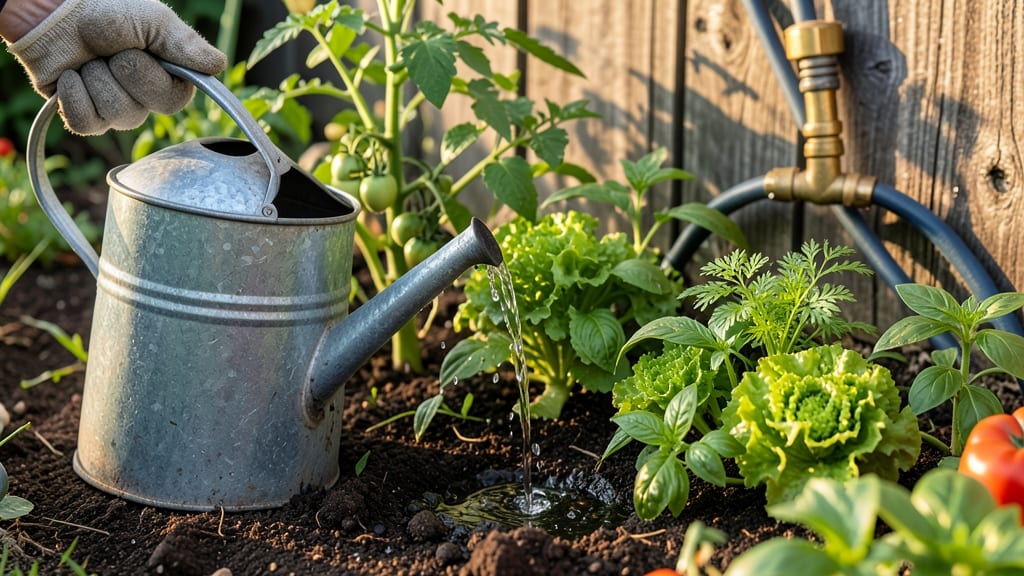
Watering your vegetable garden the right way means knowing how often to water it so the soil stays moist but never soggy — a balance that keeps your 🥬 thriving without wasting effort.
Overwatering or underwatering your vegetable garden can mean the difference between a thriving harvest and lost plants — yet most gardeners guess instead of using science-backed methods to determine when to water.
Think about it: too little water and your plants wilt; too much and roots suffocate. The key is checking soil moisture before you reach for the hose, which is where the finger test comes in.
Below, I’ll show you exactly how to adjust your watering schedule based on soil type, plant needs, and even the season — so you never have to wonder again.
The perfect watering schedule based on soil type and plant needs
Determining how often to water your vegetable garden depends on two critical factors: your soil type and the specific needs of your plants. Clay soil holds moisture tightly, while sandy soil drains quickly, and loamy soil strikes a balance.
Meanwhile, leafy greens like lettuce need frequent shallow watering, while root crops like carrots require deep, infrequent soaking. Understanding these differences ensures your plants thrive without waste.
Most gardeners make the mistake of watering based on a one-size-fits-all schedule, but this approach fails to account for root depth and moisture retention. For example, a tomato plant with deep roots needs watering at the soil base, while shallow-rooted radishes only require moisture in the top inch.
Adjusting your watering routine based on these factors saves time, water, and keeps your garden healthy.
Below is a soil-and-plant-specific watering guide to help you create a customized schedule. Use this as a starting point, then fine-tune based on your local climate, season, and plant responses. Remember, overwatering is just as harmful as underwatering—both can lead to root rot or stunted growth.
| Soil Type | Watering Frequency | Leafy Greens (e.g., Lettuce, Spinach) | Root Crops (e.g., Carrots, Potatoes) | Fruiting Plants (e.g., Tomatoes, Peppers) |
|---|---|---|---|---|
| Clay Soil | Every 5-7 days (deep soak) | Every 2-3 days (shallow) | Every 7-10 days (deep) | Every 4-5 days (deep) |
| Sandy Soil | Every 2-3 days (light soak) | Daily (shallow) | Every 3-4 days (deep) | Every 2-3 days (deep) |
| Loamy Soil | Every 3-5 days (moderate) | Every 2-4 days (shallow) | Every 5-7 days (deep) | Every 3-4 days (deep) |
Note: Adjust for extreme heat (increase frequency) or drought (reduce frequency).
For leafy greens, focus on keeping the top 1-2 inches of soil moist. These plants have shallow roots and benefit from frequent, light watering. If the soil dries out, you’ll notice wilting leaves or bitter-tasting produce.
On the other hand, root crops like carrots and beets need deep watering to encourage root development. Water them infrequently but thoroughly, ensuring moisture reaches at least 6-8 inches deep.
Fruiting plants, such as tomatoes and peppers, fall somewhere in between. They require consistent moisture to develop fruit but also benefit from deep watering to prevent blossom-end rot. Aim to water these plants at the base in the morning to reduce evaporation and fungal risks. Avoid wetting the leaves, as this can promote diseases like powdery mildew.
Seasonal adjustments are key. During summer months, increase watering frequency by 30-50% due to higher evaporation rates. In winter, reduce watering to once every 10-14 days, unless you’re growing cold-hardy crops like kale or Brussels sprouts.
Always check the soil moisture before watering—stick your finger 1-2 inches deep; if it feels dry, it’s time to water.
Mulching is another game-changer for water retention. Apply a 2-3 inch layer of mulch (straw, wood chips, or leaves) around your plants to lock in moisture and regulate soil temperature.
This reduces the need for frequent watering, especially in sandy soil, where water drains away quickly. Mulch also suppresses weeds, which compete with your vegetables for water.
Pay attention to plant stress signals. Yellowing leaves often indicate overwatering, while crispy, brown edges suggest underwatering. For root crops, watch for crack
The finger test method: how to check soil moisture like a pro
Mastering the finger test method is one of the simplest yet most effective ways to determine when your vegetable garden needs water. Unlike relying on a watering schedule, this hands-on technique lets you check soil moisture directly, ensuring your plants get just the right amount of hydration.
The key? Understanding how deep to dig based on your plants' root depth and what the soil should feel like at different stages.
Before you stick your finger in the dirt, know that overwatering and underwatering both harm plants. Overwatering suffocates roots by cutting off oxygen, while underwatering stresses plants and stunts growth. The finger test helps you strike the perfect balance by giving you real-time data on your soil's moisture level.
Plus, it’s free, requires no tools (though a trowel helps), and works for every type of plant in your garden.
-
1
Choose the right depth:
- Seedlings: 1 inch deep
- Leafy greens: 1-2 inches deep
- Root crops: 3-4 inches deep
- Mature plants: 4-6 inches deep
- 2 Insert your finger gently into the soil at the chosen depth. Avoid disturbing the roots or compacting the soil further.
-
3
Check moisture levels:
- Dry: Soil crumbles easily, no moisture (water immediately)
- Moist: Soil feels slightly damp, sticks slightly to finger (water in 1-2 days)
- Wet: Soil is clinging and cool, excess moisture (hold off on watering)
-
4
Adjust for soil type:
- Sandy soil: Drains fast; check moisture daily
- Clay soil: Retains moisture; check every 2-3 days
- Loamy soil: Balanced; check every 1-2 days
- 5 Water deeply when dry: Aim for 1-2 inches of water per week, delivered slowly to encourage deep root growth. Use a soaker hose or watering can for precision.
For container gardens or potted vegetables, the finger test works the same way, but you’ll need to check more frequently—typically every 1-2 days—since pots dry out faster. If your soil feels dry at the surface but moist below, it’s a sign you’ve been watering too lightly.
Always water until moisture reaches the depth of your plants' root zone.
To take your finger test to the next level, consider investing in a moisture meter for larger gardens or high-value crops. These tools provide instant readings and are especially useful in clay-heavy soils where moisture can hide beneath the surface.
Pair your finger test with a quick glance at your plants: wilting leaves often mean it’s time to water, while yellowing foliage could signal overwatering or poor drainage.
Pro tip: Keep a gardening journal to track your finger test results alongside weather patterns. Over time, you’ll notice how your garden’s moisture needs shift with seasonal changes, helping you refine your watering routine for maximum efficiency.
Remember, the goal isn’t just to keep soil moist—it’s to nurture healthy root systems that thrive independently.