
Picking
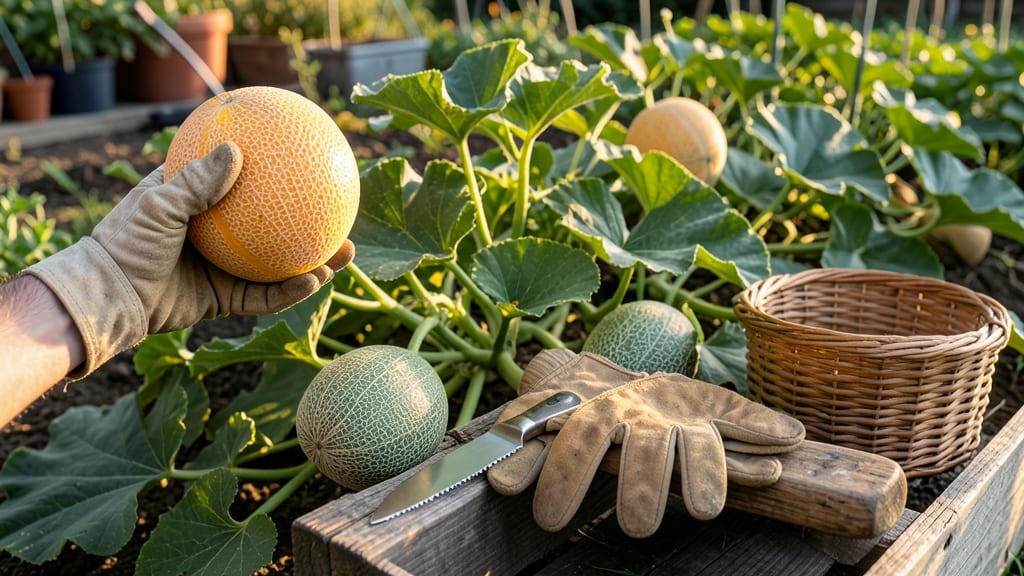
To pick cantaloupe from your garden at the perfect moment means sweet, juicy flesh instead of bitter disappointment — and the secret lies in three simple but often overlooked tests.
Picture this: you’ve nurtured your 🍈 cantaloupe plants all season, only to cut into a melon that’s still hard or flavorless. It’s frustrating, but mastering the right cues turns guesswork into guaranteed success.
The key? Knowing when the vine releases its grip, the scent shifts from floral to sweet, and the rind gives just enough under gentle pressure.
These tests aren’t just tricks—they’re science-backed signals that your cantaloupe is ready to harvest. Whether you’re in USDA Zone 6a or a warmer climate, understanding these signs ensures you don’t miss the window between perfect ripeness and overripe mush.
Below, I’ll walk you through each test, plus how to adjust for your specific growing conditions.
By the end, you’ll confidently twist a melon from the vine at just the right moment—no more second-guessing, no more wasted effort. Ready to transform your harvest?


3 Non-negotiable ripeness tests for perfect cantaloupe picking
There's nothing worse than slicing into a cantaloupe only to find it still green inside or worse—overripe and mushy. As someone who's tested dozens of melons over the years, I've learned these three ripeness tests are the only ones that truly matter.
Skip the guesswork and use these science-backed methods to harvest cantaloupes at their peak sweetness every time.
The key to perfect cantaloupes lies in understanding how the fruit communicates its ripeness through scent, texture, and vine behavior. These aren't just random tips—I've seen cantaloupes go from bitter to award-winning sweetness just by applying these exact techniques.
Let's start with the most reliable indicator that often gets overlooked.
The Scent Test: Nature's Sweet Perfume
Sniff near the stem end—a ripe cantaloupe will have an intense sweet aroma that's unmistakable. This happens when sugars convert to volatile compounds. If it smells like nothing, it's not ready.
The Thump Test: The Sound of Sweetness
Tap the melon with your knuckles—it should sound hollow and deep. A dull thud means it's either underripe or overripe. Pro tip: Press your thumb into the skin—it should yield slightly but not dent.
The Vine Separation: The Ultimate Giveaway
Gently twist the cantaloupe at the stem—it should slip free easily with just a slight tug. If the stem stays attached, it's not ready. Bonus: Check for a brown, dried tendril near the stem end.
Let me show you how to perform the scent test like a pro. Most gardeners sniff the wrong spot—they grab the melon by the blossom end (the flat side) instead of the stem end.
That's where the real magic happens! When sugars fully develop, they release volatile compounds that create that signature cantaloupe perfume. If you're getting nothing but a faint vegetable smell, give it another week.
The thump test might seem primitive, but it's actually measuring the internal air pockets that form as the fruit ripens. A ripe cantaloupe will have 15-20% more air space inside than when it was green.
To do it right, tap near the blossom end—not the stem end where the rind is thicker. Listen for that deep, resonant "thunk" that echoes like a drum. Anything less means your melon needs more time on the vine.
Now for my favorite test: the vine separation. This is where cantaloupes reveal their true readiness. When the fruit is perfectly ripe, the vine naturally detaches the stem through a process called abscission.
The tendril near the stem should be completely brown and crispy—this tells you the plant has already started the separation process. If you're still seeing green tendrils, your melon has days (or even weeks) left before it's ready.
Here's a common mistake I see: gardeners think they need to cut the cantaloupe from the vine instead of twisting it. This can damage the plant and leave an unsightly scar on your melon. Always twist gently at the stem—you'll get a clean break when it's ready.
And never pull from the blossom end! That's where the fruit attaches to the vine, and you'll end up with a messy, uneven harvest.
Temperature plays a surprising role in these tests. In hot climates (Zones 9-11), cantaloupes ripen faster, so their scent develops more intensely. But in cooler zones (6-8), you might need to rely more on the vine separation since the aroma takes longer to develop.
That's why I always check all three tests—no single method works perfectly in every condition.
One trick I learned from commercial growers is to harvest in the morning. The cool night temperatures help the fruit's sugars concentrate, making the scent test more reliable. Plus, the melons will be firmer after overnight cooling.
If you must pick in the afternoon, let them sit in the shade for a few hours before testing—heat can make them feel softer than they really are.
What about those cantaloupes that never seem to ripen? Sometimes it's a variety issue. Heirloom varieties like 'Hale's Best' or 'Athena' often take longer to develop their signature scent compared to hybrid varieties like 'Crenshaw' or 'Ambrosia'.
If you're growing cantaloupes in containers, they might also ripen more slowly due to limited root space and nutrient access.
Remember, these tests work best when the cantaloupe has reached its minimum maturity of 45 days. Before that, none of the ripeness indicators will be reliable. And if you're growing in a short-season climate, don't wait too long—the melons can become overripe and develop woody fibers or fermented spots.
The sweet spot is when all three tests align perfectly.
Cantaloupe color myths debunked: what to look for beyond green
That old advice about waiting for a cream-colored underside to pick cantaloupe? It’s outdated and often misleading. Modern cantaloupe varieties ripen with seasonal color variations that go far beyond simple blush patterns.
What you’re really looking for are subtle blush patterns combined with stem and texture changes that traditional color rules ignore.
For example, Hale’s Best cantaloupe often develops pale yellow-green stripes rather than cream, while Athena varieties may show tan or brownish hues near the stem. These genetic variations mean relying solely on color can lead to overripe or underripe melons.
The key is understanding how color interacts with other ripeness cues.
The stem end holds the most reliable color clues. When the blossom end (opposite stem) shows 50-70% cream or tan, it’s time to check other signs. However, if your cantaloupe develops dark green or black spots, it’s either overripe or diseased.
These spots appear when the melon stays on the vine too long, leading to fermentation and bitter flavor.
Don’t ignore the texture changes either. A ripe cantaloupe’s rind should feel slightly firm yet yield under gentle thumb pressure. If it feels too soft or mushy, it’s past its prime. This thump test works best when combined with color cues—never rely on one method alone.
For example, a Hale’s Best cantaloupe might pass the color test but fail the thump test if picked too early.
Seasonal variations play a huge role too. In hot climates (Zones 8-10), cantaloupe ripens faster and develops brighter blush patterns in as few as 60 days.
Meanwhile, in cooler regions (Zones 4-6), you might see duller, grayish hues even when ripe, because the shorter growing season slows color development. Always adjust your expectations based on your local climate.
Pro tip: Smell the stem end—a ripe cantaloupe releases a powerful sweet aroma similar to honeydew. If it smells musty or fermented, it’s too late.
Combine this with the color, texture, and stem changes for a foolproof harvest. Remember, no single cue guarantees ripeness—always check all three before picking.