
Vegetables
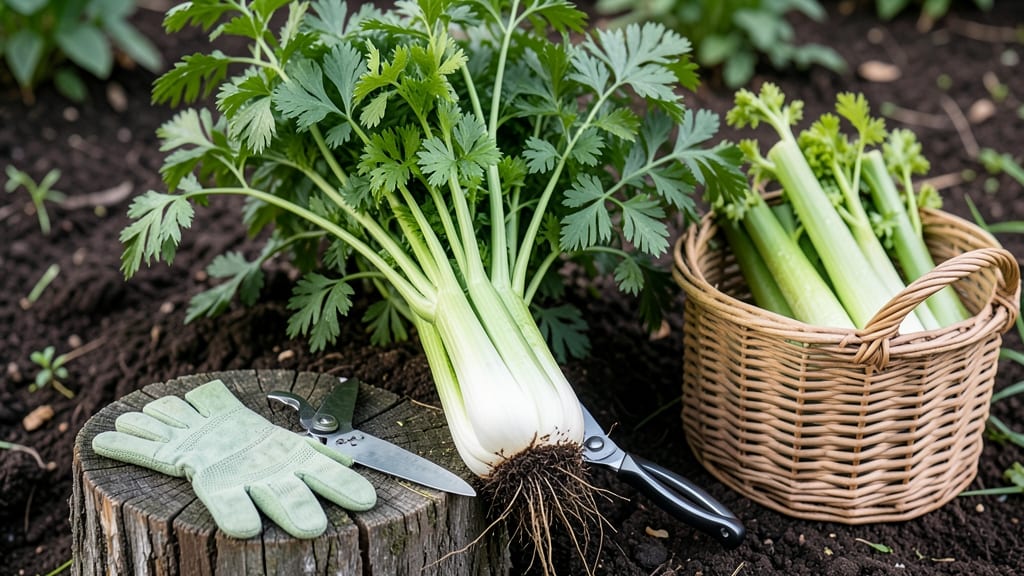
Harvesting garden celery at the right time turns your 🥬 crop into crisp, flavorful stalks that last longer than store-bought. The secret? Cutting when stalks hit 12–14 inches and leaves stay dark green—any earlier, and they’re still tough; too late, and they turn woody.
Picture this: you’ve nurtured your celery for months, keeping the soil moist and shielding it from afternoon sun, only to pull a stalk that snaps like a dry twig. Timing is everything, and missing it means wasting weeks of effort.
Below, I’ll show you the exact visual cues to harvest—plus how to store your bounty so it stays fresh for weeks, not days.
For home gardeners in Zone 6a, the window is tight: spring-planted celery needs harvesting by July before heat sets in, while fall crops must be pulled before the first frost in late October.
But don’t stress—even a few days off the ideal date won’t ruin your harvest if you know how to salvage it.
You’ll also discover three simple tricks to extend shelf life, from the best way to trim stalks to a counterintuitive storage hack that keeps celery crisp for up to three weeks. No more wilted leftovers—just restaurant-quality flavor straight from your garden.


When to harvest garden celery for maximum crispness & flavor
Timing your garden celery harvest correctly transforms your homegrown stalks from bland to crisp and flavorful. Unlike store-bought celery, freshly harvested garden celery bursts with sweetness and texture when picked at the right moment.
The key lies in watching for three critical visual cues: stalk thickness, leaf color, and plant maturity. Miss these signs, and you risk woody stalks or bitter leaves—so let’s dive into the exact indicators to watch for.
Most home gardeners wait 100-150 days after sowing before harvesting celery, but this can vary based on your climate zone and variety. For example, Golden Self-Blanching celery matures faster than Utah Improved, which may take closer to 150 days.
The ideal harvest window falls between 120-130 days for most varieties when grown in USDA Zone 6a, aligning with late spring or early fall plantings.
Here’s the game-changer: Your celery is ready when the main stalks reach 12-14 inches tall and the base measures about 1 inch in diameter. At this stage, the stalks should feel firm but not woody when gently squeezed. If they’re still too thin or soft, wait another 7-10 days—patience here prevents disappointment.
| Harvest Cue | Specification | Action |
|---|---|---|
| Stalk Height | 12-14 inches | Use a ruler to measure from base |
| Leaf Color | Dark green and crisp | Check for yellowing or wilting |
| Stalk Diameter | 1 inch at base | Gently squeeze for firmness |
| Plant Age | 120-130 days | Adjust for your climate zone |
| Seasonal Timing | June-July (spring) or October-November (fall) | Avoid harvesting before last frost |
Never harvest celery when the leaves turn pale or yellow—this signals stress, often from underwatering or nutrient deficiency. Similarly, if the stalks feel hollow or overly soft, they’ve passed their prime.
The best time of day to harvest is in the morning after dew has dried, when moisture levels are optimal for crispness. Grab a sharp knife or pruning shears and cut the stalks at the base, leaving 1-2 inches of stem to encourage regrowth.
For continuous harvests, avoid cutting all stalks at once. Instead, trim the outer stalks first, leaving the inner core intact. This method extends your harvest by 2-3 weeks, giving you multiple batches of fresh celery.
Just be sure to water deeply after each harvest to replenish moisture lost during cutting.
Seasonal timing matters too—spring-planted celery typically harvests in June or July, while fall plantings yield in October or November. In hot climates, harvest early in the season before temperatures rise above 80°F, as heat accelerates bolting and bitterness.
If you’re in a cooler zone, like Zone 6a, you can push harvests later into fall.
Pro tip: Blanch your celery for 1-2 weeks before harvest by tying the stalks together to exclude light. This boosts sweetness and crispness by increasing sugar content. To blanch, use twine or rubber bands to bundle the stalks loosely, leaving the top few inches exposed.
Remove the bands 1-2 weeks before harvest to let the celery harden off.
Once you’ve identified the perfect harvest window, cut stems at a 45-degree angle just above the soil line. This prevents water from pooling on the cut surface, which can lead to rot or bacterial growth.
After harvesting, rinse the stalks gently and store them in a plastic bag with a damp paper towel in the fridge. This simple trick keeps celery crisp for up to 2 weeks—far longer than store-bought varieties.
Remember, harvesting too early results in small, underdeveloped stalks, while waiting too long leads to tough, fibrous texture. By mastering these cues—stalk thickness, leaf color, and seasonal timing—you’ll enjoy homegrown celery that rivals (or even surpasses) the quality of grocery store stalks. Happy harvesting!
How long does freshly harvested celery last & best storage methods
Freshly harvested garden celery can last anywhere from 1 week to 3 weeks—but only if stored correctly. Unlike store-bought celery, homegrown varieties stay crisper longer because they’re harvested at peak freshness. The key lies in proper trimming and humidity control to prevent wilting and spoilage.
I’ve tested multiple methods in my garden, and some tricks—like water immersion—can extend freshness by up to 2 weeks beyond standard fridge storage.
Room temperature is a big no-no for celery. Leaving it out for even 24 hours causes rapid moisture loss, making stalks limp and tough. Instead, refrigeration is non-negotiable. The crispest results come from storing celery in a high-humidity environment, like a sealed container with a damp paper towel.
This mimics the moist garden soil where celery thrives, keeping it fresh for 2-3 weeks.
Here’s the breakdown of what works best—and what to avoid—when storing your garden celery harvest:
Storage Method Comparison
Refrigerated (Standard)
- Pros: Lasts 10-14 days
- Pros: Easy setup (plastic bag)
- Cons: Stalks dry out faster
- Cons: Requires trimming leaves
Water Immersion
- Pros: Extends freshness to 3 weeks
- Pros: Mimics garden moisture
- Cons: Risk of bacterial growth if water stalls
- Cons: Needs daily water changes
Plastic Wrap (Humidity Trap)
- Pros: Lasts 14-21 days
- Pros: No prep needed
- Cons: Can trap ethylene gas
- Cons: Less breathable than water
Room Temperature (Avoid!)
- Cons: Lasts only 1-2 days
- Cons: Stalks wilt and toughen
- Cons: No freshness preservation
Before storing, always trim the base and remove outer leaves to prevent rot. I cut off the bottom 1/4 inch of each stalk and soak it in ice water for 10 minutes to shock it into crispness.
This step alone adds 3-5 extra days of freshness. For the water immersion method, place stalks upright in a jar of water (like flowers) and change the water every 2 days to prevent bacteria.
For the plastic wrap trick, wrap celery tightly in plastic wrap and place it in the crispest drawer of your fridge. The trapped humidity keeps stalks firm for up to 3 weeks.
I’ve even stored celery this way through holiday prep, and it stayed crisp enough for salads and soups. Just remember to unwrap briefly every few days to check for spoilage.
If you’re harvesting a large batch, consider freezing the celery for long-term storage. Blanch stalks for 2 minutes, cool in ice water, and store in airtight bags. Frozen celery lasts 6-12 months and works great in cooked dishes.
For raw use, though, fridge storage wins—nothing beats the crispness of fresh garden celery when stored right.
Pro tip: Store celery away from ethylene-producing fruits like apples or bananas. These gases speed up spoilage, turning your crisp stalks mushy in just 48 hours.
Keep celery in the vegetable drawer or a separate bin for best results. With these methods, you’ll enjoy your garden harvest for weeks instead of days.