
Light Requirements
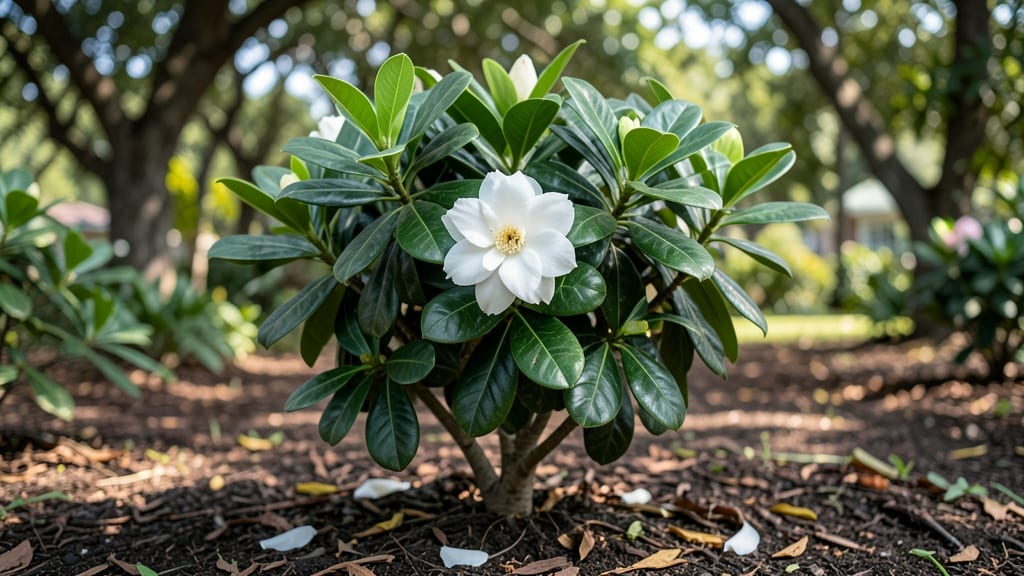
Your gardenia’s sunlight requirements are all about finding that sweet spot of bright, indirect light—too much sun scorches its delicate leaves, while too little dims those fragrant blooms.
Picture this: your gardenia 🌸 sits in a spot where it gets morning sun and afternoon shade, yet the flowers refuse to open. That’s the classic sign of a sunlight mismatch, and it’s easier to fix than you think.
Gardenias thrive in partial shade, meaning they need protection from the harsh afternoon rays but still crave plenty of light to fuel their glossy leaves and fragrant blooms.
In this guide, I’ll break down exactly how much light your gardenia needs, how to spot when it’s getting too much or too little, and where to place it—whether indoors or out—to keep it blooming all season.

Optimal sunlight conditions for gardenias: direct vs. indirect light explained
Gardenias thrive in bright indirect light, but their sunlight needs vary by variety. Tropical gardenias prefer 60-80% shade, while hardier types tolerate morning sun with afternoon shade.
Understanding these differences is key to preventing leaf scorch or sparse blooms. Let’s break down how to measure sunlight exposure and adjust for seasonal changes.
The ideal sunlight range for gardenias is 4-6 hours of morning sun followed by afternoon shade. Too much direct sun causes leaf burn, while insufficient light leads to leggy stems and few flowers. Your gardenia’s location—indoor, patio, or garden bed—will determine how you achieve this balance.
To measure sunlight exposure at your location, use a sunlight meter or observe shadows. A 6-foot shadow at noon means partial shade, while no shadow indicates full sun. For gardenias, aim for a 4-6 foot shadow during peak sun hours (10 AM–2 PM).
Seasonal adjustments are critical. In summer, gardenias need more afternoon shade to prevent heat stress. In winter, they can tolerate more direct light since days are shorter. If growing outdoors, monitor leaf color—yellowing leaves signal too much sun, while dark green leaves indicate ideal conditions.
For indoor gardenias, an east-facing window provides perfect morning light. If your space lacks natural light, supplement with a grow light (12-14 hours/day). Avoid placing gardenias near south-facing windows, where afternoon sun intensifies and risks leaf scorch. A sheer curtain can diffuse harsh light effectively.
Hardy gardenias in USDA Zones 7-10 can handle more direct sun than tropical varieties. If you’re in a hot climate (Zones 9-10), provide dappled shade with a lattice or tree canopy. In cooler climates (Zones 6-7), focus on morning sun exposure to encourage blooming.
Adjusting your gardenia’s light exposure seasonally ensures consistent blooms. In spring and fall, 4-5 hours of morning sun is ideal. During summer’s peak heat, limit direct sun to 2-3 hours max. Use a light meter app to track intensity—gardenias thrive at 1,000-2,000 foot-candles of light.
Pro tip: Rotate potted gardenias quarter-turns weekly to ensure even light exposure. This prevents leggy growth toward the light source. Pair your gardenia with shade-tolerant plants like ferns or impatiens to create a natural light buffer in your garden bed.
Remember, healthy foliage equals more blooms. If your gardenia’s leaves are glossy and dark green, you’ve nailed the sunlight balance. Struggling with blooms? Reassess light exposure—gardenias need bright indirect light to produce those signature fragrant flowers. 🌸
Signs your gardenia isn’t getting the right sunlight (and how to fix it)
Your gardenia’s glossy leaves and fragrant blooms are its calling cards, but when sunlight is off, these signs disappear fast. I’ve seen gardenias struggle with yellowing leaves, leaf scorch, or even no flowers at all—all red flags for sunlight issues.
The key is recognizing these symptoms early and adjusting before your plant throws in the towel.
Gardenias thrive in bright indirect light, but they’re sensitive to harsh afternoon rays. Too much sun causes brown leaf edges, while too little leads to stretched, pale growth.
Even indoor gardenias suffer when placed in dim corners. Let’s troubleshoot these common problems with practical fixes you can implement today.
⚠️ Gardenia Sunlight Warning Signs
Too Much Sun: Crispy leaf edges, bleached spots, drooping by afternoon. Fix: Move to morning sun only or use sheer curtains.
Too Little Sun: Yellowing leaves, leggy growth, no blooms. Fix: Relocate to east-facing window or add grow lights (6-8 hrs/day).
Indoor Tip: Rotate plant quarterly for even light exposure. Outdoor Tip: Use dappled shade cloth (30-50%) in hot climates.
Start by checking your gardenia’s leaf color. If the undersides are yellowing or leaves feel thin and papery, it’s craving more light. I once had a gardenia in a north-facing window—it grew tall but produced zero flowers until I moved it to an east-facing spot.
Morning sun is ideal because it’s gentler than afternoon rays.
For outdoor gardenias, watch for leaf scorch—those crispy brown patches appear when temperatures exceed 85°F (29°C) with direct sun. In my Zone 8 garden, I use a lightweight shade cloth (40% blockage) during peak summer hours.
If you notice this, trim affected leaves and provide afternoon shade immediately.
Sparse or no blooms? This is your gardenia’s way of saying, “I’m not getting enough light!” Gardenias need 4-6 hours of bright indirect light daily to flower. If yours is indoors, supplement with a full-spectrum LED grow light (12-16 inches away) for 12-14 hours/day.
I swear by the Soltis LED grow bulb—it’s saved my winter gardenias every year.
Don’t forget to rotate potted gardenias every few weeks so all sides get even light. I learned this the hard way when one side of my plant turned lanky and pale while the other stayed compact.
A simple quarter-turn weekly keeps growth balanced. For outdoor plants, ensure they’re not overshadowed by taller plants—gardenia roots are shallow, so they compete poorly for light.
Pro tip: Use a light meter app (like Light Meter Pro) to check your gardenia’s light levels. Aim for 1,000-2,000 foot-candles of bright indirect light. If you’re unsure, place a white sheet of paper under the plant—if you can’t read it easily, the light is too dim.
Adjust placement until you find that sweet spot for those show-stopping blooms! 🌸