
Watering
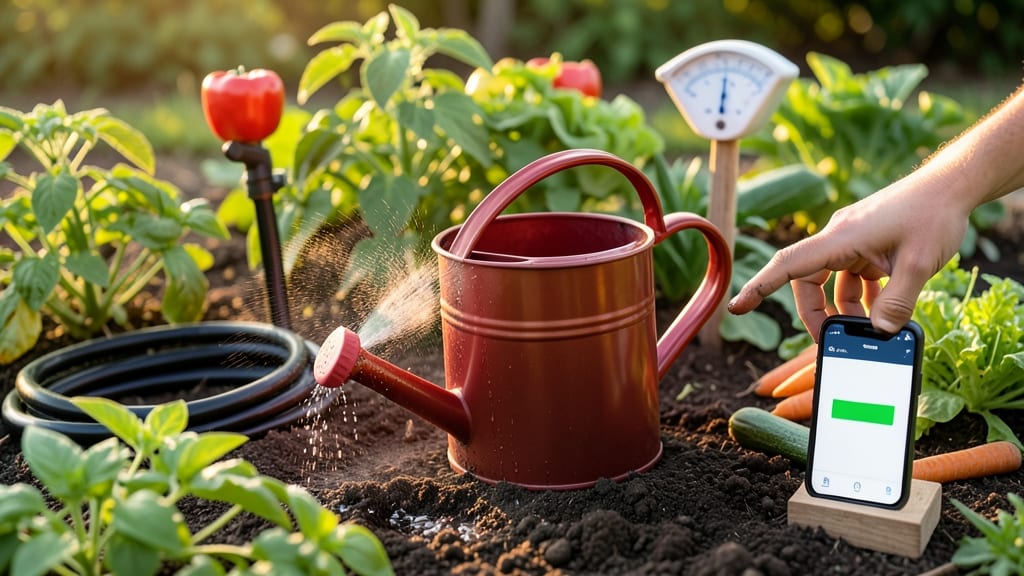
To water a veggie garden properly, aim for 1-2 inches of water per week—but timing and technique make all the difference between lush harvests and sad, wilted plants.
Most gardeners overthink it, then either drown their 🥕 or let them parch. The truth? Healthy soil holds moisture better than you realize, and a simple finger test beats guessing.
Below, I’ll break down how often to water by plant type, how to check soil moisture without fancy tools, and the one mistake that kills more veggies than drought ever will.
You’ll leave here knowing exactly when to water, how deep, and why your tomatoes keep splitting—no more wasted effort or wasted water.
The ideal watering frequency for vegetable gardens by plant type
Watering your vegetable garden isn't one-size-fits-all—each plant type has unique needs. Leafy greens like lettuce and spinach thrive with consistent moisture, while root crops such as carrots and potatoes prefer deep but infrequent watering.
Understanding these differences prevents wilting or rot. Climate plays a huge role too: hot, dry regions demand more frequent watering than cool, moist areas. Let's break down the science-backed schedules for your garden's stars.
For leafy greens, shallow roots mean they need daily watering in hot weather but can tolerate every other day in cooler conditions. Fruiting plants like tomatoes and peppers, however, require deep watering 2-3 times per week to support heavy fruit production. Root vegetables like beets and radishes actually prefer less frequent but deeper watering to prevent splitting.
Adjusting for your local climate ensures your plants stay happy without wasting water.
Here's a quick reference for the most common vegetable types and their ideal watering schedules:
In hot, dry climates, mulching with straw or wood chips helps retain moisture and reduces evaporation.
Aim for 1-2 inches of water per week, delivered deeply to encourage root growth. Drip irrigation is ideal here—it delivers water directly to the roots without wetting foliage, which can lead to fungal issues.
For cool, moist regions, you can space watering out slightly, but always check soil moisture before skipping a day.
Drought-resistant varieties are a game-changer for areas with limited rainfall. Plants like Swiss chard and rainbow carrots handle dry spells better than their counterparts. If you're in a region with occasional droughts, consider planting these varieties alongside your favorites.
They'll help you stretch your water resources while still delivering a bountiful harvest. Always pair them with 2-3 inches of mulch to lock in moisture.
Adjust your watering schedule based on plant maturity. Young seedlings need frequent, light watering to establish roots, while mature plants can handle deeper, less frequent watering.
For example, tomato seedlings may need daily watering for the first two weeks, but mature plants can thrive with deep watering every 3-4 days. Always water in the early morning to reduce evaporation and prevent fungal diseases like powdery mildew.
Pay attention to soil type—sandy soil drains quickly and may need daily watering, while clay soil holds moisture longer and can go longer between waterings. If you're unsure, perform a simple soil moisture test: stick your finger 1-2 inches into the soil.
If it's dry, it's time to water. If it's damp, hold off until the next day. This tactile method ensures you're neither overwatering nor underwatering your plants.
For container-grown vegetables, watering needs are even more critical. Potted plants dry out faster, so check soil moisture daily in hot weather. Use self-watering containers or place pots on saucers filled with water to maintain consistent moisture.
Herbs like basil and parsley in containers may need watering every 1-2 days in summer, while root crops like radishes can handle slightly longer intervals.
Don't forget that weather patterns
How to perform the perfect soil-moisture test (without a moisture meter)
Mastering the art of checking soil moisture is the secret to watering your veggie garden just right. Without a fancy meter, your hands and eyes become your best tools.
I’ve tested these methods in my own garden, and they’ve saved me from both drowning my plants and watching them wilt from thirst.
Most vegetables thrive when the top 1-2 inches of soil stays consistently moist, but not soggy. The key is testing at different depths—especially for root crops like carrots or deep-watering plants like tomatoes. Here’s how I check moisture at every level, from surface to roots.
-
Step 1: The Finger Test (Top 1-2 Inches)
Stick your index finger 1-2 inches deep into the soil. If it feels dry at the knuckle, water lightly. If damp, wait another day.
-
Step 2: Thumb Test (2-4 Inches Deep)
Press your thumb 2-4 inches down. For root crops like beets, dryness here means deep watering. Sandy soil dries faster—check every 2 days.
-
Step 3: Shovel Check (6+ Inches Deep)
Dig a 6-inch hole. If the soil clumps together when squeezed, it’s moist enough. If it crumbles like dust, water deeply until it’s saturated.
-
Step 4: Visual Cues for Stress
Wilted leaves by noon? Underwatered. Yellowing leaves or moldy soil? Overwatered. For leafy greens, let the soil dry slightly between waterings. Root veggies need consistent moisture.
-
Step 5: Adjust for Your Soil
Clay soil holds moisture longer—test daily. Sandy soil drains fast—check twice a day in summer. Mulch with straw to slow evaporation and keep roots cool.
Pro tip: Test soil moisture in the morning after sunrise. Evening checks can trick you—soil may feel damp from dew or recent watering, but roots might still be thirsty. I always test the same spot near each plant to track patterns over time.
Overwatering is just as deadly as underwatering. If your tomatoes develop blossom end rot or your lettuce bolts to seed, it’s often a sign of inconsistent moisture. The perfect balance keeps soil 60-70% moisture—like a wrung-out sponge.
Adjust your watering schedule based on these tests, and your veggie garden will thank you with lush, productive growth.
Remember, every garden is unique. Keep a watering journal to note when you water and how the soil feels. Over time, you’ll develop an instinct for what your plants truly need—no meter required.