
How To
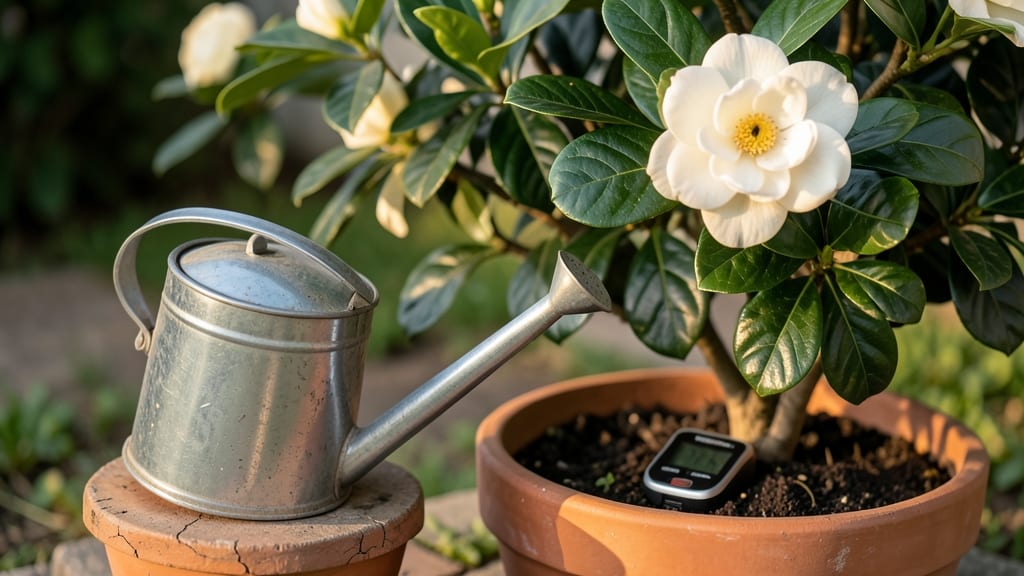
To water a gardenia properly, check soil moisture every 2-3 days in summer and adjust for cooler months — because these fragrant 🌸 shrubs hate soggy roots as much as they love staying damp.
Struggling to keep your gardenia blooming? Overwatering or underwatering can kill these fragrant favorites — so how often should you water them? The answer lies in a simple finger test that saves time and stress.
Most gardeners make the mistake of sticking to a rigid schedule, but soil conditions change with seasons, pots dry out faster than in-ground plants, and clay soil holds moisture longer than sandy mixes. That’s why the 1-2 inch finger test is the game-changer.
Below, I’ll show you exactly how to use this trick, plus when to water in the morning vs. evening, how to spot overwatering (yellow leaves!) vs. underwatering (wilting), and why mulching can cut your watering in half.
Gardenia watering schedule: the 1-2 inch soil test explained
Mastering the art of watering gardenias starts with understanding their natural moisture needs. These tropical beauties thrive when their soil stays consistently damp but never soggy. The key? A simple finger test that takes just seconds—no guesswork required!
Whether you're growing gardenias in temperate zones or tropical climates, this method ensures your plants get just the right amount of hydration for lush blooms.
Most gardeners make the mistake of sticking to rigid schedules, but gardenias don't follow a one-size-fits-all routine. Instead, their watering needs shift with seasonal changes, container size, and even local humidity levels.
The 1-2 inch soil test adapts to these variables, making it the foolproof solution for keeping your gardenia thriving year-round. Let's dive into how to use this method like a pro.
How to Perform the 1-2 Inch Soil Test
- 1 Wait until the topsoil feels dry—stick your finger about 1 inch deep (or 2 inches for mature plants). If it feels damp, wait another day.
- 2 Water deeply until moisture reaches 6 inches down. Use a watering can with a thin spout or a hose with gentle pressure to avoid disturbing roots.
- 3 Check soil moisture again in 2-3 days. Gardenias in containers dry out faster than in-ground plants, so adjust your schedule accordingly.
- 4 Adjust for climate: In tropical zones, water every 2-3 days. In cooler climates, extend to 5-7 days in fall/winter.
- 5 Mulch to retain moisture. Apply 2-3 inches of mulch around the base (avoid touching the trunk) to reduce evaporation and keep roots cool.
For gardenias in containers, the soil dries out much faster than in-ground plants. If you're growing them in pots, you'll likely need to water every 1-2 days during hot summer months.
The same finger test applies—just be extra vigilant about checking moisture levels. Pro tip: Use a moisture meter for accuracy if you're unsure about your finger's judgment!
Seasonal adjustments are crucial for gardenias. During spring and summer, when growth is most active, your plants will need more frequent watering. In fall and winter, reduce watering to every 5-7 days (or less in dormant periods).
Tropical climates may require daily checks in peak heat, while temperate zones can stretch watering intervals. Always prioritize consistency over quantity—gardenias hate dry spells but despise soggy roots.
One common mistake is assuming that larger gardenias need less water. Actually, mature plants with extensive root systems often require more water to support their size. The 1-2 inch test accounts for this by checking deeper into the soil.
For young plants, stick to the 1-inch mark and water more frequently to encourage root development. Over time, you'll learn your gardenia's unique thirst level.
If you're growing gardenias in humid climates, you might notice they need less water than in dry areas. The air's moisture content plays a big role in soil evaporation. In these cases, extend the time between waterings slightly but always confirm with the finger test.
Conversely, windy conditions dry out soil faster, so you may need to water more often. Pay attention to your local weather patterns and adjust accordingly.
For gardeners in USDA Zones 8-10, gardenias are often treated as year-round plants, but even here, watering needs shift. During monsoon seasons, you might reduce watering significantly, while drought periods call for increased frequency.
Always let the soil guide you—never rely solely on calendar schedules. The finger test is your best friend in these unpredictable climates.
Remember, the goal is to keep your gardenia's soil consistently moist but never waterlogged. Overwatering is just as damaging as underwatering—it leads to root rot and fungal diseases. If you're unsure whether to water, err on the side of waiting.
A slightly drier soil is better than soggy roots. With practice, you'll develop an instinct for when your gardenia is thirsty and when it's had enough.
Start today by testing your gardenia's soil moisture. Grab a finger, dig in, and feel the difference between the perfect dampness and the wrong extremes. Your gardenia's blooms will thank you! With this simple method, you'll never overthink watering again—just follow the soil's lead. 🌸
Signs of overwatering vs. underwatering gardenias (with fixes)
Your gardenia’s leaves tell a story—wilting, yellowing, or brown edges are often cries for help. Overwatering and underwatering are the two biggest killers of these fragrant shrubs, but the fixes are simple once you spot the symptoms. Let’s decode what your plant is really saying.
If your gardenia’s leaves turn yellow with brown edges, it’s likely drowning in water. Root rot sets in when soil stays soggy, cutting off oxygen to roots. On the flip side, crispy, dry leaves or buds that drop before blooming mean your plant is thirsty.
Both issues stem from watering mistakes—but fixing them is easier than you think.
How Often to Water Gardenia: Pros & Cons
✅ DO: Water Gardenias
- Morning watering (reduces evaporation & fungal risk)
- Deep soak (2-3 inches into soil)
- Check soil moisture (finger test: top 1-2 inches dry)
- Use well-draining soil (peat moss + perlite mix)
❌ DON’T: Overwater Gardenias
- Water at night (promotes fungal diseases)
- Let soil stay soggy (root rot risk)
- Use tap water (chlorine/fluoride burns roots)
- Skip drainage holes (potted plants need escape)
Key Fix: Adjust watering to 2-3x/week in summer, 1x/week in winter.
For overwatered gardenias, the first step is to stop watering immediately and let the soil dry out. Repot the plant in fresh, well-draining soil (mix equal parts peat moss, perlite, and pine bark).
If roots look mushy or black, trim them with sterile scissors and treat with a fungicide like copper fungicide.
If your gardenia is underwatered, give it a deep drink—water until it drains from the bottom of the pot. Then, place the pot in a tray of pebbles + water to boost humidity (gardenias love 50-70% humidity).
Mist the leaves lightly in the morning to mimic their tropical habitat.
Pro tip: Group gardenias with other humidity-loving plants like ferns or calatheas. The collective transpiration creates a microclimate that keeps leaves lush and blooms abundant. A humidifier near potted gardenias in dry climates can work wonders too.
Remember, gardenias thrive on consistency. Whether you’re fixing an overwatered or underwatered plant, stick to the finger test (insert your finger 1-2 inches deep—if dry, water; if damp, wait). With these fixes, your gardenia will bounce back with glossy leaves and fragrant blooms in no time. 🌸