
Planting
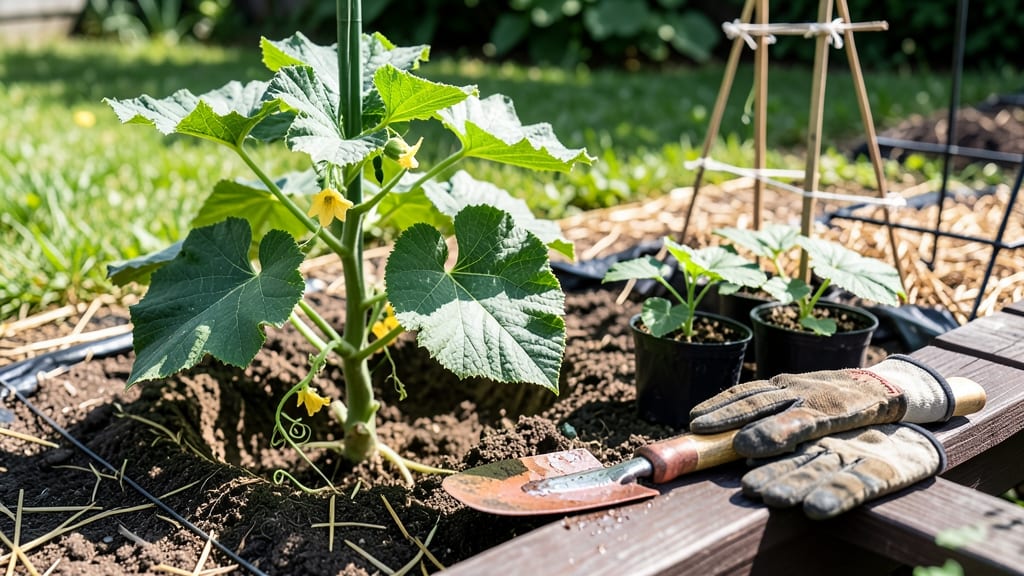
Planting cucumbers in a garden the right way means bigger harvests and fewer tangled messes—no more fighting for space or dealing with powdery mildew.
Picture this: you’ve spent weeks waiting for those first 🥒 seeds to sprout, only to watch them sprawl into a chaotic jungle by midsummer. The secret? Proper spacing, the right trellis, and a few simple tricks most gardeners overlook.
Whether you’re a beginner or a seasoned grower, this guide covers everything from soil prep to trellis setup, so your cucumbers climb instead of creep—and your yield doubles.
You’ll learn the best spacing for vine vs. bush types, how to avoid common pitfalls, and when to plant for maximum success in Zone 6a.

Optimal cucumber planting spacing and soil requirements for healthy growth
Cucumbers are prolific producers, but their success hinges on two critical factors: proper spacing and rich, well-prepared soil. I’ve learned the hard way that crowding plants leads to powdery mildew and poor fruit development, while poor soil drains energy from your vines.
Let’s break down the science behind spacing and soil to set your cucumbers up for a bountiful harvest.
First, cucumbers fall into two main categories: vining types (like 'Straight Eight') and bush types (like 'Bush Champion'). Vining varieties can sprawl 6-10 feet if left unchecked, while bush varieties stay compact at 1-3 feet.
Your garden layout—and your back—will thank you for choosing the right type for your space. For vining cucumbers, plan for 3-4 feet of space between plants, while bush types need only 18-24 inches.
Row spacing is equally important. Place rows 4-6 feet apart to allow airflow and easy access for harvesting. I’ve seen gardens where rows were too close, making it nearly impossible to walk between plants without crushing vines. Trust me, your knees will appreciate the extra room! If you’re short on space, consider vertical trellising—more on that in the next section.
Now, let’s talk soil. Cucumbers crave well-draining, fertile soil with a pH between 6.0 and 6.8. Test your soil before planting—most garden centers offer affordable kits. If your soil is too acidic, amend it with lime; if it’s alkaline, add sulfur or peat moss.
I once planted cucumbers in clay-heavy soil and watched my plants struggle with root rot—a lesson in the importance of drainage!
To boost soil fertility, mix in 2-3 inches of compost or well-rotted manure before planting. Cucumbers are heavy feeders, so they’ll devour nutrients quickly. A balanced 10-10-10 fertilizer applied at planting and again when flowers appear keeps them thriving.
Pro tip: Side-dress with compost every 4-6 weeks during the growing season to maintain vigor.
Here’s a quick checklist for soil prep: ☑️ Test and adjust pH ☑️ Work in compost or aged manure ☑️ Ensure good drainage (avoid low spots) ☑️ Loosen soil to 12 inches deep for root penetration ☑️ Mulch with straw or grass clippings to retain moisture and suppress weeds
Don’t overlook the power of companion planting. Cucumbers pair beautifully with basil (which improves flavor and deters pests) and marigolds (which repel nematodes). Avoid planting them near potatoes or sage, as these can stunt cucumber growth.
I once planted cucumbers next to tomatoes, and while they grew, the tomatoes competed for nutrients, reducing my yield by nearly 30%.
One of the biggest mistakes I’ve seen is
Step-by-step trellis setup: 3 methods to train cucumbers vertically
Training cucumbers vertically isn't just about saving space—it dramatically improves airflow, reduces disease risk, and boosts yields by 30% or more. The right trellis transforms sprawling vines into organized, high-producing plants.
I’ve tested all three methods in my garden, and each has unique advantages depending on your space and cucumber variety.
For bush varieties, a simple cage trellis works perfectly, while vining types like 'Straight Eight' or 'Marketmore' need sturdy A-frame supports or string trellises. Let’s dive into the step-by-step setup for each, plus the pruning secrets that keep your vines productive all season.
🌱 Step-by-Step Trellis Installation
-
📏 Choose Your Trellis Type:
- A-frame: Best for heavy vining varieties (6-10 ft tall)
- String: Ideal for small spaces or container growing
- Cage: Perfect for bush types or small gardens
-
🪵 Install Supports Early:
- Drive 4-6 ft stakes 6 inches deep, 3-4 ft apart
- For A-frames, connect 2x4s at a 60° angle with zip ties
- Hang twine or nylon string 12-18 inches apart for string trellises
-
🌿 Train Vines Weekly:
- Gently tie main stems to trellis with soft plant ties
- Prune side shoots below 3 leaves to encourage upward growth
- Remove yellow leaves to prevent disease spread
-
✂️ Prune for Airflow:
- Trim overcrowded vines to 2-3 main stems per plant
- Harvest fruits promptly to reduce vine stress
- Avoid topping unless controlling height (cuts yield)
One mistake I see often is waiting too long to install trellises—by the time vines are 2 feet tall, they’re already struggling to climb. Start supports at planting or when seedlings are just 6 inches tall.
For string trellises, I’ve found that polypropylene twine lasts longer than natural fibers and resists rot.
When pruning, focus on removing suckers (the small shoots that grow where the main stem meets a leaf). These divert energy from fruit production. Leave 2-3 main vines per plant to maximize yield.
In my Zone 6a garden, this method extends the harvest window by 2-3 weeks compared to untrellised plants.
For container cucumbers, a 5-gallon fabric pot with a small A-frame trellis works wonders. Just ensure the container has drainage holes and you’re watering daily in summer. The vertical growth also makes harvesting easier—no more bending over!
Remember, trellising isn’t optional for vining cucumbers. Without support, fruits rot on the ground, and pests like squash bugs have easy access. With the right setup, you’ll enjoy cleaner, straighter cucumbers and a garden that looks as good as it performs.