
Watering
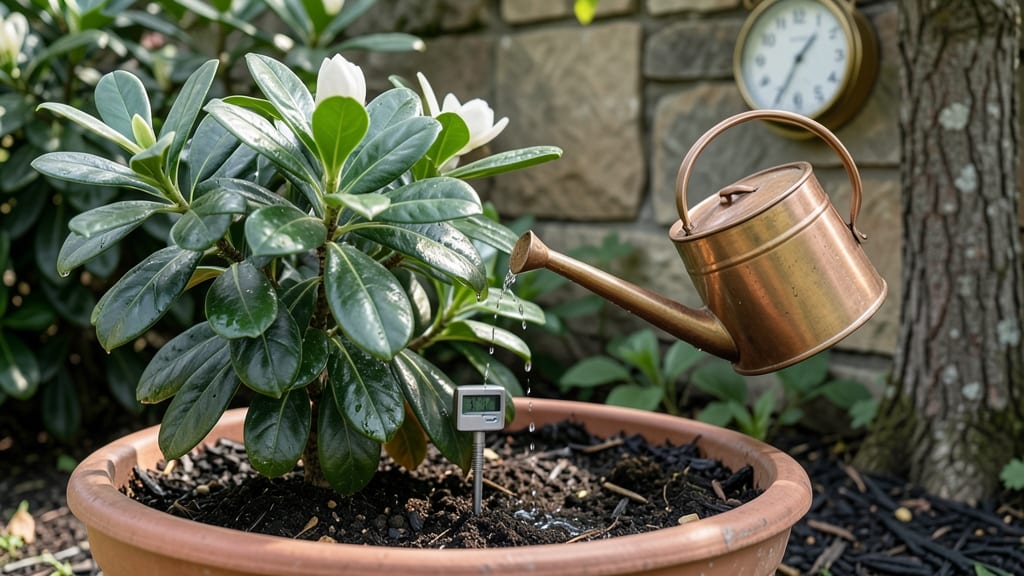
Watering gardenia plants the right way keeps those fragrant blooms coming back year after year 🌸 — but get it wrong, and you’ll end up with sad, droopy leaves or worse.
Struggling to keep your gardenia thriving? The secret isn’t just in the soil or sunlight—it’s in mastering the perfect watering routine. Overwater or underwater, and you’ll risk yellow leaves, wilting flowers, or even root rot.
Gardenia plants love moisture but hate soggy roots. A deep soak every 2-3 days in summer (or weekly in cooler months) keeps the soil consistently damp without drowning the roots.
Below, I’ll break down the exact watering schedule, how to check soil moisture, and the easiest fixes for common mistakes—so you can enjoy lush, blooming gardenias all season long.
Optimal watering schedule for gardenias: when and how much
Mastering the watering schedule for gardenias is the key to those glossy, fragrant blooms you dream of. These tropical beauties thrive on consistent moisture but despise soggy roots—finding that sweet spot is everything. Unlike drought-tolerant succulents, gardenias demand regular hydration, especially during their active growing season (spring through fall).
The trick? Water deeply but infrequently, ensuring the roots get the hydration they crave without sitting in waterlogged soil.
Your gardenia’s watering needs shift with the seasons and climate. In humid, tropical zones (USDA 9-11), you might water every 2-3 days in summer, while cooler spring/fall months may only require weekly watering.
Potted gardenias dry out faster than in-ground plants, so they’ll need daily checks during heatwaves. The goal? Keep the soil evenly moist but never waterlogged—think of it like a wrung-out sponge, not a swamp.
When to water gardenias matters just as much as how much. Always water in the early morning (6-9 AM) to let foliage dry before evening. This prevents fungal diseases like powdery mildew, which thrive in damp leaves. Avoid evening watering—it traps moisture on leaves overnight, creating a perfect breeding ground for pests. If you’ve had recent rain (over ½ inch), skip watering entirely and let nature do the work.
To avoid guesswork with watering, use the finger test method: Stick your index finger 1-2 inches into the soil. If it feels dry, it’s time to water.
For precision, invest in a moisture meter—these tools read soil moisture levels accurately and save your gardenias from root rot or dehydration. Pro tip: Young gardenias (under 1 year) need more frequent watering than mature plants, as their root systems are still developing.
Adjust your watering routine based on your local climate and soil type. Sandy soil drains quickly, so you’ll need to water more often than in clay-heavy soil, which holds moisture longer.
If you notice yellowing leaves or wilting flowers, it’s often a sign of underwatering—but if the leaves turn brown and feel mushy, you’re overwatering. Mulching with pine bark or cypress mulch helps retain moisture and regulates soil temperature, reducing how often you need to water.
Rainfall plays a huge role in your gardenia’s hydration. After a heavy rain (over ½ inch), skip your scheduled watering and wait until the soil dries slightly. Use a rain gauge to track precipitation—this prevents overwatering during wet spells.
In drought-prone areas, consider drip irrigation or soaker hoses to deliver water directly to the roots, minimizing evaporation and maximizing efficiency.
One common mistake is light, frequent watering instead of deep, infrequent soaks. This encourages shallow root growth and weakens the plant. Always water until the soil is
Signs of overwatering vs. underwatering gardenias (and how to fix it)
Your gardenia plants may look healthy on the surface, but their watering needs are often misunderstood. Too much or too little water can cause dramatic changes in leaf color, stem strength, and overall growth.
Learning to spot these visual cues early is key to saving your plants before damage becomes permanent.
Overwatering and underwatering both create stress, but the symptoms are distinct. Yellowing leaves with mushy stems signal overwatering, while crispy brown edges and wilting indicate thirst. I’ll walk you through how to diagnose these issues and restore your gardenias to their fragrant best.
Overwatering vs. Underwatering: Quick Fixes
Overwatering
- Yellow leaves with green veins
- Mushy stems or soft soil
- Fungal growth on soil surface
- Root rot (black, smelly roots)
Underwatering
- Brown leaf edges or crispy leaves
- Wilting stems that don’t bounce back
- Dry, cracked soil at surface
- Premature leaf drop
If your gardenia shows yellow leaves with green veins, it’s likely overwatered. This happens when roots suffocate in soggy soil, blocking oxygen. Check the soil—if it smells like rot or feels damp more than an inch down, you’re overdoing it.
Let the top 2-3 inches dry out between waterings to prevent this.
For underwatered gardenias, the signs are equally telling. Brown, crispy edges on leaves mean the plant is desperate for moisture. Unlike overwatering, these leaves won’t turn entirely yellow—they’ll stay green in the center.
Water deeply until it drains from the bottom, then reduce frequency to every 2-3 days in summer or weekly in cooler months.
Moldy soil or a sour smell near the base is a red flag for overwatering. Use a well-draining mix with perlite or peat moss to improve aeration. If repotting is needed, trim any black, mushy roots before replanting in fresh soil.
For underwatered plants, a thick layer of mulch (like pine bark) helps retain moisture and mimics their natural tropical habitat.
Recovery takes patience. Overwatered gardenias may need 2-4 weeks to bounce back, while underwatered ones can revive in just a few days with proper care. Always water in the morning to reduce fungal risks, and avoid letting plants sit in saucers of standing water.
With these fixes, your gardenias will thrive with glossy leaves and fragrant blooms all season long. Pay attention to the soil and leaves—they’re your plants’ way of communicating their needs! 🌸