
Planting
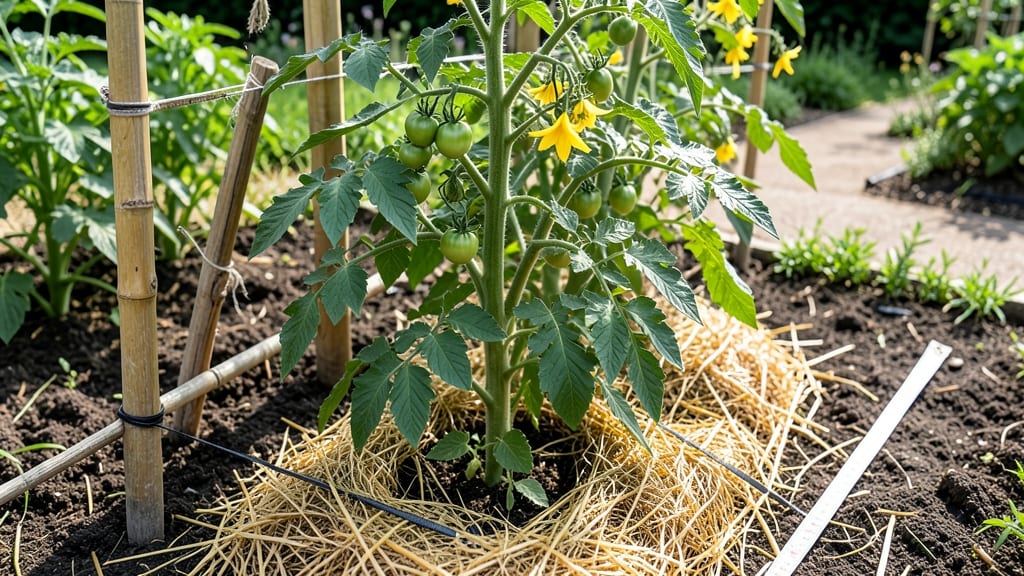
Growing tomatoes with the right garden spacing 🍅 is the difference between a bumper crop and a sad, crowded mess that fights for every inch of sunlight.
Struggling with blighted tomato plants or stunted growth? The secret to a thriving tomato garden often lies in the spacing—too close, and your plants compete for sunlight; too far, and you waste precious garden space.
Whether you're working with determinate varieties that stay compact or indeterminate giants that climb all season, getting the spacing right means better airflow, fewer diseases, and more tomatoes on the vine.
In this guide, I’ll break down the exact distances for rows and plants, how to adjust for raised beds or containers, and the simple fixes for when things go wrong.
Optimal tomato garden spacing by variety and growth type
Tomatoes are one of the most rewarding plants to grow, but their success hinges on proper spacing. Whether you’re cultivating determinate (bush) or indeterminate (vining) varieties, incorrect spacing leads to disease, poor airflow, and reduced yields.
The key is balancing sunlight exposure with plant density to maximize both health and harvest.
Determinate tomatoes grow to a fixed height and produce fruit all at once, while indeterminate varieties grow continuously and produce fruit throughout the season. This fundamental difference dictates their spacing needs.
For example, a determinate variety like Roma thrives with tighter spacing, whereas indeterminate types like Sungold need room to sprawl vertically. Let’s break down the science behind spacing for each type.
For determinate tomatoes, stick to 18–24 inches between plants and 24–36 inches between rows. These varieties form bushy shapes, so they don’t need vertical support beyond a 2–3 ft cage.
The goal is to prevent leaf wetness from overhead watering, which reduces blight risk. Think of it like a tight-knit community where each plant shares resources efficiently.
Indeterminate tomatoes, on the other hand, are vining powerhouses that can grow 6–10 ft tall if given the chance. Space them 24–36 inches apart with 36–48 inches between rows to accommodate their sprawling habit.
Without proper spacing, these plants compete for sunlight, leading to smaller fruit and increased disease. Use a trellis or stakes to guide their growth vertically, which also improves air circulation around the foliage.
Cherry tomatoes are a special case—often indeterminate but with tighter spacing needs. Since they produce clusters of small fruit, you can space them 12–18 inches apart while still maintaining 24–36 inches between rows.
This setup maximizes yield without sacrificing plant health. Pair them with a lightweight trellis or netting to keep the clusters off the ground and improve access for harvesting.
When planning your tomato layout, consider the mature size of your varieties. A heirloom like Brandywine or Black Krim needs 30–36 inches between plants and 48–60 inches between rows due to their large leaves and heavy fruit load.
These plants benefit from a strong trellis or arbor to support their weight and encourage upward growth.
Another critical factor is soil fertility. Rich, well-draining soil allows roots to spread more freely, reducing the need for tight spacing. Amend your soil with compost or aged manure before planting to give roots a head start.
Avoid over-fertilizing with nitrogen, as this promotes leafy growth at the expense of fruit production. A balanced 10-10-10 fertilizer applied every 4–6 weeks keeps plants healthy without encouraging excessive foliage.
Finally, don’t overlook the role
How to adjust tomato spacing for different garden layouts
Your garden space is unique—whether you're working with a 4x8-foot raised bed, a 5-gallon container on your patio, or a sprawling in-ground plot. The key to maximizing tomato yields lies in adjusting spacing to fit your layout while ensuring air circulation and sunlight access.
Let’s break down the best approaches for each setup to avoid overcrowding and disease while boosting productivity.
For traditional in-ground gardens, most gardeners use a 24- to 36-inch row spacing with 18- to 24-inch plant spacing for indeterminate varieties like 'Sungold' or 'Better Boy'.
Determinate types, such as 'Roma' or 'Celebrity', can handle slightly closer spacing—18-inch rows with 12- to 18-inch plant spacing—since they grow in compact bushes. The goal? Balance yield density with plant health.
- 🌱 Raised Beds
- Space indeterminate tomatoes 18-24" apart in 24" rows. For determinate varieties, reduce to 12-18" spacing in 18" rows. Use vertical trellises to save space and improve airflow.
- 🪴 Containers
- Choose dwarf or bush varieties like 'Tiny Tim' or 'Patio Princess'. Plant 1 tomato per 5-gallon container or 2 per 7-gallon container. Ensure containers have drainage holes and support stakes.
- 🪣 Trellises & Cages
- For indeterminate tomatoes, use 6-foot trellises and space plants 12-18" apart. Prune suckers to encourage upward growth. Determinate types can use 4-foot cages with 18" spacing.
- 🏡 Small Spaces
- Opt for bush varieties or cherry tomatoes like 'Tumbling Tom'. Plant in hanging baskets (1 plant per basket) or stacked planters with 12" spacing between plants. Use reflective surfaces to maximize sunlight.
If you're working with limited space, consider interplanting tomatoes with shallow-rooted companions like basil or lettuce. This not only saves space but also improves flavor and pest control.
For example, basil planted at the base of tomato plants can deter pests and enhance tomato flavor—just keep it 12-18 inches away from the main stem to avoid competition.
For vertical gardening, indeterminate varieties thrive on trellises or stakes, allowing you to grow 2-3 times more tomatoes in the same footprint. Train vines upward and prune aggressively to focus energy on fruit production rather than foliage.
This method is perfect for balconies, patios, or small yards where horizontal space is scarce.
Remember, soil health and watering consistency play a huge role in how well your tomatoes adapt to spacing. Amend your soil with compost or aged manure before planting to ensure nutrients are readily available. Mulch around plants to retain moisture and suppress weeds, which can compete for space and resources.
Experiment with spacing in one section of your garden this year—try closer spacing in containers or wider rows in raised beds—and track your yields. You might be surprised by what works best for your microclimate and soil type. Happy planting! 🌱