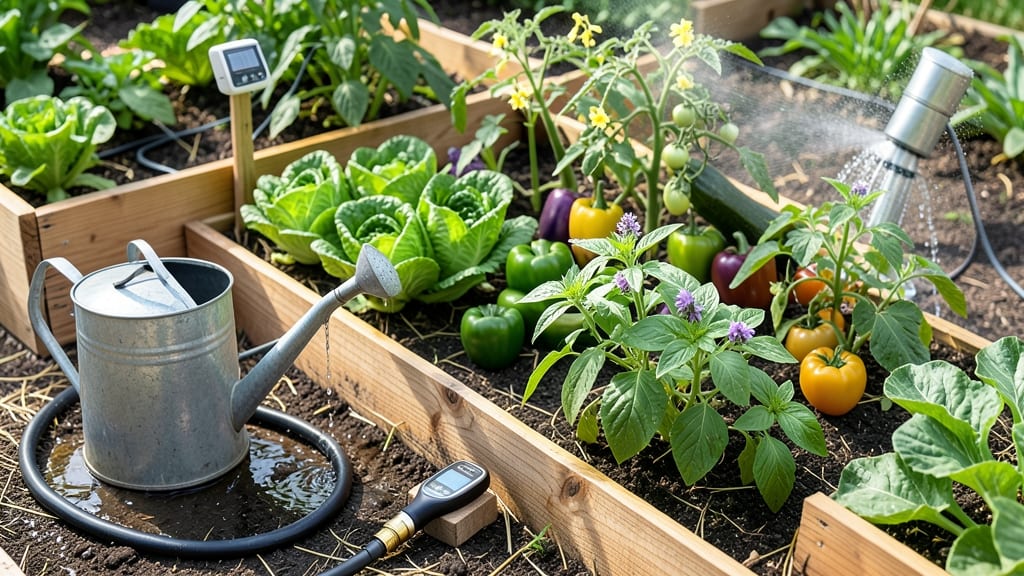
Your vegetable garden’s watering frequency is the single most critical factor in determining whether you’ll harvest crisp, flavorful produce or watch your plants wilt into disappointment.
Picture this: you’ve spent weeks planting your 🌱 vegetable garden, only to see your tomatoes shrivel or your lettuce bolt because you either drowned the roots or left them high and dry.
The truth? Most gardeners guess—and that’s how you end up with uneven growth or worse, a failed harvest.
Here’s the game-changer: the right watering schedule isn’t one-size-fits-all. Leafy greens like lettuce need frequent, shallow drinks, while deep-rooted crops like carrots thrive with deep, infrequent soaks. Throw in soil type, climate, and season, and you’ve got a puzzle that’s easier to solve than you think.
In this guide, I’ll break down the exact watering frequency for your top vegetables, teach you how to read your soil like a pro, and share hacks to cut water waste by 40%—so you can finally stop guessing and start growing with confidence.
💧
Frequency
Varies by plant and season
Every 3-7 days (depends on weather and soil type)
🌿
Water Need
Medium to High
Most vegetables need consistent moisture, especially during flowering and fruiting.
🌅
Best Time
Morning
Before 10 AM to reduce evaporation and fungal diseases to reduce evaporation and fungal diseases
🥛
Amount
Deep soak (1-2 inches of water per week)
~2500
How often to water vegetables: the science-backed frequency guide by plant type
Watering your vegetable garden isn’t a one-size-fits-all task. Some plants, like leafy greens, thrive with frequent shallow watering, while others, such as tomatoes and peppers, demand deep soaks to develop strong roots.
The key lies in understanding each plant’s root depth, seasonal needs, and soil type—because watering too much or too little can spell disaster for your harvest. Let’s break down the science-backed watering schedules for 15+ common vegetables so you can water with confidence.
Most gardeners make the mistake of sticking to a rigid schedule, but weather conditions and soil moisture change daily. For example, sandy soils drain quickly and may need watering every 2-3 days, while clay soils retain moisture longer, requiring watering every 5-7 days.
Always check the top 1-2 inches of soil—if it’s dry, it’s time to water. Morning watering is ideal because it reduces evaporation and fungal diseases caused by wet foliage at night.
Below, you’ll find a plant-by-plant watering guide tailored to their unique needs. Pay close attention to the root depth column, as deeper-rooted plants (like carrots or squash) need longer, less frequent watering to encourage root growth.
Shallow-rooted plants (like lettuce or radishes) benefit from more frequent, lighter watering to keep the soil surface moist.
| Vegetable |
Watering Frequency |
Root Depth |
Seasonal Adjustments |
Key Tips |
| Tomatoes |
Every 2-3 days (deep soak) |
12-18 inches |
Increase in summer; reduce in fall |
Water at base, avoid wetting leaves |
| Peppers |
Every 2-4 days (deep watering) |
12-18 inches |
Consistent moisture critical for fruiting |
Mulch to retain moisture |
| Lettuce |
Every 1-2 days (light watering) |
6-12 inches |
Reduce in heat to prevent bolting |
Keep soil evenly moist |
| Cucumbers |
Every 2-3 days (deep watering) |
12-18 inches |
Increase during fruiting |
Use trellis to reduce soil contact |
| Carrots |
Every 3-4 days (deep watering) |
12-16 inches |
Keep soil moist but not soggy |
Avoid overhead watering to prevent cracking |
| Zucchini |
Every 2-3 days (deep soak) |
12-18 inches |
Increase during flowering/fruiting |
Mulch heavily to retain moisture |
| Spinach |
Every 1-2 days (light watering) |
6-12 inches |
Reduce in heat to prevent bolting |
Harvest frequently to encourage growth |
| Green Beans |
Every 2-3 days (even moisture) |
12-18 inches |
Consistent watering prevents blossom end rot |
Use drip irrigation for precision |
| Onions |
Every 3-4 days (moderate watering) |
8-12 inches |
Reduce watering as bulbs mature |
Avoid wetting foliage to prevent disease |
| Radishes |
Every 1-2 days (light watering) |
4-6 inches |
Keep soil consistently moist |
Harvest quickly to avoid pithiness |
Signs your vegetable garden is overwatered or underwatered (and how to fix it)
Even with the best vegetable garden watering frequency, mistakes happen. Too much water drowns roots, while too little stunts growth. The key is learning to read your plants—wilting leaves or soggy soil are loud warnings your watering routine needs an overhaul.
Start by checking the soil moisture with your finger. Stick it 1-2 inches deep—if it feels damp, hold off on watering. If it's bone-dry, your garden is thirsty. But here’s the catch: yellowing leaves or mushy stems often signal overwatering, not underwatering.
🚨 Watering Frequency Warning
Most vegetables need 1-1.5 inches of water weekly, but daily light showers won’t cut it—they encourage shallow roots. Deep watering 2-3x/week is better. Adjust for:
- Clay soil: Water less often (holds moisture longer)
- Sandy soil: Water daily (drains too fast)
- Heatwaves: Increase by 30-50%
Pro Tip:
Use a moisture meter or the "squeeze test"—grab a handful of soil; if it crumbles, water. If it sticks, wait.
Watch for fungal growth like white mold on leaves or stems—this is a red flag for overwatering. Root rot follows close behind, turning leaves black and mushy. If you spot these, reduce watering immediately and improve drainage by adding organic mulch or perlite to the soil.
On the flip side, underwatered plants show signs like crispy leaf edges or drooping stems that don’t bounce back after watering. For leafy greens like lettuce or spinach, this means bolting (going to seed) faster than expected. Tomatoes and peppers may drop blossoms entirely when thirsty.
Fix underwatering by adjusting your irrigation system. Swap sprinklers for drip lines to deliver water directly to roots. For containers, use self-watering pots or group plants together to retain moisture. Morning watering is critical—it gives roots time to absorb water before evening evaporation.
Don’t ignore soil texture either. Compacted soil repels water, leaving roots parched. Loosen the top 2 inches with a fork or tiller to help water penetrate. For container gardens, ensure pots have drainage holes and use well-draining potting mix.
Remember, consistency is key. Stick to a watering schedule based on your garden’s needs, and always check the soil before reaching for the hose. A little observation goes a long way in keeping your veggies happy and productive. 💧
★★★★★4.5(8 reviews)