
Pruning
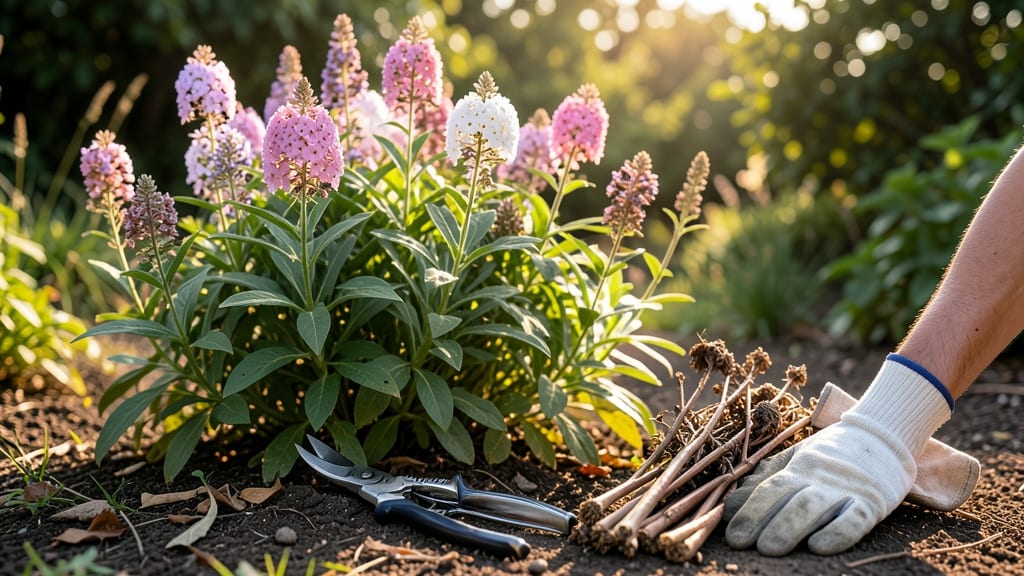
Cutting back garden phlox 🌸 after the first hard frost—but before the ground freezes—is the secret to next year’s showstopping blooms.
Struggling to decide when to prune your garden phlox without risking next year’s vibrant blooms? Timing this task wrong can mean fewer flowers—or even losing your plant entirely.
In USDA Zone 6a, like most of the Midwest, the ideal window is late October to mid-November, when the foliage turns brown and crispy but hasn’t yet succumbed to ice.
Below, I’ll walk you through the exact steps, regional tweaks, and tools to revive your phlox while keeping it safe through winter’s harshest months.
Best late fall timeline for cutting back garden phlox
Timing is everything when it comes to pruning your garden phlox. Cutting back too early exposes tender stems to frost damage, while waiting too long risks smothering the plant under dead foliage.
The ideal window is a 3-week period after your region’s first hard frost but before the ground freezes solid. This balance ensures your phlox enters winter healthy and ready to rebound in spring.
Most gardeners in USDA Zones 3-10 can prune between late October and mid-November, but exact timing depends on your local climate. For example, Zone 3 gardeners should wait until November 1-15, while Zone 7-10 gardeners can safely prune as late as December 1-15.
The key is watching for visual frost cues rather than relying solely on a calendar.
How to know if your phlox is truly dormant? Look for these 3 critical signs:
- Foliage turns brown and collapses (not just wilting)
- Leaves feel crispy when touched (like dry paper)
- No new growth appears after 2-3 weeks of cold weather
These signals confirm your phlox has entered dormancy and is ready for pruning.
Pruning too early—before your phlox is fully dormant—can stimulate new growth that won’t survive winter. This winter dieback often appears as blackened stems in spring. Conversely, waiting until the ground freezes can smother the plant under snow or ice, trapping moisture and causing rot.
The 3-week window gives you flexibility to adjust based on weather delays.
In Zone 3-5, where winters are harsh, aim to finish pruning by November 15 to avoid early snow cover. For Zone 6-8, you have until December 1, but monitor forecasts for unexpected freezes.
Southern gardeners in Zone 9-10 can prune as late as January 15, but only if your phlox shows clear dormancy signs.
Pro tip: Test your soil’s readiness by pushing a screwdriver into the ground. If it goes in 1-2 inches easily, the soil is workable and safe for pruning. If it resists or feels icy, wait another week. This simple check prevents root damage from working frozen soil.
After pruning, mulch heavily (3-4 inches) with straw or shredded leaves to insulate the crown. This protects your phlox from temperature fluctuations and soil heaving during freeze-thaw cycles. Avoid using fresh wood chips, which can draw moisture away from the roots.
Remember: Phlox stores energy in its roots over winter. Cutting back too aggressively removes these reserves, leading to weak spring growth or fewer blooms. Always leave 1-2 inches of stem above the crown—this small stub acts as a growth marker for next year’s shoots.
If you miss the late-fall window, don’t panic! You can safely prune in early spring (just before new growth appears), though you’ll sacrifice some of the plant’s natural winter protection.
The key is consistency—whether you prune in fall or spring, always use the same method to avoid confusing your phlox.
🌿
Step-by-step pruning guide: how to revive phlox without harming it
Pruning garden phlox correctly is the key to reviving it for next year’s vibrant blooms. The right technique ensures healthy regrowth while avoiding woody stems or fungal infections.
I’ve pruned phlox for years, and I’ve learned that height matters—cutting too high or too low can spell disaster. Let’s dive into the exact method to do it right.
First, gather your tools before you start. You’ll need bypass pruners (not shears!) for clean cuts and a small trowel for mulching later. Avoid dull blades, as they crush stems instead of cutting them cleanly.
I also recommend wearing gloves—phlox can be prickly, and you’ll thank me later when your hands aren’t covered in scratches.
Now, here’s the critical part: the pruning height. Most gardeners make the mistake of cutting too high, leaving 4-6 inches of stem. Instead, aim for 1-2 inches above the ground. This encourages new growth from the base next spring.
If you cut too high, you risk woody stems that won’t produce flowers, and if you cut too low, you might damage the crown of the plant.
⚠️ callout warning ⚠️
- Wet ground – Muddy soil can smother roots and spread disease.
- Frozen stems – Brittle, frozen phlox snaps easily and won’t regrow properly.
- Active growth – Pruning too early (before first frost) stresses the plant.
Once you’ve cut back your phlox to the correct height, it’s time for post-pruning care. Start by mulching around the base with 2-3 inches of organic mulch, like shredded leaves or straw.
This insulates the roots from freezing temperatures while keeping moisture locked in. I swear by pine straw—it’s lightweight, lasts all winter, and breaks down nicely in spring.
After mulching, hold off on fertilizing until early spring. Phlox is dormant in winter, and feeding now can encourage unwanted growth that won’t survive the cold. Instead, wait until March or April when you see new shoots emerging.
Then, apply a balanced fertilizer (like 10-10-10) to give your phlox the nutrients it needs for next year’s blooms.
Finally, keep an eye out for pests or diseases after pruning. Remove any dead or diseased stems immediately and dispose of them in the trash—not your compost bin—to prevent spreading pathogens.
If you notice yellowing leaves or black spots, treat with a copper fungicide as a precaution. With these steps, your phlox will thrive and reward you with show-stopping blooms next summer!