
Picking
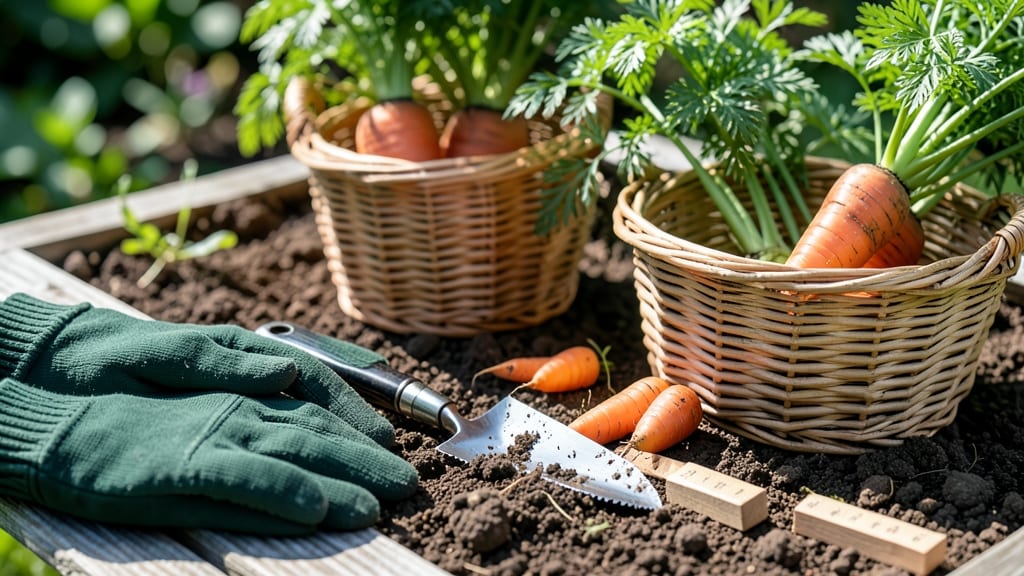
Harvesting carrots from your garden at the right time means the difference between sweet, tender roots and tough, bitter ones 🥕.
Picture this: you’ve nurtured your carrot patch for months, only to pull a woody, flavorless mess because you missed the window. The good news? There’s a simple, foolproof way to know when to harvest—like the 3-finger soil check that guarantees perfect timing every time.
Most gardeners wait too long, letting carrots overgrow and develop tough fibers. Others pull them too soon, leaving you with tiny, underdeveloped roots. The key is knowing when the roots reach 3-6 inches in length, the soil resists gentle pressure, and the tops are lush and vibrant.
In this guide, I’ll walk you through the exact steps to harvest carrots at peak sweetness, plus the best times of day and season to avoid common mistakes. By the end, you’ll never second-guess when to pull your next batch again.


How to use the 3-Finger soil check for perfect carrot harvest timing
Harvesting carrots at the right time transforms your garden into a sweet, crunchy treasure chest. The 3-finger soil check is my go-to method for determining when these root veggies are ready to pull.
This simple test helps you avoid the two biggest harvest mistakes: picking too early (small, watery carrots) or too late (woody, bitter roots). Start checking about 60 days after planting, when most varieties begin developing noticeable roots.
The 3-finger soil test works by assessing both root size and soil resistance—two critical factors that indicate maturity. Unlike leafy greens, carrots grow underground, so you can't judge readiness by appearance alone.
Organic varieties often mature slightly slower than conventional ones, so adjust your timing by 3-5 days if you're growing heirloom or slow-maturing types like Danvers or Nantes.
Before you begin, gather these tools: a trowel, gardening gloves, and a measuring tape. Work on a dry day when the soil is slightly moist but not soggy—this makes the test more accurate.
The key is to gently insert your fingers into the soil near the plant's base, being careful not to damage developing roots.
Step-by-Step 3-Finger Soil Check
- 1 Locate the plant's base: Find the thickest part of the carrot's foliage and insert your index finger 1-2 inches away from the stem. This is where the main root develops.
- 2 Insert fingers 3 inches deep: Push your index, middle, and ring fingers straight down into the soil. If the soil resists slightly (like pressing into firm butter), the carrot is likely ready. Too loose? It's underdeveloped.
- 3 Assess root contact: If your fingers brush against a firm, rounded object (the carrot), it's time to harvest. For smaller varieties (like Paris Market), you may only need 2 fingers of depth.
- 4 Check leaf growth: Healthy carrots have 4-6 inch tall leaves with a deep green color. Yellowing or wilting leaves signal it's past prime time.
- 5 Test for doneness: Gently wiggle the carrot—if it slides out easily with minimal resistance, it's ready. If it feels like you're pulling a rock, wait 3-5 more days.
Pay close attention to the soil resistance during the test. Firm but not hard soil indicates a mature carrot with developed sugars. If the soil feels loose or crumbly, the root hasn't bulked up enough.
Pro tip: Organic varieties often need 5-7 extra days to reach the same firmness as conventional ones due to slower growth rates.
Don't rely solely on the soil test—leaf color and size are equally important. Carrots ready for harvest should have vibrant green leaves (not yellowing) and a thick, bushy appearance. The leaves act like a nutrient indicator: if they're lush, the root below is storing energy and sweetness.
For purple or yellow varieties, the color deepens as they mature, so look for consistent hue along the root's length.
Timing affects flavor dramatically. Carrots harvested at 70-80 days (the ideal window) develop maximum sweetness because they've had time to convert starches into sugars. Harvesting too early (before 60 days) means watery, bland roots, while waiting too long (past 90 days) leads to fibrous, bitter textures.
For storage carrots, you can let them mature slightly longer, but they won't taste as sweet.
One common mistake is assuming all carrots mature at the same rate. Short varieties (like Little Finger) reach harvest size in 50-60 days, while long varieties (like Chantenay) need 70-80 days.
Always check the seed packet for days to maturity and adjust your soil tests accordingly. In cooler climates, carrots may take 5-10 extra days to reach the same size as those in warm regions.
After mastering the 3-finger test, you'll notice a dramatic improvement in texture and flavor. The key is consistency—check every 3-5 days once you're within the harvest window.
This method works for all carrot types, from classic orange to rainbow heirlooms. Once you've pulled a perfect carrot, you'll never go back to guessing!
🌱
Common mistakes that make carrots taste bitter or woody (and how to avoid them)
Even the most patient gardeners can end up with bitter, woody carrots if they harvest at the wrong time. The key is understanding when your carrots have reached their peak sweetness window—typically between 60-80 days after planting, depending on the variety.
Over-mature carrots develop tough fibers and concentrated sugars that taste bitter, while underripe ones lack flavor entirely.
Most home gardeners make the mistake of waiting too long, assuming bigger means better. But carrots past their prime become tough and develop a gritty texture that’s nearly impossible to fix.
Even proper soil preparation and consistent watering can’t salvage over-mature roots. The solution? Learn to recognize the 5 critical signs of perfect harvest timing before your crop turns woody.
⚠️ WARNING: Harvesting Too Late Ruins Your Carrots!
Once your carrots develop hard, fibrous cores or uneven shapes, their flavor profile changes permanently. These 5 signs mean it's already too late:
- 📏 Roots exceed 1.5 inches in diameter (beyond ideal eating size)
- ✋ Skin feels tough when pinched (not soft and yielding)
- 🌈 Color becomes uneven or dull (sign of stress)
- 🪴 Leaves yellow or wilt prematurely (nutrient depletion)
- 🔍 Soil resistance increases dramatically (roots are overcrowded)
Solution: Thin seedlings early to prevent root competition and harvest every 2 weeks once mature.
Soil compaction is another silent culprit behind woody, misshapen carrots. When soil becomes too dense, roots grow unevenly or fork, creating hard, fibrous sections that ruin texture.
The fix? Amend your soil with compost or sand before planting and avoid walking on garden beds. Loose, well-draining soil is non-negotiable for tender carrots.
Pest damage also sneaks in when you're not looking. Carrot rust flies and wireworms create entry points for bacteria, leading to bitter flavors. If you notice chewed leaves or irregular root shapes, harvest immediately and treat future crops with row covers or neem oil.
Prevention is easier than dealing with compromised flavor later.
Uneven growth happens when seeds germinate at different rates, causing some carrots to mature faster than others. To avoid this, sow seeds in succession every 2 weeks for a continuous harvest.
This ensures you're always pulling carrots at their peak sweetness rather than letting a few over-mature while others lag behind.
Remember: Sweetness peaks at harvest. Carrots left in the ground too long convert sugars into starches, creating that unpleasant bitter aftertaste. For the best flavor, harvest in the morning after watering when sugars are at their highest.
Store them in the fridge for up to 2 weeks, but don't wait—enjoy them fresh from the garden!