
Fertilization
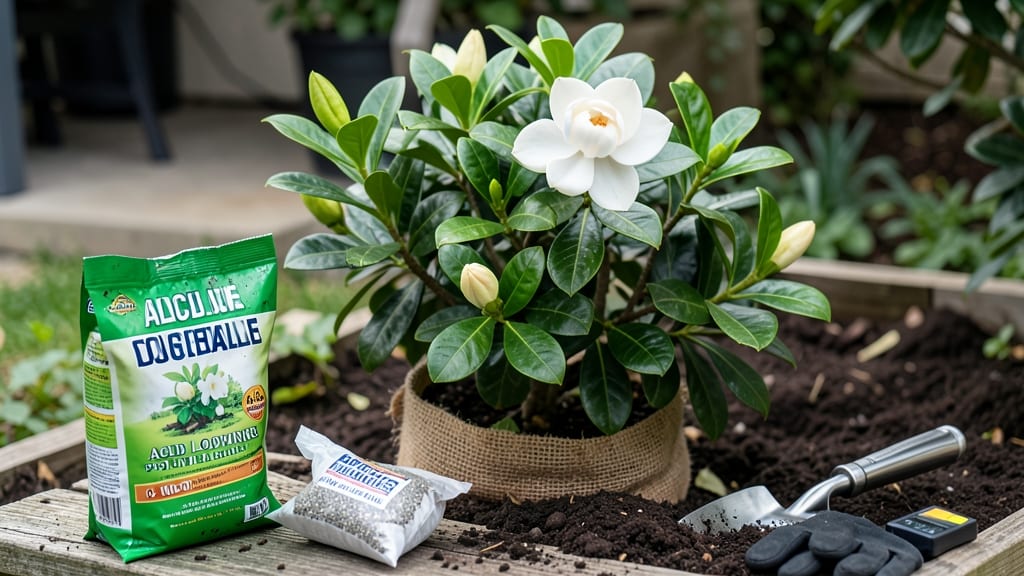
The ideal gardenia fertilizer ratio is all about balancing acidity and nutrients to unlock those fragrant blooms you’ve been dreaming of.
Struggling to get your gardenia 🌸 to bloom as beautifully as it should? The secret might be hiding in the numbers—not just any fertilizer, but the perfect acid-loving blend ratio that mimics its natural tropical soil environment.
Gardenia thrives in USDA Zones 9-11 where the soil stays naturally acidic, but even in cooler climates, you can replicate that environment with the right mix.
A 3-1-2 or 4-2-3 NPK ratio (nitrogen, phosphorus, potassium) paired with a pH of 4.5-6.0 is key to avoiding yellow leaves and encouraging lush, fragrant blooms.
In this guide, I’ll break down the exact ratios, organic vs. synthetic options, and the 4-6 week feeding schedule that keeps your gardenia thriving year-round—without overdoing it.
Optimal gardenia fertilizer ratio for acid-loving soil (N-P-K breakdown)
Your gardenia thrives on precision—just like a tropical orchid—and the numbers on your fertilizer bag hold the key to those fragrant blooms.
Gardenias demand acid-loving soil with a specific N-P-K ratio, typically ranging from 3-1-2 to 4-2-3, to balance leafy growth, root development, and bloom production. Too much nitrogen? You’ll get lush leaves but no flowers. Too little phosphorus? Buds will drop before opening.
Let’s break down the science behind these ratios and how to apply them for year-round blooms.
Gardenias are native to humid, acidic forests where the soil pH hovers between 4.5 and 6.0. This acidity unlocks essential micronutrients like iron and magnesium, which prevent yellowing leaves (a common sign of deficiency). Without the right pH, even the perfect N-P-K ratio won’t save your plant.
Testing your soil’s pH with a simple kit is the first step—aim for that 5.0–6.0 range to keep your gardenia thriving. If your soil is too alkaline, amend it with sulfur or peat moss to lower the pH gradually.
Now, let’s dive into the N-P-K ratios that work best for gardenias. The numbers represent the percentages of nitrogen (N), phosphorus (P), and potassium (K) in the fertilizer.
For gardenias, a ratio like 4-2-3 is ideal during spring and fall to encourage blooming, while a slightly higher nitrogen ratio like 3-1-2 in early spring promotes leaf and root growth.
Phosphorus (the middle number) is critical for flower development, so never skip it—even a small drop can cause buds to abort.
Micronutrients like iron, magnesium, and calcium are just as vital as the big three. Iron deficiency, for example, causes yellowing between leaf veins (chlorosis), while magnesium deficiency leads to yellow patches on older leaves. A balanced chelated iron supplement can fix these issues quickly. Always pair your fertilizer with a micronutrient blend designed for acid-loving plants to avoid deficiencies.
🌿
When applying fertilizer, timing is everything. Start feeding in early spring as new growth begins, using a 3-1-2 ratio to kickstart foliage. Switch to a 4-2-3 ratio by late spring to push blooming, and continue through fall.
In summer, reduce the frequency to every 6-8 weeks and use a half-strength solution to avoid burning roots or causing salt buildup. Always water your gardenia thoroughly before and after applying fertilizer to prevent root damage and ensure nutrients reach the soil.
Over-fertilizing is a common mistake that leads to leaf scorch, bud drop, or even plant death. If you notice crispy leaf edges or white crust on the soil surface, flush the roots with water to remove excess salts.
For container gardenias, leach the soil every 2-3 months by watering until it runs out of the drainage holes. This simple step can save your plant from nutrient toxicity and keep it blooming beautifully.
For organic gardeners, blend composted pine needles, coffee grounds, and fish emulsion to mimic the acidic, nutrient-rich
Step-by-step guide: how to mix gardenia fertilizer at home (organic vs. synthetic)
Gardenia plants thrive when their soil mimics the acidic, nutrient-rich environments of their tropical origins. Whether you prefer organic or synthetic fertilizers, achieving the right N-P-K ratio (3-1-2 to 4-2-3) is key.
Homemade blends using coffee grounds or pine needles can be just as effective as commercial options like Miracle-Gro Azalea/Camellia fertilizer, but the mixing ratios matter.
For organic fertilizers, focus on slow-release nutrients like fish emulsion, composted manure, or pine bark fines. These provide a steady supply of nutrients without the risk of burning your gardenia’s roots.
Synthetic fertilizers, on the other hand, offer precise NPK ratios but require careful dilution to avoid over-fertilizing.
Select organic or synthetic fertilizer. For organic, use 1 part fish emulsion (5-1-1 NPK) or 1 part composted worm castings. For synthetic, use 1 tbsp azalea fertilizer (e.g., Miracle-Gro) per 1 gallon of water.
Add 1 part coffee grounds or 2 parts pine needles to organic blends to lower pH. For synthetic mixes, include 1 tsp sulfur per gallon to maintain pH 4.5-6.0.
For organic: Combine 1 part fish emulsion, 1 part coffee grounds, and 2 parts compost. For synthetic: Dilute 1 tbsp azalea fertilizer in 1 gallon water + 1 tsp sulfur.
Apply every 4-6 weeks during spring-fall. Water soil thoroughly before and after to prevent root burn. Use half-strength in summer to avoid leaf scorch.
Watch for yellow leaves (iron deficiency) or purple stems (phosphorus deficiency). Adjust ratios or pH accordingly. Test soil annually to confirm acidity levels.
Homemade organic blends are gentler on gardenias but require more frequent applications. Synthetic fertilizers provide immediate results but need precise measurements to avoid over-fertilizing. Always water your gardenia deeply after fertilizing to help nutrients reach the roots.
Remember, less is more when it comes to gardenia care. Over-fertilizing can lead to burned roots or reduced blooms. Stick to the 4-6 week schedule and adjust based on your plant’s response.
With the right fertilizer ratio, your gardenia will reward you with fragrant blooms all season long! 🌸