
Picking
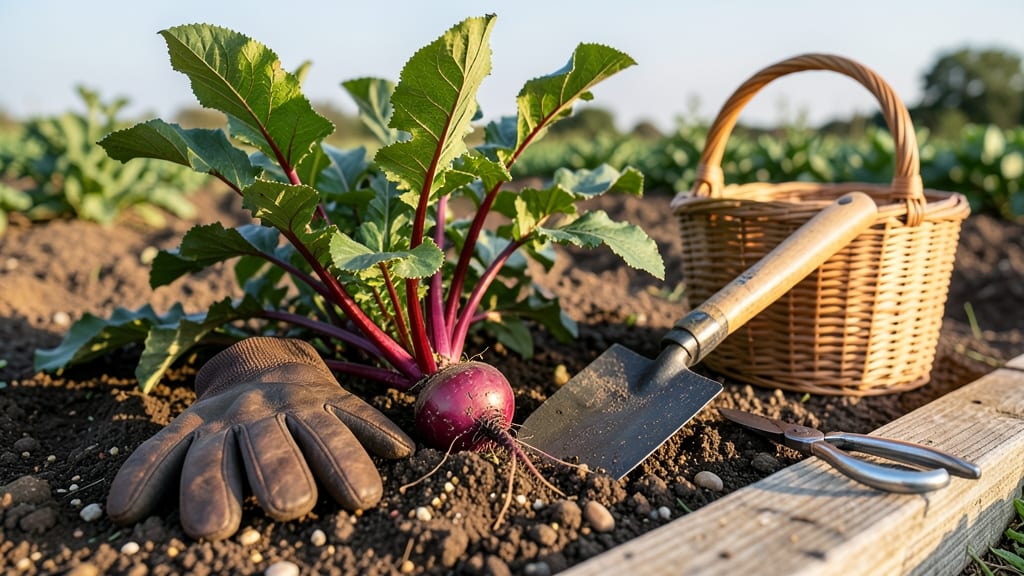
To pick beets from your garden at their sweetest, aim for 60–70 days after planting when roots reach 1–3 inches in diameter 🥕.
Harvesting beets at the wrong time can turn your crisp, earthy roots into tough, woody disappointments—so knowing when to pull them is half the battle in growing a perfect garden crop.
You’ll spot the perfect moment when the tops hit 4–6 inches tall and the skin feels firm to the touch, signaling peak flavor and tenderness. Skip this window, and you risk either bland baby beets or fibrous overgrowth.
Below, I’ll walk you through three foolproof visual cues to nail the harvest, plus how to store your bounty and avoid common mistakes that waste your hard work.


3 Visual cues to identify perfectly ripe beets in your garden
There’s nothing worse than pulling a beet from your garden only to discover it’s either underripe and bland or overgrown and woody. The secret to harvesting beets at their peak? Mastering these three visual cues that guarantee sweet, tender roots every time.
I’ve learned through years of trial (and a few tough beets) that timing is everything—and these signs never fail me.
Beets are ready when they hit a sweet spot between size and maturity. That means checking three key areas: the leaf color, the root diameter, and the skin texture.
Skipping any of these can lead to disappointment, so let’s break down what to look for—and what to avoid—when it’s time to harvest.
- 1. Leaf Color: Vibrant deep green tops with no yellowing or wilting. Golden beets should have bright, healthy foliage too.
- 2. Root Size: Diameter of 1–3 inches (like a golf ball to a softball). Detroit Dark Red varieties are best at 2 inches.
- 3. Skin Texture: Smooth, firm skin with no cracks or soft spots. Gently press—it should feel resistant, not mushy.
Let’s start with the leaf color, because this is your first clue. Healthy beet greens should be vibrant and uniform in color. For red or golden varieties, the leaves should remain deep green without yellowing or browning.
If you notice yellowing edges, it’s often a sign of nutrient deficiency or overmaturity. I once ignored this cue and ended up with beets that tasted bitter—don’t make my mistake!
Next, check the root diameter. This is where most gardeners go wrong—they either pull beets too small (under 1 inch) or leave them too long (over 3 inches). The ideal size is 1–3 inches in diameter, depending on the variety.
For example, Detroit Dark Red beets are best when they’re about 2 inches wide, while Chioggia beets can stay smaller since their stripes fade if overgrown.
Finally, examine the skin texture. A perfectly ripe beet will have smooth, taut skin that resists gentle pressure. If the skin feels soft or wrinkled, the beet is overripe and likely woody. On the flip side, if it’s too small and rubbery, it hasn’t reached peak sweetness.
Pro tip: Run your thumb over the root—it should feel firm like a ripe apple, not spongy like a damp sponge.
One common mistake I see is harvesting based on days alone. While most beets mature in 50–70 days, factors like soil temperature and variety can shift that window.
For instance, Baby Beets are ready in 40 days and should only reach 1 inch in diameter. Always cross-reference days with visual cues to avoid guesswork.
If you’re unsure whether your beets are ready, do this quick test: Gently tug on the greens. If the root pops out of the soil easily, it’s time to harvest.
If it resists, wait another 3–5 days. I also recommend harvesting on a cool morning when the soil is moist—this makes the roots easier to pull without breaking.
Once you’ve mastered these cues, you’ll never struggle with underripe or overgrown beets again. The key is consistency: check your plants every 2–3 days during their final growth phase. And remember, smaller, more frequent harvests lead to sweeter, more tender beets—so don’t wait until the entire patch is mature!
Now that you know what to look for, your next harvest will be a crisp, flavorful success. Happy digging—and enjoy those homegrown beets roasted, pickled, or tossed into your favorite salad! 🥕
How long until beets are ready: timing guide by variety
Beets aren't one-size-fits-all when it comes to harvest timing. The Detroit Dark Red variety, my go-to for classic earthy flavor, typically reaches maturity in 55-65 days after planting. Meanwhile, Chioggia beets with their stunning striped patterns take slightly longer, usually 60-70 days.
For those golden varieties like Golden Beets, expect a 50-60 day window to harvest.
Your local climate plays a surprisingly big role in these timelines. Cooler regions may extend maturity by 5-10 days compared to warmer areas. I've found that soil temperature below 50°F slows beet growth significantly, while ideal conditions of 60-70°F speed up development.
Even well-draining soil can affect timing - compacted soil often delays maturity by 7-14 days.
| Variety | Days to Maturity | Root Size | Climate Notes |
|---|---|---|---|
| Detroit Dark Red | 55-65 days | 1.5-3 inches | Faster in warm climates |
| Chioggia (Striped) | 60-70 days | 1-2.5 inches | Slower in cool soils |
| Golden Beets | 50-60 days | 1-2 inches | Quickest to mature |
| Baby Beets | 30-40 days | 0.5-1 inch | Best for quick harvests |
Don't let those days-to-maturity numbers fool you - they're just starting points. I always check the leaf color first. Healthy beet greens should be vibrant green, not yellowing or wilting. The root size is equally important - most varieties are perfect when they reach 1-3 inches in diameter.
For Chioggia varieties, I aim for slightly smaller roots since they can become woody faster.
One trick I've learned is to harvest a test beet from each variety about 10 days before the expected maturity date. This gives you a real-world check on your growing conditions. If the test beet tastes sweet and tender, you're ready to harvest the rest.
If it's still tough, give them another 5-7 days of growing time. Remember that over-mature beets develop tough, fibrous roots that even long cooking can't fix.
For successive planting, I recommend sowing new seeds every 2-3 weeks during the growing season. This ensures a continuous harvest rather than one big batch. In my Zone 6a garden, I typically get two main harvest windows: early summer and late fall.
The key is to space your plantings so you're always harvesting at peak maturity rather than dealing with a glut of beets all at once.
Pro tip: If you're growing beets for their greens rather than roots, you can harvest the leaves when they're 4-6 inches tall and still get a second crop of roots later.
This two-for-one approach maximizes your garden space and harvest potential. Just be sure to leave at least 2-3 inches of leaf growth on each plant to support root development.