
Picking
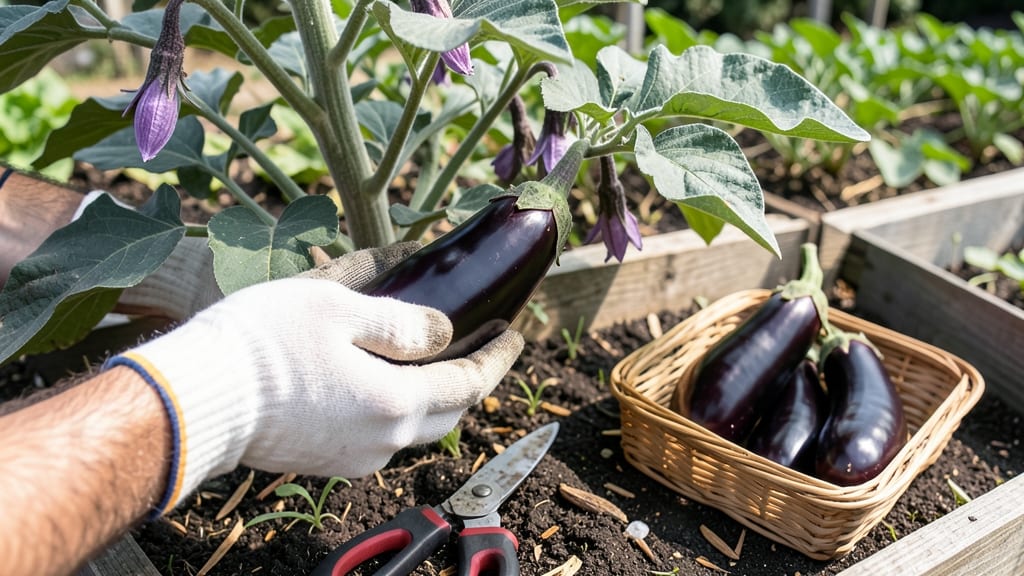
Picking eggplant from your garden at the right time ensures you get the most flavorful, tender fruit 🍆 — and skipping this step means ending up with bitter, seedy disappointments.
Harvesting too early leaves you with hard, pale fruit that lacks sweetness, while waiting too long turns them into woody, overripe messes. The key? Watch for glossy skin, a firm but gentle give when pressed, and the right size for your variety.
In USDA Zone 6a, late summer to early fall is prime time, but regional heat and humidity can speed up ripening. I’ll walk you through the exact cues—color, texture, and even the best time of day to harvest—to guarantee perfect eggplant every time.
Once you master these tricks, you’ll never second-guess when to pick again. Below, I’ll break down how to avoid common mistakes, store your harvest properly, and keep your plants producing for weeks.
How to identify perfectly ripe eggplant by color, size, and texture
Knowing when to pick eggplant from your garden transforms a good harvest into a great one. The difference between a tender, flavorful fruit and one that's bitter or seedy often comes down to timing. Let’s break down the visual and physical cues that signal your eggplant is ready for harvest.
Eggplant ripeness isn’t just about color—it’s a combination of size, texture, and even stem behavior. For example, a deep purple eggplant might look ripe but feel firm, while a white or striped variety could be ready when its skin turns uniformly pale.
Each clue works together to ensure you pick at peak flavor.
Start with color as your first clue. Most eggplants develop a deep, vibrant hue—whether purple, white, or striped—when ripe. For example, Black Beauty eggplants turn glossy purple, while Rosa Bianca varieties develop a creamy white finish. However, color alone isn’t enough; pair it with size consistency.
Next, check the size of your eggplant. Each variety has a target range: standard types like Black Beauty typically reach 6-8 inches, while dwarf varieties like Fairy Tale stop at 4-6 inches.
If your eggplant isn’t growing anymore but hasn’t reached this size, it might be a slow-maturing variety—give it a few more days.
Texture is where many gardeners miss the mark. A ripe eggplant should have glossy, firm skin that yields slightly when pressed with your thumb. If it feels rock-hard or dented easily, it’s either underripe or overripe.
Pro tip: Tap the fruit—it should sound solid, not hollow. A hollow sound means it’s past its prime.
Don’t overlook the stem test, a foolproof way to confirm ripeness. Gently twist the stem near the fruit. If it snaps cleanly (without tearing the skin), it’s ready to pick.
This method also helps you avoid damaging the plant, which can stunt future growth. For stubborn stems, use clean pruning shears instead of pulling.
Regional climate plays a role too. In hot, dry climates (like Zone 9-10), eggplants ripen faster due to intense sunlight. In cooler zones (like Zone 7), they may take longer to reach maturity. Adjust your expectations based on your local growing season—typically 70-85 days after transplanting for most varieties.
One common mistake is waiting until the eggplant turns yellow or brown, a sign of overripeness. Overripe eggplants develop bitter flesh and excessive seeds, ruining their culinary potential.
Conversely, picking too early results in hard, pale fruit with poor flavor. Aim for the sweet spot between glossy and firm.
For continuous harvests, check your plants every 2-3 days once they start flowering. Eggplants produce fruit in clusters, so one ripe eggplant often means others nearby are close behind. Keep a small notebook to track which varieties ripen fastest—this helps you stay ahead of the harvest curve.
Finally, store freshly picked eggplants in a cool, dark place (like a pantry) for up to 2 weeks. Avoid refrigerating them, as cold temperatures turn the flesh mealy and bitter. With these tips, you’ll always know exactly when to pick eggplant for the best flavor and texture.
Common mistakes that cause eggplant to ripen too early or late
Eggplants are finicky about timing—pick them too early, and you’ll end up with hard, pale fruit that’s bland and seedy. Wait too long, and they become bitter, overripe with a spongy texture.
The culprits? Mostly environmental factors we often overlook, like temperature swings or inconsistent watering. I’ve learned the hard way that even small mistakes can ruin an entire harvest.
One of the biggest mistakes is ignoring temperature requirements. Eggplants thrive in warmth (70-85°F), but they’ll bolt or ripen unevenly if nights dip below 60°F.
I once grew eggplants in Zone 5 and had to use row covers to protect them from cool evenings, or they’d turn bitter before reaching full size.
Overcrowding is another sneaky problem. When plants compete for sunlight and nutrients, they prioritize survival over fruit development. I’ve seen eggplants stay small and green for weeks because neighboring plants blocked 6+ hours of sun.
Always space them 18-24 inches apart—this gives them room to grow strong stems and develop properly.
⚠️ CALLOUT-WARNING ⚠️
⚠️ When to Pick Eggplant: Don’t Wait for Perfect Color!
Mistake: Harvesting only when eggplants turn deep purple/black.
Why it fails: Many varieties (like white or striped eggplants) never reach full color. Instead, check for:
- ✅ Glossy skin (not dull or wrinkled)
- ✅ Firm texture (press gently—it should yield slightly)
- ✅ Full size for the variety (e.g., 6-8 inches for standard types)
Pro Tip: Pick in the morning when skin is coolest—this prevents bruising.
Watering errors are equally damaging. Eggplants need consistent moisture, but too much water causes blossom-end rot (a mushy bottom), while drought stress leads to small, tough fruit. I use a drip irrigation system to deliver 1-2 inches of water weekly, keeping soil evenly damp but never soggy.
Poor soil fertility also throws off ripening. If your plants look yellow or stunted, they’re not getting enough potassium and phosphorus. I side-dress with compost or a 5-10-10 fertilizer mid-season to boost fruit development.
Over-fertilizing with nitrogen, though, will give you leafy growth at the expense of fruit—so balance is key.
Finally, pest pressure can force early ripening. Squash bugs and aphids stress plants, making them drop fruit prematurely. I’ve had success with neem oil sprays and row covers to protect young plants.
If you notice yellowing leaves or sticky residue, act fast—pests will turn your eggplants into small, seedy messes before they’re ready.