
Picking
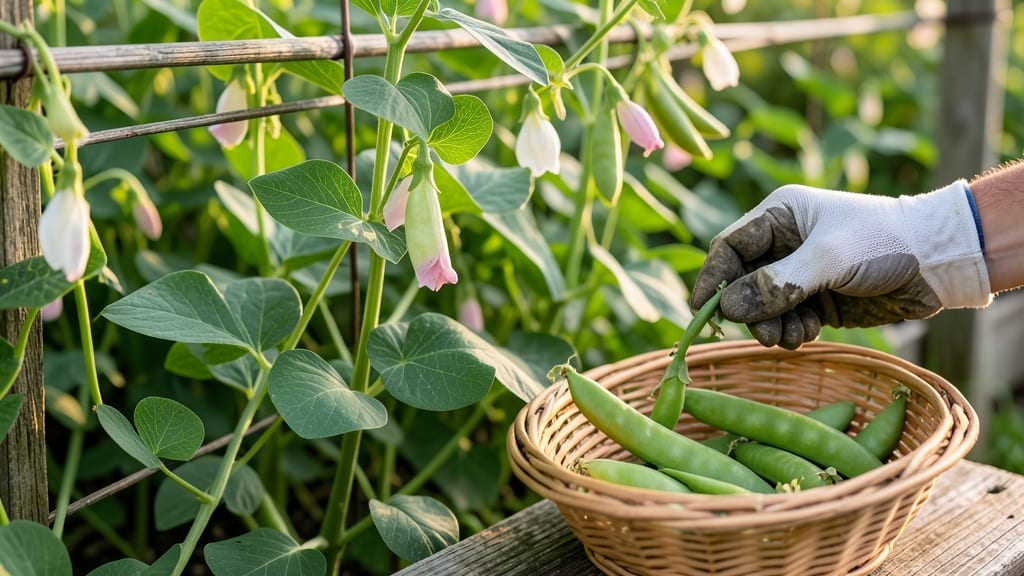
To pick peas from your garden at the perfect moment means harvesting sweet, tender pods bursting with flavor—wait too long, and you’ll end up with tough, mealy peas that taste like disappointment.
Peas may seem simple to grow, but timing their harvest is everything. A few days too early, and your pods are underdeveloped; a few too late, and they turn woody.
The difference between a crisp, fresh pea and a sad, overripe one often comes down to knowing exactly when to check your vines.
In this guide, you’ll learn the three key signs that your 🌱 peas are ready for harvest—pod size, color, and texture—plus how to extend your harvest season for a steady supply of fresh peas.
Whether you’re growing sugar snaps, shelling peas, or snow peas, these tips will help you avoid common mistakes and maximize your garden’s potential.
Ready to turn your pea patch into a flavor-packed harvest? Let’s dive into the best practices for picking peas when they’re at their peak.


3 Visual signs your pea pods are ready for harvest
Peas are one of the first sweet rewards from your garden, but knowing exactly when to pick peas can be tricky. The difference between a tender, flavorful pod and a woody, overripe mess often comes down to three key visual cues.
Whether you're growing sugar snap peas, garden peas, or snow peas, these signs will help you harvest at peak perfection.
First, let's clarify the differences between pea varieties, as each has slightly different harvest readiness indicators. Garden peas (also called shelling peas) are harvested for their peas inside, while snap peas and snow peas are eaten whole. Missing the window means tough fibers or shrunken peas—neither is ideal.
Here’s what to look for when inspecting your pea pods:
- 1 Pod Size and Shape: For snap peas, look for pods that are 2-3 inches long and slightly curved. Garden peas should be 1-2 inches long and rounded. Snow peas stay flat and should be 2-3 inches long but never puffy.
- 2 Color and Texture: The pod skin should be smooth and slightly waxy, not dull or wrinkled. Green color is ideal—avoid yellowing or browning, which signals overripeness. Gently squeeze the pod; it should feel tender, not hard.
- 3 The Snap Test: Bend a pod gently—it should snap easily with a slight give. If it resists or feels rubbery, it’s past its prime. For snap peas, the pod should break cleanly; for garden peas, the peas inside should be fully formed but still soft.
🌱 Pro Tip: Check pods every 2-3 days—peas mature quickly!
For garden peas, also peek inside the pod to confirm the peas are plump and bright green.
If they’re shriveled or starting to turn yellow, the pod has overstayed its welcome. Snap peas and snow peas should be harvested before the peas inside bulge too much—this is when the pods become fibrous and less sweet.
Timing matters even more with early vs. late varieties. Early-season peas (like Sugar Ann or Little Marvel) mature faster and may need picking 60-65 days after planting, while late varieties (such as Wando) can wait up to 70-80 days.
Always check the seed packet for variety-specific guidance.
Harvesting at the right time isn’t just about flavor—it also encourages more production. When you pick peas promptly, the plant redirects energy to producing new flowers and pods, extending your harvest window.
Aim to pick in the morning after dew dries for the freshest peas, and use a sharp pair of pruning shears or scissors to avoid damaging the vine.
One common mistake is waiting too long because the pods look "big enough." But size isn’t the only factor—texture and color are critical. Overripe peas develop thick skins and tough fibers, making them unappetizing.
If you’ve missed the window, don’t despair: shelling peas can still be used in soups or stews, but their sweetness will be diminished.
For continuous harvests, pick peas every 2-3 days during peak production. This keeps plants productive and prevents overcrowding. If you notice fewer flowers or smaller pods, it’s time to fertilize lightly with a high-phosphorus fertilizer to boost flowering.
Now that you know what to look for, grab your shears and enjoy the sweet, crisp reward of a well-timed pea harvest! With these visual cues, you’ll never miss the perfect moment again. 🌿
How to extend your pea harvest season with proper picking techniques
Peas are one of the fastest crops to mature, but their short window of peak flavor makes timing your harvest absolutely critical. If you let pods linger on the vine too long, they’ll turn tough and fibrous, ruining their sweetness.
The key to a prolonged harvest lies in consistent picking and smart garden management.
Most pea varieties reach maturity in 60-70 days, but the real secret to extending your harvest isn’t just about when you start picking—it’s about how often you do it.
Think of it like pruning a bush: the more you remove spent blooms or pods, the more your plant will produce. For peas, this means checking your vines every 2-3 days once harvesting begins.
To encourage continuous production, focus on removing old pods as soon as they reach maturity. This signals your pea plants to redirect energy into new flower production.
I’ve found that pole peas (like 'Sugar Snap' or 'Oregon Sugar Pod') benefit most from this technique, as they produce flowers continuously from the bottom up.
Another game-changer is succession planting. Since peas thrive in cool weather, plant a second batch 4-6 weeks after your first harvest, using early-maturing varieties like 'Little Marvel' or 'Green Arrow'.
This staggered approach can extend your harvest by 3-4 weeks, giving you a steady supply of fresh peas.
Don’t forget about pruning techniques for vining varieties. If your peas start looking leggy or overcrowded, gently trim back overgrown tendrils to improve air circulation. This reduces disease risk and helps the plant focus energy on producing more pods rather than excessive foliage. Just avoid cutting into the main stem.
Finally, store harvested peas properly to maintain quality. Keep them in the fridge for up to 5 days or blanch and freeze for long-term storage.
The fresher you eat them, the sweeter they’ll taste—so plan to harvest small batches frequently rather than trying to store a large harvest all at once. With these techniques, you’ll turn your pea patch into a continuous harvest machine! 🌿