
Vegetables
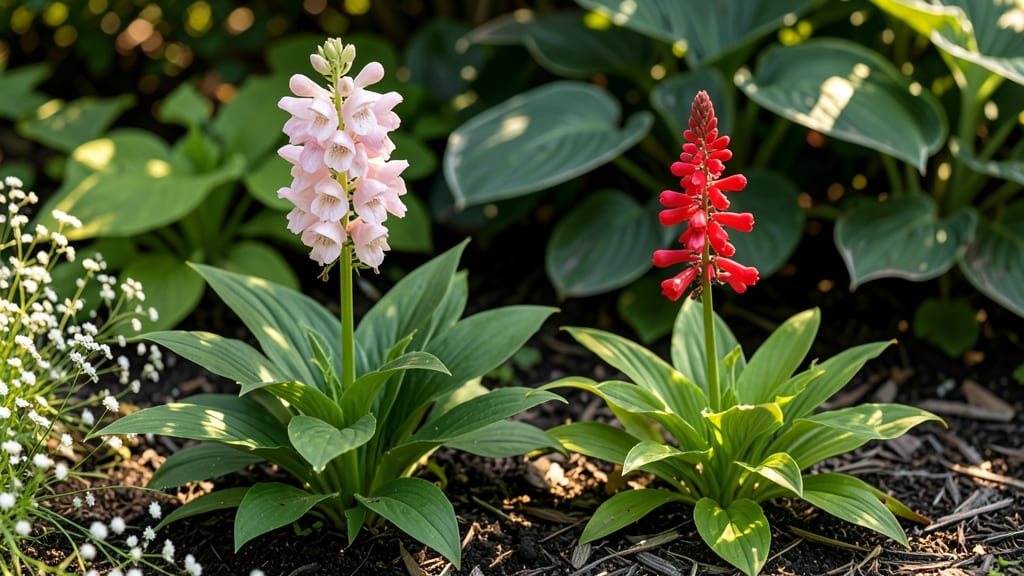
Themed paths and plant symbolism in Alice in Wonderland Botanical Gardens bring Lewis Carroll’s story to life through carefully curated flora, including giant flowers, bluebell meadows, and foxglove that evoke Wonderland’s most iconic scenes while using real botanical species.
The gardens transform literary imagination into living art by pairing symbolic plants with story elements. 🌿 For example, Queen Anne's lace represents the White Queen's purity, while foxglove—used for the Mad Hatter's tea—adds a touch of danger.
Many gardens also incorporate whimsical elements like "talking tree" labels or winding paths that mimic the rabbit hole, creating an immersive experience. The beauty lies in how these real plants double as both decorative elements and narrative tools, making the gardens feel like stepping into the story itself.
Visitors often marvel at how the gardens balance botanical accuracy with creative interpretation. 🌸 The bluebell meadows, for instance, symbolize Alice's dreamlike state, while giant flowers reference the oversized flora in Wonderland.
This clever design choice makes the gardens both educational and magical, appealing to plant lovers and literature fans alike.
💡 In This Article
- Botanical Symbolism in Alice’s Wonderland Plants
- Designing Your Own Wonderland-Themed Garden
Botanical symbolism in Alice’s Wonderland plants
The gardens use plants as visual storytelling tools, where each species carries deep symbolic meaning tied to characters and themes. 🌸 For example, white roses—like those from the White Queen’s garden—represent purity and innocence, while their delicate petals symbolize the fleeting nature of Wonderland’s logic.
The real Rosa chinensis variety, with its pale blooms, mirrors the story’s dreamlike quality, where even the most ordinary objects take on fantastical significance.
Foxglove (Digitalis purpurea) is one of the most striking examples, embodying both beauty and danger. Its tall spikes of bell-shaped flowers inspired the Mad Hatter’s infamous tea, which contained digitalis—a toxic compound that causes hallucinations.
In folklore, foxglove was linked to witchcraft and madness, making it a perfect botanical match for the Hatter’s eccentricity. The plant’s height (often 3-5 feet) and dramatic foliage create a striking visual contrast, reinforcing the garden’s whimsical yet eerie tone.
Bluebells (Hyacinthoides non-scripta) play a dual role: their delicate, drooping flowers mirror Alice’s dreamy state as she shrinks and grows, while their natural clustering evokes the crowded, chaotic beauty of Wonderland.
These woodland natives thrive in shaded areas, much like how Alice’s adventures unfold in hidden, mysterious spaces. Their scent—sweet and slightly nutty—adds an immersive sensory layer, transporting visitors deeper into the story’s atmosphere.
Queen Anne’s lace (Daucus carota), with its lacy white umbels, represents the White Queen’s rigid, rule-bound world. Its wild, self-seeding nature contrasts with the structured gardens of Wonderland’s royalty, subtly critiquing the story’s themes of order versus chaos.
Meanwhile, the giant flowers—often represented by oversized Delphinium or Rudbeckia—mirror the story’s surreal scale, where even the smallest details feel monumental.
Many gardens incorporate "talking tree" labels near mature specimens like oak or willow, referencing the Cheshire Cat’s vanishing act. These trees, with their gnarled bark and towering presence, become silent storytellers, inviting visitors to imagine conversations between their branches.
The use of real species ensures the gardens remain botanically accurate while staying true to Carroll’s imaginative spirit.
What’s fascinating is how these plants reflect real-world folklore and science. 💫 Foxglove’s toxicity, for instance, ties to historical herbal medicine, where it was used (and misused) for heart conditions—a dark parallel to the Hatter’s tea.
Bluebells, meanwhile, were once gathered for their honey, linking the garden’s magic to practical human history. This blend of myth and reality is what makes the botanical gardens so enchanting.