
Tools
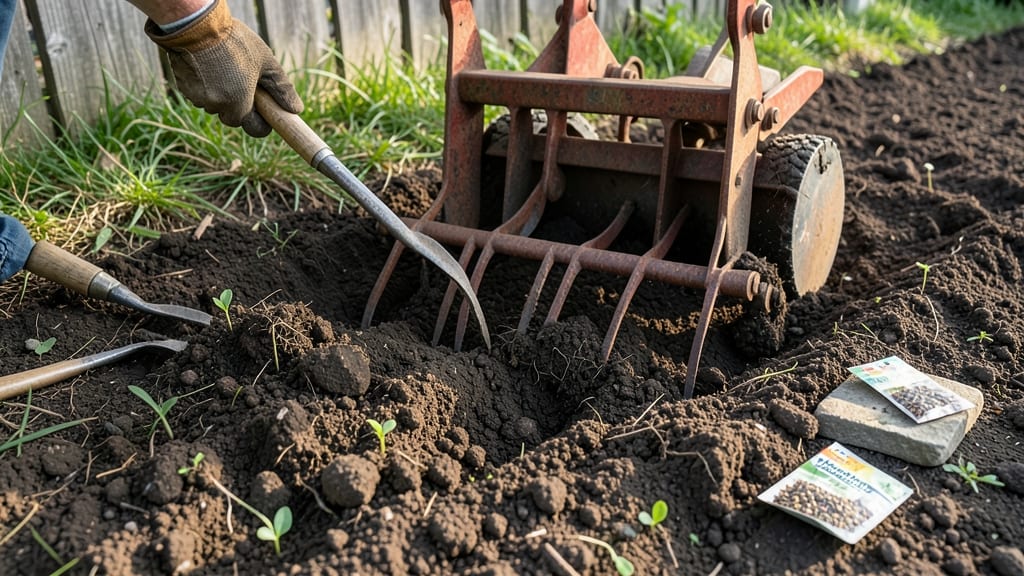
You don’t have to till a garden—no-till methods preserve soil structure, reduce erosion, and maintain organic matter, though tilling can help break up compacted soil or incorporate amendments in certain cases. The choice depends on soil health, garden goals, and maintenance effort.
Tilling disrupts the natural soil ecosystem by breaking up fungal networks and exposing organic matter to oxidation, which releases carbon. 🌱 However, no-till gardening builds soil fertility over time through mulching and cover crops, creating a more stable environment for roots.
I’ve seen gardens thrive with no-till after just one season of proper preparation, especially in clay-heavy soils where tilling would worsen compaction.
For those who still prefer tilling, consider using a broadfork or minimal disturbance techniques to reduce damage. This approach gives you some of the benefits of tilling—like incorporating compost—while preserving the soil’s structure.
The key is matching your method to your garden’s specific needs: heavy clay benefits from no-till, while sandy soils might need occasional loosening.
💡 In This Article
- How Tilling Affects Soil Structure and Microbial Life
- When and How to Use No-Till Gardening Techniques
How tilling affects soil structure and microbial life
Tilling physically disrupts the soil’s natural architecture by breaking apart fungal networks—called the mycorrhizal web—that connect plant roots and transfer nutrients. These beneficial fungi form intricate, thread-like structures that can span several inches underground, creating a 30-50% more efficient nutrient exchange system than roots alone.
When you till, you sever these connections, forcing plants to rebuild their relationships with soil microbes from scratch. 🌱
The immediate benefits of tilling—like improved aeration and easier weed removal—come at a cost. Exposing soil to air accelerates the breakdown of organic matter through oxidation, releasing stored carbon dioxide into the atmosphere. Studies show tilling can increase carbon loss by up to 20-30% annually compared to no-till methods.
Over time, this depletion reduces soil fertility, as organic matter acts as a reservoir for nutrients and moisture retention.
No-till gardening preserves this microbial ecosystem by maintaining the soil’s natural stratification. The top layer remains loose from mulch decomposition, while deeper layers stay undisturbed, creating a more stable environment for earthworms and beneficial bacteria.
In clay-heavy soils, no-till prevents the 10-15% compaction that tilling often worsens, allowing roots to penetrate deeper without resistance. The trade-off? No-till requires more upfront planning, like cover crops or sheet mulching, to build fertility.
For gardeners who still prefer tilling, tools like the broadfork offer a middle ground by loosening soil without inverting layers. This method preserves 60-70% of fungal networks while incorporating compost or amendments.
The key difference lies in the depth: broadforking typically affects only the top 8-12 inches, leaving deeper soil layers intact for microbial activity. 💫
Consider this: a well-managed no-till garden can achieve 2-3 times more organic matter over 5 years compared to tilled soil, thanks to reduced oxidation and continuous surface mulching. The microbial diversity in no-till plots often exceeds that of tilled soil by 30-40%, supporting healthier plant growth with less input.
This makes no-till particularly valuable for organic gardeners or those aiming for long-term sustainability.