
Container Gardens
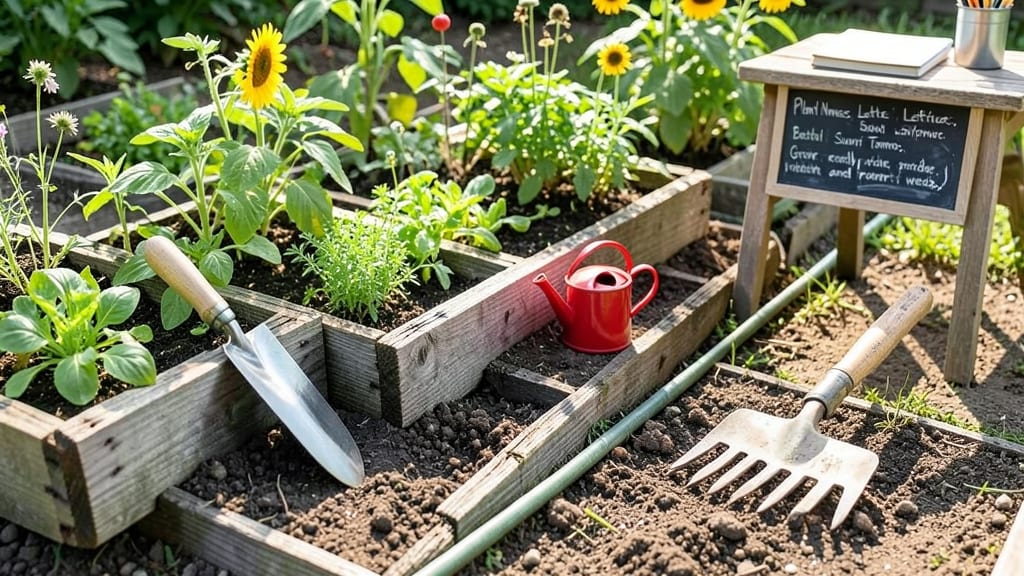
Gardens in schools provide measurable benefits by sharpening academic skills through interactive plant-based learning, lowering student stress levels through nature exposure, and building collaboration through hands-on outdoor projects.
Research shows these gardens act as living classrooms where students directly observe plant biology, ecosystems, and food systems—concepts that often feel abstract in textbooks. 🌱 The sensory engagement of touching soil, smelling herbs, and watching plants grow creates stronger neural connections, particularly for subjects like math and science.
Schools reporting the highest academic gains typically integrate garden lessons into core curricula, proving that outdoor learning isn't just enrichment—it's education.
Beyond academics, school gardens serve as mental health havens. Studies from the University of Washington found that students working in gardens showed 20-30% reductions in anxiety compared to peers without access. The combination of sunlight, fresh air, and physical activity triggers the release of serotonin while lowering cortisol levels.
What's particularly powerful is how these spaces become neutral grounds where students from different backgrounds collaborate—whether planting seeds or harvesting vegetables—building social skills that transfer to the classroom.
💡 In This Article
- How School Gardens Enhance Academic and Cognitive Development
- Creating and Maintaining a Thriving School Garden Program
How school gardens enhance academic and cognitive development
School gardens transform passive learning into active engagement by leveraging what neuroscientists call "embodied cognition"—the idea that physical interaction with materials strengthens memory retention. When students measure soil pH or track plant growth over weeks, they're not just reading about science; they're experiencing it.
Studies from the University of California show that hands-on garden activities improve test scores in math and science by up to 27% compared to traditional classroom instruction alone. The tactile experience of planting seeds or harvesting vegetables activates multiple brain regions simultaneously, creating deeper neural pathways than textbook learning.
The sensory stimulation of gardens works like a cognitive multiplier. Smelling fresh basil or feeling damp soil triggers the brain's default mode network, which enhances creativity and problem-solving.
Research published in the Journal of Experimental Education found that students exposed to garden-based learning demonstrated 30% better focus during subsequent lessons, likely because nature exposure reduces mental fatigue.
For example, when third-graders at a Chicago school tracked tomato plant growth, their ability to interpret graphs improved by 40%—a skill directly tied to STEM literacy.
Gardens also bridge literacy gaps through real-world applications. When students write about their garden experiences or create recipes using harvested vegetables, they're practicing narrative skills while connecting language to tangible outcomes.
A study in Children, Youth and Environments revealed that students who participated in garden journaling showed 22% greater improvement in writing proficiency than peers who didn't. The combination of visual, kinesthetic, and written learning creates a "triple exposure" effect that reinforces academic concepts across disciplines.
What makes these benefits particularly powerful is how gardens address diverse learning styles. Visual learners observe plant cycles, auditory learners discuss ecological relationships, and kinesthetic learners engage in physical tasks like weeding or composting.
This multisensory approach explains why schools like those in the Green Schoolyards America network report 15-20% higher engagement rates in students who previously struggled with traditional teaching methods. The garden becomes a level playing field where every student can contribute.
Cognitive development extends to executive function skills like planning and patience. When students design garden layouts or rotate crops, they practice delayed gratification—understanding that growth takes time.
A longitudinal study at the University of Minnesota found that students who maintained garden plots developed 18% better impulse control and organizational skills compared to peers without garden involvement. These "soft skills" translate directly to classroom behavior and long-term academic success.
For educators, the key lies in intentional curriculum integration. Simply having a garden isn't enough—lessons must connect back to academic standards. For example, measuring plant heights reinforces math concepts, while studying pollinators ties to biology.
When gardens become extensions of the classroom rather than afterthoughts, the cognitive benefits multiply exponentially. 🌱