
Tools
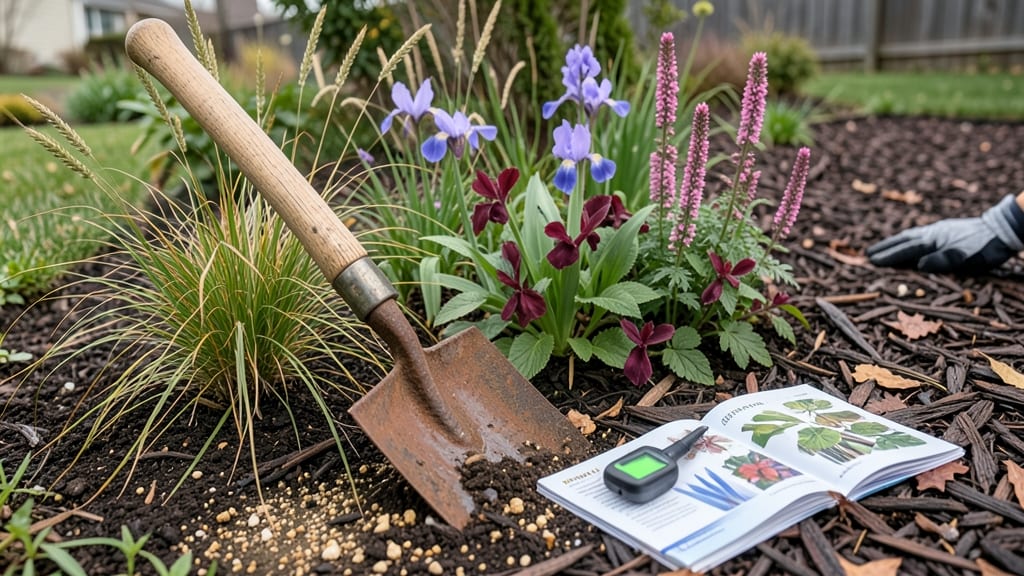
A perfect rain garden soil mix blends 60% native topsoil, 30% compost, and 10% coarse sand or perlite to balance drainage and moisture retention for plants like sedges and wildflowers. Adjust proportions based on your existing soil's texture and drainage needs.
A rain garden thrives on the right soil blend because it needs to handle both excess water and nutrient demands. The native topsoil provides essential minerals and microbial life, while compost boosts organic matter for root growth.
Sand or perlite creates air pockets, preventing compaction and ensuring water flows freely. 🌱 This mix also supports local ecosystems by mimicking natural wetland conditions, where plants like rushes and asters naturally grow. For heavy clay soils, increase the sand ratio to 15% for better drainage.
Pro tip: Test your existing soil's drainage by filling a jar halfway with soil, adding water, and timing how long it takes to drain. If water sits for more than 30 minutes, your soil needs more sand.
Conversely, if it drains in under 5 minutes, add compost to slow water flow and retain nutrients. Adjusting the mix based on these tests ensures your rain garden stays healthy and functional year-round.
💡 In This Article
- Why Soil Composition Matters in Rain Gardens
- Step-by-Step Guide to Mixing Rain Garden Soil
Why soil composition matters in rain gardens
The foundation of a thriving rain garden lies in its soil's ability to balance two critical functions: water retention and drainage. Native topsoil provides the structural backbone, containing essential minerals like potassium and phosphorus that support root development.
However, its natural composition often lacks sufficient organic matter to retain moisture during dry spells.
This is where compost steps in—it introduces humus, a spongy organic material that holds up to 20 times its weight in water while slowly releasing it to roots. 🌱 Without this organic boost, water would drain too quickly, leaving plants parched.
Coarse sand or perlite acts as the soil's circulatory system, creating macropores that prevent compaction—a common issue in rain gardens where heavy rainfall can compress particles. These air pockets allow oxygen to reach roots while ensuring excess water flows downward rather than pooling.
For example, a mix with 10% perlite can increase drainage rates by 30-40% compared to pure native soil. The texture of this blend should resemble a loamy soil—crumbly when dry but able to hold moisture without becoming soggy.
Clay-heavy soils, which drain at rates as slow as 0.1 inches per hour, may require up to 15% sand to improve permeability.
Native soil isn't just a filler—it contains beneficial microbes and mycorrhizal fungi that form symbiotic relationships with plant roots, enhancing nutrient uptake. These microorganisms thrive in slightly acidic to neutral pH ranges (6.0-7.5), which is why testing your soil's pH before mixing is crucial.
For instance, blue flag iris—common in rain gardens—prefers acidic conditions (pH 5.0-6.5), while sedges tolerate a broader range. Adjusting the compost type (e.g., using leaf mold for acid-loving plants) ensures the pH stays optimal for your chosen flora.
Drainage rates vary dramatically based on soil texture: sandy soils drain at 1-2 inches per hour, while clay soils may take over 6 hours. The ideal rain garden mix should drain at 0.5-1.5 inches per hour, allowing water to soak in without flooding.
To test this, fill a jar with your mixed soil, add water, and time the drainage. If water disappears in under 10 minutes, add more compost to slow it down; if it lingers for over 30 minutes, increase the sand ratio.
This balance is what keeps your garden functional during both heavy rains and dry periods.
Another critical factor is nutrient density. Compost provides nitrogen, phosphorus, and micronutrients that support vigorous growth, but the native soil's mineral content ensures long-term sustainability. For example, a 30% compost mix can supply 1-2% organic matter—enough to feed plants for 1-2 seasons without additional fertilization.
However, in sandy soils where nutrients leach quickly, consider adding biochar (a charcoal-like amendment) to lock in nutrients and improve water retention by up to 50%.
Visualize the ideal texture: when you squeeze a handful of mixed soil, it should hold its shape but crumble easily—a loamy consistency. This structure prevents root suffocation while maintaining moisture for plants like cardinal flower, which thrives in consistently damp conditions.
The blend also mimics natural wetlands, where organic detritus and mineral-rich sediments create the perfect habitat for native species. By understanding these interactions, you're not just building a garden—you're recreating a mini ecosystem that supports biodiversity and sustainable water management.