
Vegetables
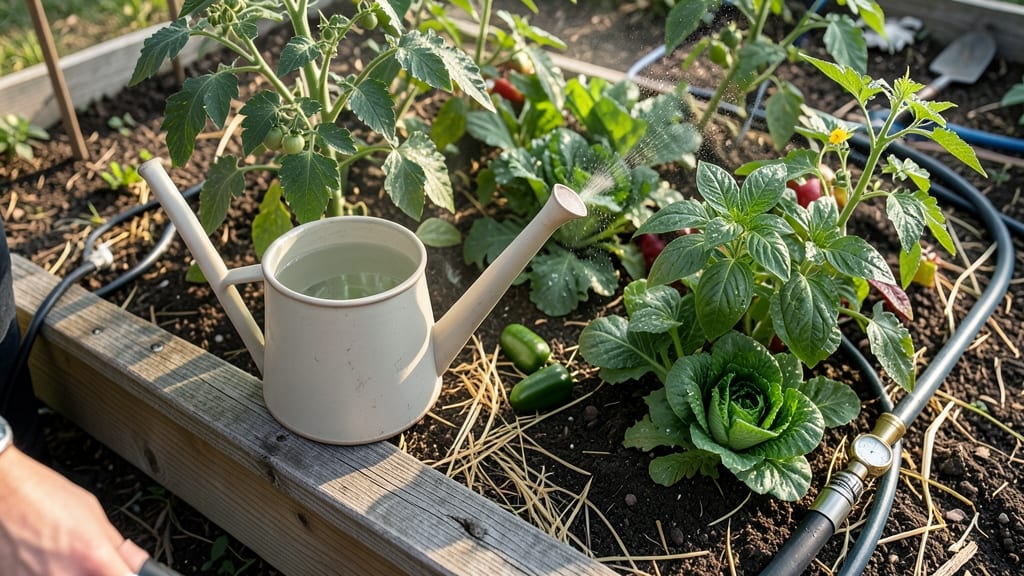
Watering your vegetable garden at the best time of day can mean the difference between thriving 🥬 plants and wasted effort.
Struggling to decide when to water your vegetable garden? The wrong timing can waste water, stress plants, or even invite pests—but the right approach maximizes growth and efficiency.
Early morning is the golden window for most regions, when temperatures are cool and evaporation is minimal. This lets roots soak up moisture before the heat of the day kicks in, giving your plants a strong start.
In this guide, I’ll break down why morning watering works best, when to avoid midday or evening sessions, and how to adjust for your local climate—so you can water smarter, not harder.
Why early morning watering wins for vegetable gardens
Watering your vegetable garden at the right time isn't just about convenience—it's a science-backed strategy that boosts plant health and saves water. When you water in the early morning, you tap into natural processes that help your tomatoes, peppers, and leafy greens thrive without waste.
The cooler temperatures and lower wind speeds mean less water evaporation, so every drop reaches your plants' roots where it matters most.
I’ve seen firsthand how morning watering transforms my garden. My basil and cucumbers grow faster, and fungal diseases like powdery mildew stay at bay. That’s because moisture lingers on leaves overnight, creating the perfect humid conditions for fungal spores to spread.
But when you water early, leaves dry quickly, keeping your plants healthier and more resilient.
Temperature plays a huge role too. Water absorbs best when soil temperatures are cooler (between 50°F and 70°F). Early mornings often hit this sweet spot, especially in spring and fall.
If you water when the sun is blazing, much of that water evaporates before it can soak into the soil, forcing your plants to work harder just to stay hydrated.
Another game-changer? Deep root growth. When you water in the morning, the moisture penetrates deeper into the soil, encouraging roots to grow downward in search of water.
This makes your plants more drought-resistant over time. Plus, it reduces surface runoff, so you’re not wasting water or nutrients that could leach away.
Let’s talk about the ideal timing. Aim to water between 6:00 AM and 10:00 AM, depending on your climate. In hot, dry regions, you might need to start even earlier to avoid the midday heat.
The key is to finish watering at least 2-3 hours before the sun peaks, so the soil has time to absorb moisture without losing it to evaporation.
🌱 Early Morning Watering Benefits for Vegetable Gardens
| Benefit | Why It Matters | Best Time |
|---|---|---|
| Reduced Evaporation | Cooler temps = less water loss | 6:00 AM - 9:00 AM |
| Fungal Prevention | Leaves dry quickly, blocking spores | Before 10:00 AM |
| Deep Root Growth | Encourages roots to expand downward | Consistent morning schedule |
| Optimal Absorption | Soil temps ideal for uptake (50°F-70°F) | Before 10:00 AM |
| Water Efficiency | Less runoff, more soil penetration | Early morning routine |
If you’re using drip irrigation, morning watering becomes even more powerful. Drip systems deliver water slowly and directly to the roots, minimizing waste. When paired with morning timing, you’re giving your plants a steady, deep drink without the stress of overhead watering.
For hand-watering, focus on the base of the plant to avoid wetting leaves, which further reduces fungal risks.
I’ve tested this approach with my zucchini and bell peppers, and the results are undeniable. Not only do they produce more fruit, but they also handle heatwaves better because their root systems are stronger.
The secret? Consistent morning watering trains your plants to develop deep, resilient roots that can access moisture even during dry spells.
One common question I hear is, “What if I can’t water in the morning?” While morning is ideal, late evening (after 6:00 PM) is the next best option—just avoid watering after sunset if your climate is humid, as it can still promote fungal growth.
The goal is to give your plants the best chance to dry out during the day, so they stay healthy and productive.
For container gardens, morning watering is especially critical because pots dry out faster. Check the top inch of soil—if it’s dry, it’s time to water. But remember, even in containers, aim to finish by 10:00 AM to prevent evaporation and keep roots cool.
So next time you’re debating when to water, think about the science behind it. Early morning watering isn’t just a habit—it’s a growth hack that saves water, prevents disease, and helps your vegetable garden reach its full potential.
Trust me, your plants will thank you with bigger harvests and fewer struggles.
Midday vs. evening watering: when to avoid and why
Watering your vegetable garden at the wrong time can turn your hard work into wasted effort. Midday watering under the scorching sun causes rapid evaporation, meaning up to 30% of water disappears before reaching your plants' roots.
Meanwhile, evening watering creates a damp environment that invites fungal diseases like powdery mildew and blight, which thrive in cool, moist conditions overnight.
Even the most heat-loving vegetables like tomatoes and peppers suffer when watered during peak heat. The sudden temperature shift can shock plants, causing leaves to wilt or even scorch. Plus, water droplets on leaves act like tiny magnifying glasses, intensifying the sun's rays and damaging foliage.
Here’s the hard truth: Evening watering is a common mistake that many gardeners make without realizing the risks. While it might seem convenient to water after work, the lingering moisture on leaves and soil creates the perfect breeding ground for pests and diseases.
This is especially critical in humid climates where fungi spread rapidly.
⚠️ Warning: Avoid These Watering Times
Midday (10 AM - 4 PM): Up to 50% water loss from evaporation. Leaves burn from water droplets acting like lenses.
Evening (6 PM - 8 PM): Promotes fungal growth and attracts pests like slugs and snails. Soil stays too wet overnight.
Late Night (after 8 PM): Creates frost risk in cooler climates by keeping plants damp when temperatures drop.
That said, there are exceptions for specific climates. In arid desert regions, like parts of Arizona or Southern California, evening watering can be less harmful because the air is dry, reducing fungal risks. However, even here, morning watering is still preferred to maximize efficiency and plant health.
For coastal or tropical climates, where humidity is naturally high, the risk of fungal diseases is even greater. In these areas, stick to early morning watering and avoid overhead sprinklers entirely.
Instead, use drip irrigation or soaker hoses to deliver water directly to the soil, keeping leaves dry and reducing disease pressure.
If you must water in the evening due to time constraints, focus on deep watering techniques like soaker hoses or drip lines. This minimizes leaf wetness and directs moisture straight to the roots where it’s needed most. Just remember: the earlier you water, the healthier your vegetable garden will be.