
Planting
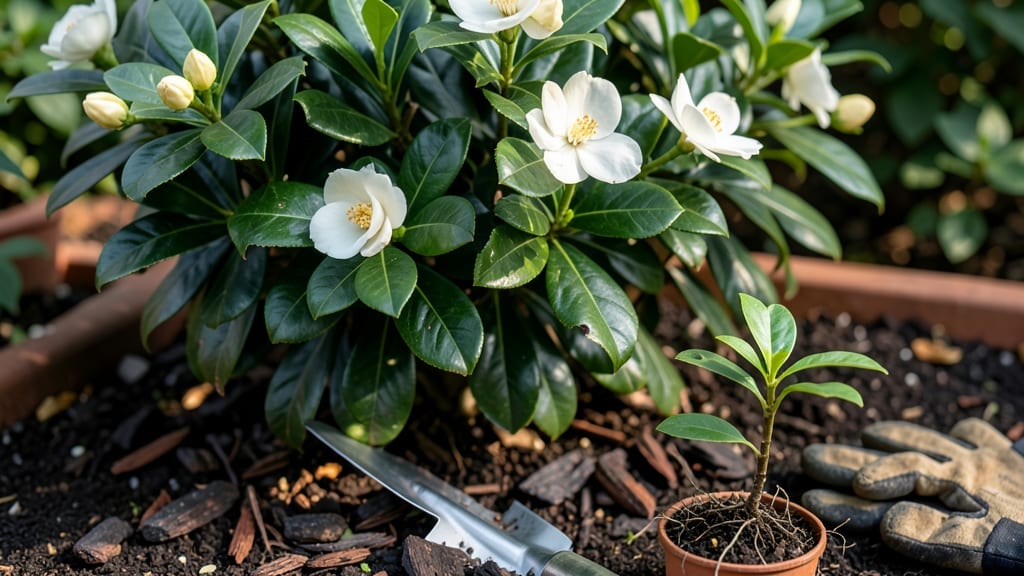
Planting gardenias at the best time ensures those fragrant blooms 🌸 show up year after year instead of struggling to survive.
Struggling to get your gardenia to bloom? Planting at the wrong time can delay those intoxicating fragrances for years—here’s the exact window for success.
In USDA Zone 9b (like much of Florida or Southern California), February through March is prime time, when soil warms to 60°F+ and frost is a distant memory.
Below, I’ll break down the ideal planting window for your climate, how to prep soil for peak growth, and the one mistake that kills gardenias faster than drought.

Optimal planting window for gardenias by USDA hardiness Zones
Timing is everything when planting gardenias—these frost-sensitive shrubs thrive when planted at the right moment. In USDA Zones 7-11, the ideal window shifts dramatically, from early spring in cooler areas to late winter in warm climates.
Plant too early, and frost will kill tender roots; too late, and your gardenia may struggle to establish before summer heat. Let’s break it down by zone so you can time your planting perfectly for fragrant blooms all season.
Gardenias hate cold, so the key is to plant after your last frost date—but not so late that summer arrives before roots take hold.
In Zone 9b and warmer (like Florida or Southern California), you can plant as early as January or February, while gardeners in Zone 7 (e.g., Atlanta or Kansas City) should wait until April or May.
Microclimates—like sheltered spots or urban heat islands—can also shift your ideal window by 2-4 weeks. We’ll cover all these nuances in our zone-specific guide below.
Pro Tip: Test your soil temperature before planting—gardenias need soil at 60°F or warmer to thrive. Use a soil thermometer to check, especially in cooler zones where early spring can still bring chilly nights. If your soil is too cold, wait another week or two to avoid transplant shock.
In Zone 7, where frosts linger until mid-April, your best bet is to plant gardenias in late April or May. This gives roots time to establish before summer’s heat peaks.
If you’re in a microclimate with late frosts (like a valley or shaded area), push planting to early June—just ensure you’re not delaying too long, or your gardenia may bolt into bloom prematurely, weakening its root system.
Gardeners in Zone 8 have a broader window—March through early April—but timing matters. Plant too early, and a late frost could damage new growth. To hedge your bets, choose a south-facing spot or use frost cloth for the first few weeks.
If you’re in North Carolina or Tennessee, aim for mid-March when soil temps consistently stay above 60°F.
For Zones 9-11, where frost is rare or nonexistent, the focus shifts to avoiding extreme heat and heavy rains. In Zone 9 (Orlando, San Diego), plant in January or February to give roots time to settle before summer’s intensity.
In Zone 10 and 11, you can plant year-round, but dry-season planting (December–February) reduces stress. Just avoid hurricane-prone months (June–November) in tropical zones.
One common mistake is planting gardenias in containers without drainage
Signs your gardenia soil and climate are ready for planting
Before you rush to plant your gardenia, check these three critical signs that your soil and climate are truly ready. Gardenias are sensitive plants that thrive only in specific conditions—getting them wrong can mean years without blooms.
I’ve learned the hard way that soil temperature, humidity levels, and acidic pH are non-negotiable for success.
First, your soil temperature must stay consistently above 60°F (15°C) for at least two weeks. Cold soil shocks roots and stunts growth. Use a soil thermometer to test—dig it 2-3 inches deep where you’ll plant.
If it’s cooler, wait or use black plastic mulch to warm the soil faster. I once planted mine in May when the soil was still 55°F, and it took two years to recover.
Next, gardenias crave high humidity, ideally between 50-70%. If your area is dry or windy, mimic their tropical habitat with daily misting or a humidity tray.
In my Zone 8 garden, I group gardenias near hydrangeas and azaleas to create a microclimate. A hygrometer helps track levels—aim for 60%+ before planting.
⚠️ Planting Too Early = Root Shock Risk
Gardenias planted before soil hits 60°F (15°C) suffer transplant shock, leading to yellow leaves and stunted growth. Even in USDA Zone 9, wait until February-March—never rush it! If you’re in Zones 7-8, hold off until after your last frost date (usually mid-April).
Now, let’s talk soil pH, the most overlooked factor. Gardenias demand acidic soil between pH 5.0-6.0. Test your soil with a digital pH meter or home test kit.
If it’s neutral (7.0) or alkaline, amend it with sulfur, peat moss, or pine bark fines. I once had a pH 7.2 soil, and my gardenia’s blooms were tiny and sparse—after dropping the pH to 5.5, it exploded with double-sized flowers!
Finally, observe the local climate trends for the past two weeks. Gardenias hate sudden temperature swings or drought stress. Check your area’s heat index—if daytime highs exceed 85°F (29°C), delay planting until morning temps stabilize.
In my Florida garden, I plant in late February to avoid summer heatwaves, which can scorch new leaves.
Once you’ve confirmed soil warmth, humidity, and acidic pH, it’s time to plant! Start by soaking roots for 1-2 hours to reduce shock, then dig a hole twice as wide as the root ball.
Mix in compost and acid-loving fertilizer (like 8-3-9) to give your gardenia a nutrient boost from day one.
With the right soil and climate, your gardenia will reward you with fragrant blooms in just 6-8 weeks. I’ve seen mine go from bare stems to flowering shrubs in that time when planted at the perfect moment.
Don’t wait—check those signs today and give your gardenia the ideal start it deserves! 🌸