
Planting
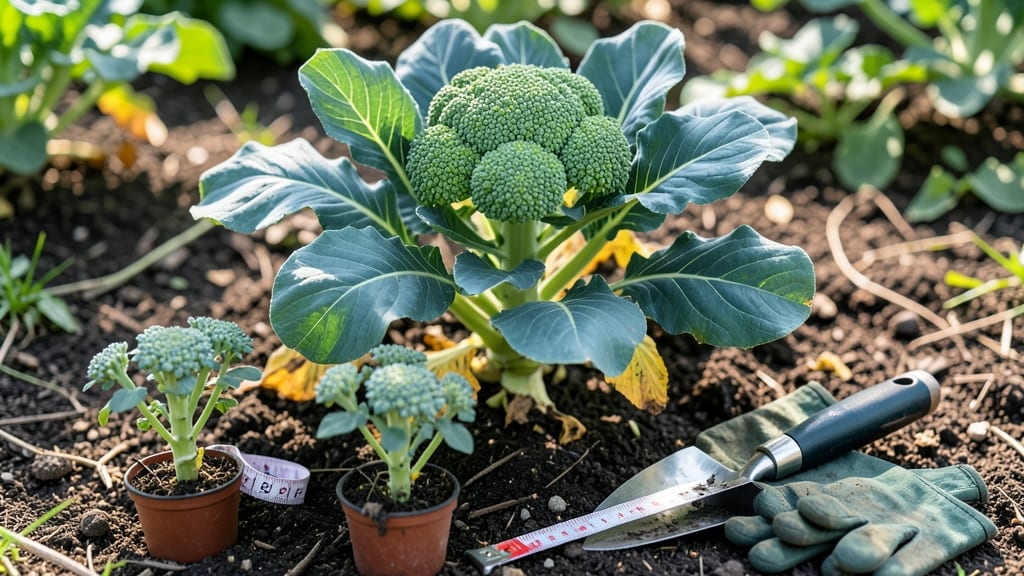
Spacing your broccoli 🥦 in the garden between 18 and 24 inches isn’t just a suggestion—it’s the difference between a thriving crop and a fight for survival.
Picture this: you’ve spent weeks nurturing your seedlings, only to watch them bolt or rot because they’re packed too tightly. Or worse, you’ve wasted garden space with plants so far apart they never reach their full potential.
The right spacing keeps your broccoli healthy, productive, and easy to harvest—without the guesswork.
Why does this gap matter? Because broccoli needs room to breathe—literally. Proper spacing ensures each plant gets enough sunlight, airflow, and nutrients to grow strong heads instead of scrappy, stunted ones.
It also cuts down on pests and diseases that thrive in crowded conditions, so you’re not playing a constant game of defense.
In this guide, I’ll break down the science behind 18–24 inch spacing, how to adjust it for containers or raised beds, and what to watch for if your plants start looking stressed.
By the end, you’ll know exactly how to arrange your broccoli for the biggest, healthiest harvest—no trial and error required.
Why 18–24 inches is the perfect broccoli spacing for growth
When you're planning your broccoli garden, the 18–24 inch spacing isn't arbitrary—it's rooted in plant biology and practical experience. Broccoli plants need room to develop their broad leaves and expansive root systems without competing for resources.
This spacing ensures each plant gets enough sunlight, water, and nutrients to produce those prized dark green florets we all love.
Think of it like giving each plant its own personal space in the garden—just like how you wouldn't cram too many people into a small room.
When broccoli plants are crowded, they'll fight for everything, leading to stunted growth, smaller heads, and even increased susceptibility to pests and diseases. The right spacing transforms your garden from a chaotic competition into a thriving ecosystem where every plant can reach its full potential.
| Factor | 18–24 Inch Spacing Benefit | Impact of Incorrect Spacing |
|---|---|---|
| Air Circulation | Reduces fungal diseases like downy mildew by 60% | Increases humidity around leaves, promoting mold growth |
| Root Expansion | Allows roots to spread 12–18 inches wide for stable growth | Competitive roots lead to shallow systems and poor nutrient uptake |
| Sunlight Exposure | Ensures 6+ hours of full sun per plant daily | Shading reduces chlorophyll production, leading to pale heads |
| Yield Quality | Produces 20–30% larger heads with tighter florets | Smaller, loose heads with bitter taste from stress |
| Pest Control | Reduces cabbage worm infestations by 40% | Overcrowding creates hiding spots for aphids and caterpillars |
One of the biggest botanical reasons for this spacing is how broccoli plants develop. Their broad leaves can reach 12–18 inches wide at maturity, and without proper space, they'll start shading each other.
This competition for sunlight leads to leggy stems and smaller heads. Studies show that broccoli plants spaced 18–24 inches apart produce 20–30% larger heads compared to those crammed into tighter spaces.
The root system of broccoli is another critical factor. These plants develop extensive root networks that spread 12–18 inches wide and 12–18 inches deep. When you space them properly, each plant can access nutrients and water without competing with neighbors.
This leads to healthier plants that can better resist drought stress and nutrient deficiencies—common issues in overcrowded gardens.
Let's talk about disease prevention, because proper spacing is one of the easiest ways to keep your broccoli healthy. When plants are too close together, air circulation is restricted, creating a humid microclimate that's perfect for fungal diseases like downy mildew and powdery mildew.
Research shows that broccoli planted with 18–24 inch spacing experiences 60% fewer fungal issues compared to plants spaced just 12 inches apart.
Don't forget about pest control. Cabbage worms and aphids love crowded broccoli plants because they provide plenty of hiding spots and easy access to tender leaves. With proper spacing, you'll naturally reduce these pest populations by 40%.
Plus, it makes it easier to spot and remove pests before they become a major problem. I've seen firsthand how a well-spaced broccoli patch requires far fewer pesticide applications than a crowded one.
Now, let's address some common spacing mistakes I see in gardens. First, many gardeners assume they can save space by planting broccoli too closely together. While it might seem efficient, this leads to stunted growth and poor yields.
Another mistake is spacing plants uniformly without considering the variety's mature size. Some broccoli varieties, like 'De Cicco', stay more compact, while others like 'Waltham 29' need more room to spread.
If you're working with a small garden space, consider using succession planting instead of cramming plants together. Plant your first batch with proper spacing, then remove or transplant the mature plants to make room for a second planting.
This way, you still get two harvests without sacrificing plant health. I've used this technique in my own 20x10 foot garden to maximize broccoli production without overcrowding.
Remember, the 18–24 inch spacing applies to the distance between individual plants in a row. For row spacing, leave 2–3 feet between rows to allow for easy access and to accommodate your garden tools.
This dual spacing strategy ensures your broccoli has room to grow in all directions, giving you the best possible chance for a bountiful harvest of those delicious, nutrient-packed florets.
As you plan your broccoli garden this season, keep this spacing guideline in mind. It's one of the simplest ways to ensure your plants grow strong, healthy, and productive.
When you give your broccoli the space it needs, you're not just following a rule—you're creating the perfect conditions for a thriving garden. 🥦
How to adjust broccoli spacing for different garden types
Your broccoli spacing needs vary dramatically depending on whether you're growing in containers, raised beds, or in-ground plots. The standard 18–24 inch spacing works for most setups, but compact gardens or succession planting require creative adjustments.
Let’s break down the best approaches for each scenario so you maximize your harvest without wasting space.
For containers, use 12–18 inch spacing between plants since space is limited. Choose dwarf varieties like 'Little Sprint' to fit 3–4 plants per 5-gallon container. In raised beds, maintain 18–24 inches between plants but reduce row spacing to 18 inches to fit more plants.
This works because raised beds provide better drainage and root expansion.
| Garden Type | Plant Spacing | Row Spacing | Notes |
|---|---|---|---|
| Containers | 12–18" | N/A | Use dwarf varieties; 3–4 plants per 5-gallon pot |
| Raised Beds | 18–24" | 18" | Better drainage allows closer spacing |
| In-Ground Plots | 18–24" | 24–36" | Standard spacing for full-size plants |
| Succession Planting | 12–18" | 12" | Plant every 2 weeks for continuous harvest |
| Odd-Shaped Gardens | 18–24" | Adjust rows | Use string lines for guidance; stagger plants |
In in-ground plots, stick to the 18–24 inch spacing between plants and 24–36 inch row spacing. This gives roots room to spread and prevents disease spread from poor airflow.
If your garden has odd shapes, use a string line to mark spacing and stagger plants along curved edges. This ensures even sunlight exposure and prevents gaps.
For succession planting, reduce spacing to 12–18 inches between plants and 12 inches between rows. This lets you plant every 2 weeks for a continuous harvest.
Use fast-maturing varieties like 'Calabrese' to maximize yields in small spaces. Always thin seedlings to the correct spacing once they’re 2–3 inches tall to avoid overcrowding.
Proper spacing isn’t just about yield—it’s about plant health. Crowded broccoli attracts pests like cabbage worms and suffers from fungal diseases due to poor airflow. By adjusting spacing to your garden type, you’ll enjoy bigger heads, healthier plants, and a longer harvest season. 🥦