
Shrubs
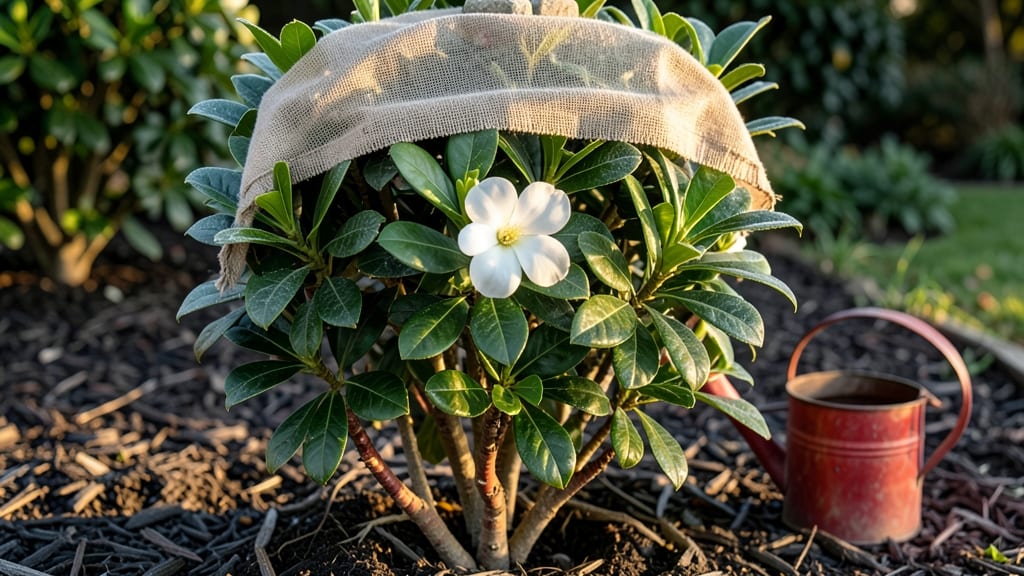
A frost-proof gardenia hedge starts with cold-resistant varieties like Gardenia jasminoides 'Kleim's Hardy' or Gardenia augusta 'Radicans', planted 3-4 inches deeper than the root ball, and protected with winter mulch or windbreaks to shield roots from freezing.
Cold-hardy gardenias survive frost through a combination of genetic resilience and smart planting. 🌱 These varieties have been bred to withstand temperatures down to 15°F, making them ideal for zones 7-9.
The deeper planting buries the root crown below the frost line, while mulch acts like a thermal blanket—organic options like straw or wood chips work best. I’ve found that pairing these techniques with a windbreak (like a lattice fence) can push hardiness another 2-3 zones further north.
What sets these gardenias apart is their ability to regenerate quickly after winter damage. Unlike tropical varieties, they develop thicker stems and more robust root systems over time, which helps them bounce back faster. For best results, I recommend planting in early fall to let roots establish before winter hits.
💡 In This Article
- Cold-Hardy Gardenia Varieties for Northern Climates
- Planting and Winterizing Techniques for Frost Resistance
Cold-hardy Gardenia varieties for northern climates
Cold-hardy gardenias like Gardenia jasminoides 'Kleim's Hardy' and Gardenia augusta 'Radicans' have evolved unique physiological adaptations that let them survive winter freezes. Their leaves contain higher concentrations of antioxidants like flavonoids, which protect cell membranes from frost damage by reducing ice crystal formation inside plant tissues.
These varieties also develop thicker, waxier cuticles on their leaves that create a protective barrier against cold winds and desiccation.
The real game-changer is their root system. Unlike tropical gardenias with shallow roots, these cold-hardy varieties grow deeper, fibrous roots that can penetrate 12-18 inches below the soil surface. This allows them to access moisture and nutrients even when surface soil freezes.
The root crown (where stems meet roots) is also positioned to regenerate quickly after winter dormancy, which is why deeper planting (3-4 inches below soil line) becomes so critical.
Breeding programs have made significant progress in creating frost-resistant gardenias by cross-pollinating tropical varieties with native North American shrubs. The result is plants that can handle 15-20°F temperatures—pushing their hardiness from USDA zones 10-11 up to zones 7-9.
For example, 'Kleim's Hardy' was developed through this process and now dominates northern nurseries because it maintains its signature creamy white blooms and intoxicating fragrance while surviving winters that would kill traditional gardenias.
What most gardeners don't realize is how leaf structure plays a role. These cold-hardy varieties have smaller, thicker leaves with fewer stomata (pores) that minimize water loss during winter. The leaves also contain higher levels of osmoprotectants like proline, which help stabilize proteins and prevent cellular damage when temperatures drop.
This is why you'll often see them keeping their foliage longer into fall compared to tropical gardenias.
When comparing varieties, consider these key factors:
- Flower size: 'Radicans' produces slightly smaller blooms (2-3 inches) but blooms more prolifically in cooler climates
- Growth habit: 'Kleim's Hardy' grows 3-5 feet tall with dense branching, ideal for hedges
- Fragrance intensity: Both varieties maintain strong scent, but 'Radicans' has a slightly citrusier note
The secret to their winter survival lies in their ability to enter a deeper dormancy state. While tropical gardenias might suffer leaf burn at 28°F, these cold-hardy varieties can withstand 15°F with only minor damage to their stems.
Their buds remain protected in the leaf axils, ready to burst forth in spring with minimal intervention.