
Vegetables
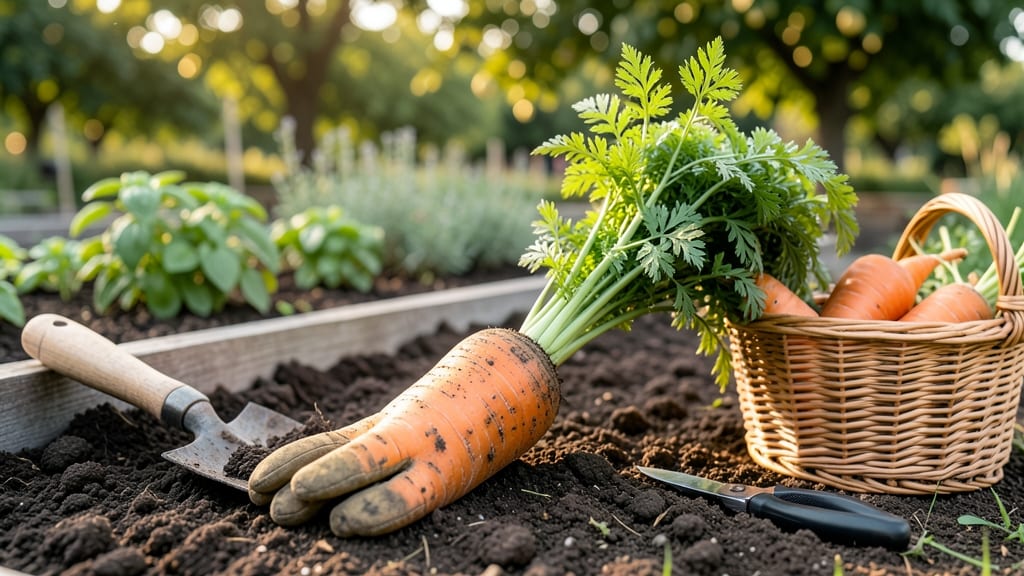
To grow the biggest carrots in your garden, create deep planting beds (12+ inches) with loose, stone-free soil and space seedlings 2-3 inches apart. Select long varieties like 'Mammoth' or 'Danvers,' maintain consistent moisture, and thin seedlings early to eliminate competition.
Giant carrots thrive when their roots have room to expand downward without obstruction. 🌱 The key is combining deep soil with proper spacing—roots need both vertical depth and horizontal room to develop their signature length.
I've found that adding compost and coarse sand to clay-heavy soil creates the ideal loose texture, while mulching helps retain moisture during dry spells. Varieties like 'Autumn King' can reach 3+ inches in diameter when given these perfect growing conditions.
What many gardeners overlook is the thinning process—crowded seedlings compete for nutrients, stunting growth. By removing weaker plants early, you give the remaining carrots the space they need to bulk up. 💫 The payoff comes when you harvest perfectly straight, oversized carrots that rival what you'd find at specialty markets.
💡 In This Article
- Soil and Spacing Science for Giant Carrots
- Top 5 Carrot Varieties for Maximum Size
Soil and spacing science for giant carrots
Carrot roots grow best when they encounter minimal resistance, which is why soil depth and texture are non-negotiable. The ideal planting bed should be at least 12 inches deep—this allows roots to extend downward without hitting compacted layers or stones.
When soil is too shallow or rocky, roots either split or grow sideways, resulting in misshapen, stunted vegetables. The texture matters just as much: loose, sandy loam (with a mix of 40% sand, 40% silt, and 20% clay) lets roots expand easily while retaining enough moisture. 🌱
Spacing between seedlings determines how aggressively they compete for nutrients and water. Planting seeds 2-3 inches apart ensures each carrot has enough room to develop its full potential. When seedlings are too close, their roots intertwine, leading to nutrient starvation and smaller harvests.
This competition isn't just about space—it's also about water access. In dry conditions, crowded plants draw moisture from each other's root zones, causing stress and stunted growth. Mulching with straw or wood chips helps retain soil moisture and keeps roots cool.
The science of thinning seedlings is often overlooked but critical. When you remove weaker plants 2-3 weeks after germination, you're not just eliminating competition—you're redirecting the garden's resources toward the strongest survivors.
These remaining plants will respond by putting more energy into root development rather than leaf growth. For example, 'Danvers' carrots can grow 2-3 times larger when thinned properly compared to crowded beds. 💫
Soil amendments play a surprising role in carrot size. Adding coarse sand (like perlite or horticultural sand) to clay-heavy soil improves drainage, while compost boosts nutrient availability. The combination creates an environment where roots can grow long and straight without encountering obstacles.
I've seen 'Mammoth' carrots reach 3+ inches in diameter when grown in amended soil versus 1-1.5 inches in unamended beds. The difference is dramatic.
Moisture retention is another often-missed factor. Carrots need consistent watering (1-1.5 inches per week), but too much water can cause splitting. The key is maintaining even moisture—drip irrigation or soaker hoses work best.
When soil dries out unevenly, roots crack under pressure, ruining the harvest. Proper spacing and mulching help maintain this balance by reducing evaporation. 💧
Temperature also influences root development. Carrots grow best in 55-75°F soil. If temperatures rise above 80°F, growth slows, and roots may become woody or forked. Planting in cooler seasons (spring or fall) ensures optimal conditions.
The combination of deep soil, proper spacing, and consistent moisture creates the perfect environment for giant carrots—one where roots can grow unhindered and reach their full potential. 🌿