
Tools
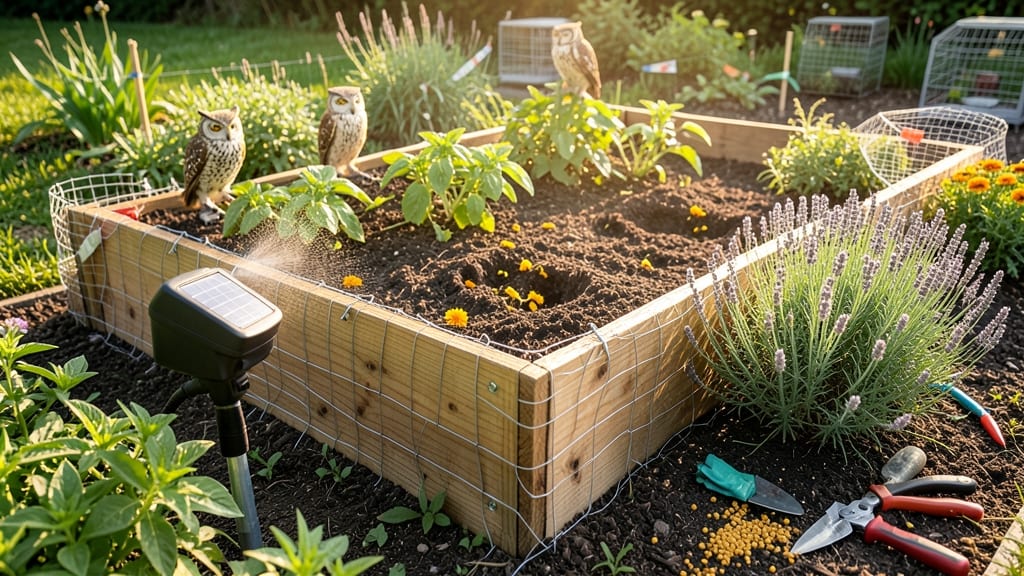
For effective garden animal control, use humane methods like live-catch cages or natural repellents such as peppermint oil, garlic spray, or ultrasonic devices to safely deter pests. Begin with physical barriers for small animals, then move to targeted solutions as needed.
Effective garden animal control starts with understanding which pests you're dealing with—rabbits, squirrels, or raccoons each respond differently to deterrents. 🐿️ Physical barriers like chicken wire or fencing work best for small animals, while larger pests often require scent-based repellents or motion-activated sprinklers.
The key is consistency: repellents need reapplication every few weeks, and traps should be checked daily to avoid stressing the animals. I’ve found that combining methods—like placing traps near repellent-sprayed areas—doubles effectiveness without cruelty.
Seasonal adjustments matter too. Spring and summer bring more foraging pests, so focus on fresh repellents like vinegar-soaked rags for cats or chili pepper sprays for deer. 🌱 In winter, rodents seek shelter, making live traps and habitat modification (like sealing entry points) your best bet.
Always prioritize humane solutions—even commercial products should be labeled non-toxic, and DIY recipes (like predator urine blends) can be just as effective when properly applied.
💡 In This Article
- How Humane Traps and Repellents Work Against Common Garden Pests
- Best Garden Animal Deterrents by Pest Type and Season
How humane traps and repellents work against common garden pests
Humane traps rely on animal behavior—most use scent-based lures or trigger mechanisms designed to mimic natural instincts.
For example, live-catch cages often include food bait like peanut butter or seeds, which trigger foraging behaviors in squirrels and rabbits. 🐿️ The key is the trap's design: spring-loaded doors close gently when the animal steps on a pressure plate, preventing injury.
These traps work best when placed along animal travel routes, like fence lines or near burrow entrances, where pests naturally pass through. Timing matters too—check traps every 12-24 hours to avoid overheating or dehydration, especially in warm climates.
Repellents leverage olfactory senses—animals like raccoons and deer have an incredible sense of smell, up to 10,000 times more sensitive than humans.
Peppermint oil, for instance, contains menthol that masks scents pests use to locate food, while garlic spray releases sulfur compounds that irritate their respiratory systems. 🌿 Ultrasonic devices emit high-frequency sounds (typically 20-50 kHz) that are inaudible to humans but create discomfort for rodents and rabbits.
The effectiveness depends on placement: ultrasonic emitters should be within 30 feet of target areas, and repellents need reapplication every 2-4 weeks or after heavy rain.
What most people don't realize is how context affects these methods.
For example, raccoons are highly intelligent and may learn to avoid traps over time, so rotating trap locations helps. 🦝 Similarly, repellents like chili spray work best when applied to plants or barriers—not directly on soil, where rain can dilute them.
The science shows that combining methods (e.g., traps near repellent-sprayed zones) creates a "buffer zone" that confuses pests, making your garden less appealing. This layered approach mimics how nature uses multiple deterrents, like predator scents and territorial markers, to protect resources.
Seasonal factors also play a role in trap and repellent performance. In spring, when animals are more active, repellents need stronger concentrations. 🌱 During winter, when food is scarce, even mild deterrents like vinegar-soaked rags can deter cats, while live traps become more effective as animals seek shelter.
The key is adapting your strategy: use motion-activated sprinklers in summer to disrupt foraging patterns, but switch to habitat modification (like sealing entry points) in colder months when pests focus on nesting. Understanding these patterns lets you stay one step ahead of garden invaders.
For DIY enthusiasts, homemade repellents can be just as effective when formulated correctly.
A blend of 1 part castor oil to 2 parts water with a few drops of hot sauce creates a natural deterrent for deer and rabbits, while predator urine (like fox or coyote) mimics territorial warnings. 💡 The critical factor is consistency: animals remember scents and patterns, so reapplying repellents and rotating trap locations keeps them guessing.
This psychological disruption is why even "low-tech" solutions like hanging wind chimes (which create unpredictable noise) can work—pests avoid areas that feel unpredictable.
Ultimately, the most successful garden animal control strategies blend science with practicality.
By understanding how pests perceive their environment—through smell, sound, and movement—you can design a defense system that feels overwhelming to them but harmless to your plants. 🌱 The goal isn't just to repel or capture, but to create an ecosystem where your garden becomes the last place they'd want to visit.
This approach ensures your efforts are both effective and ethical, protecting your hard work without causing unnecessary stress to wildlife.