
Aphids
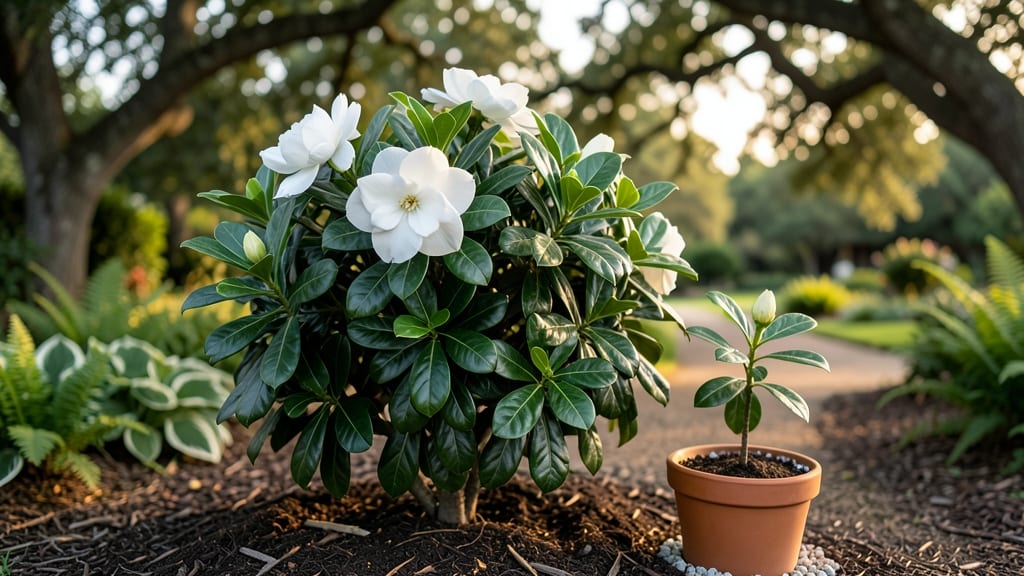
A gardenia’s height and width determine how you prune, where you plant it, and whether it’ll fit in your garden or pot 🌸 — and these dimensions vary wildly by variety.
If you’ve ever struggled to maintain your gardenia’s shape or wondered why it’s growing wildly out of control, understanding its natural growth habit is the key to pruning success. Some varieties stay compact, while others sprawl like vines, and knowing the difference saves hours of frustration.
For example, Gardenia jasminoides—the most common type—typically reaches 3 to 6 feet tall with a spread of 3 to 5 feet, but dwarf varieties like ‘Kleim’s Hardy’ max out at just 2 to 3 feet.
Meanwhile, Gardenia fortuniana can stretch up to 8 feet wide if left unchecked, making it a poor choice for small containers.
Below, I break down exact height and width ranges for popular gardenias, how sunlight and pruning affect their growth, and the spacing rules you need to keep them healthy—and in bounds.

Gardenia variety height and width: exact growth charts by type
Understanding your gardenia’s natural growth habit is the first step to keeping it lush and blooming. These tropical beauties vary wildly—from compact dwarf varieties perfect for containers to tall, sprawling shrubs that need room to shine. The key? Matching your pruning strategy to the variety’s mature size.
For example, the ‘Kleim’s Hardy’ stays tidy at 3–4 feet, while Gardenia jasminoides can reach 6 feet if left unchecked. Let’s break down the exact dimensions so you can plan your garden layout—and pruning schedule—like a pro.
Most gardenias reach maturity in 3–5 years, but their growth rates depend on sunlight, soil pH, and variety. A dwarf gardenia might max out at 2 feet, while a standard type could sprawl 5 feet wide.
The width-to-height ratio is critical: some varieties spread wider than they grow tall, while others stay neatly upright. Knowing these details helps you avoid overcrowding and ensures optimal airflow to prevent fungal diseases like powdery mildew.
Below, you’ll find exact growth charts for the most popular types, including pruning tips tailored to each.
The ‘Kleim’s Hardy’ gardenia is my top pick for small gardens or containers. Its compact 3–4 foot stature makes it ideal for patios or foundation plantings, and its moderate growth rate means you won’t spend hours pruning. I’ve seen it thrive in USDA Zone 7–10 with minimal winter protection.
The secret? A thick layer of mulch to insulate roots and keep soil acidic. For larger spaces, the ‘Fortuniana’ variety adds drama with its 6-foot height and sprawling branches, but it demands more room—and more pruning—to keep it from becoming a tangled mess.
If you’re growing gardenias in containers, choose dwarf varieties like ‘Veitchii’ or ‘Radicans’. These stay under 3 feet tall and wide, perfect for balconies or small porches.
Just remember: container gardenias dry out faster, so water every 2–3 days in summer and use a well-draining potting mix with perlite. For in-ground plantings, space standard gardenias 5–6 feet apart to allow airflow and reduce disease risk. I’ve learned the hard way—crowding leads to powdery mildew and fewer blooms!
Pruning is where most gardeners trip up. For ‘Kleim’s Hardy’, I prune lightly after flowering to shape the shrub and encourage new growth. But for ‘Fortuniana’, I take a more aggressive approach in late winter, cutting back 1/3 of the oldest stems to rejuvenate the plant. The key?
How to prune gardenias based on their natural growth habit
Pruning gardenias isn’t one-size-fits-all—each variety grows differently, and cutting at the wrong time or in the wrong way can stunt blooms or encourage leggy growth. For example, the sprawling Gardenia jasminoides ‘Fortuniana’ needs completely different pruning than the compact ‘Radicans’ variety.
Understanding your plant’s natural height and width helps you prune to encourage its best form while preventing overgrowth.
Start by identifying your gardenia’s mature size: ‘Fortuniana’ can reach 6–8 feet tall with a 5–7 foot spread, while ‘Radicans’ stays under 3 feet tall and wide.
Pruning too aggressively on a dwarf variety can turn it into a leggy mess, while neglecting a sprawling type can lead to tangled branches blocking sunlight from the center. Your goal is to shape the plant while preserving its natural growth habit.
⚠️ WARNING: Pruning Mistakes That Kill Gardenias
Never prune after early summer—this removes next year’s flower buds. ‘Fortuniana’ needs heavy pruning in late winter to control its width, while ‘Radicans’ only needs light shaping after blooming. Over-pruning any variety can lead to sparse blooms or weak stems that flop under flower weight. Always use sterilized, sharp pruners to avoid disease.
For sprawling varieties like ‘Fortuniana’, focus on width control first. In late winter (before buds swell), cut back 1/3 of the oldest branches to the ground to encourage new growth from the base.
This prevents the plant from becoming too wide for its space. Use bypass pruners for clean cuts, and always make cuts just above a leaf node or outward-facing bud to promote bushiness.
Compact varieties like ‘Radicans’ need a gentler touch. After the first flush of blooms (typically in spring), trim back only the longest stems by 1/4 to 1/3 to maintain their 3-foot height.
Avoid heavy pruning—these varieties bloom on current season’s growth, so aggressive cuts reduce flowers. Use hand pruners for precision, and remove any crossing branches to improve airflow and reduce disease risk.
Seasonal timing is critical: Prune ‘Fortuniana’ in late winter (February–March) to shape its width, and lightly trim ‘Radicans’ after blooming in early summer. For all varieties, avoid pruning in fall—this can leave wounds vulnerable to cold and disease.
Always sanitize your tools with rubbing alcohol between cuts to prevent bacterial infections, especially if your gardenia is in a humid climate.
Finally, don’t forget to feed and water after pruning. Gardenias need balanced fertilizer (10-10-10) and deep watering (1–2 gallons) to recover. Mulch around the base with acidic compost to retain moisture and encourage root growth.
With the right pruning approach, your gardenia will reward you with lush foliage and fragrant blooms all season long.
🌸