
Planting
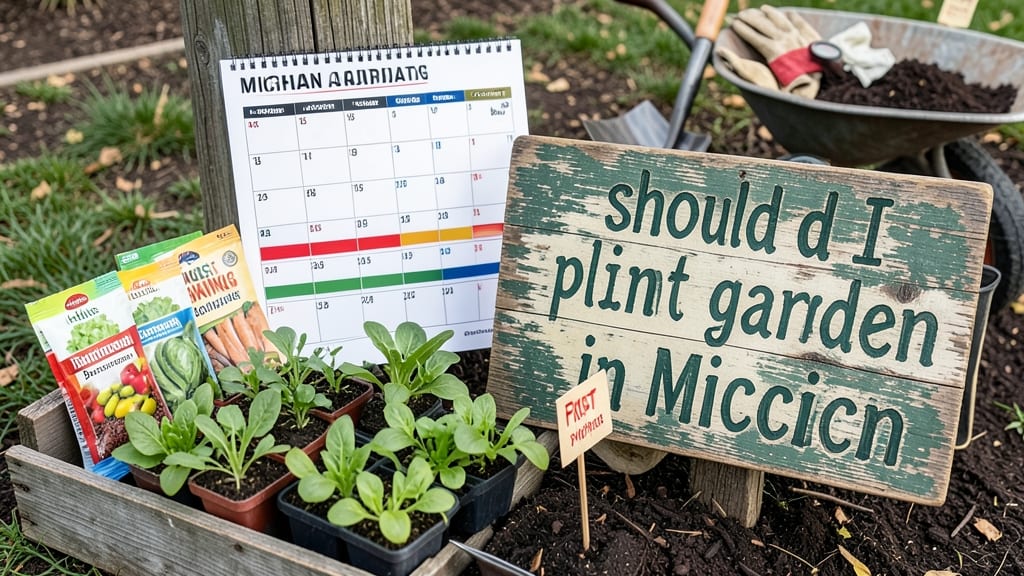
Planting your garden in Michigan after the last frost date is the key to avoiding those heartbreaking late-spring freezes that turn tender seedlings into crispy snacks.
Michigan’s unpredictable spring weather can turn a gardener’s excitement into anxiety—will your seedlings survive another late frost? Timing your garden correctly means the difference between a thriving harvest and wasted effort. 🌱
In zones 5b-6b, the average last-frost date lands in mid-April, but that’s just a starting point. Southern Michigan’s warmer microclimates might be ready weeks earlier, while the Upper Peninsula’s cooler pockets could need to wait until early May.
Below, I’ll break down the exact planting windows for your region, how to protect early crops, and the three biggest mistakes that send Michigan gardeners scrambling for row covers at the last minute.
Michigan’s last-frost dates by region: critical planting windows for vegetables and flowers
Michigan’s last-frost dates vary dramatically between regions, making it essential to know your exact USDA zone and microclimate. In the Lower Peninsula, gardeners typically see their final frost between April 15 and May 15, while the Upper Peninsula often waits until May 15 to June 1.
These differences mean the gap between planting cool-season crops like spinach and warm-season favorites like tomatoes can be just a few weeks.
Understanding these dates helps you avoid the heartbreak of frost-killed seedlings. For example, peas and lettuce can handle light frosts, but tomatoes and peppers need warm soil and air temperatures—waiting until after the last frost is non-negotiable.
Even a single late frost in May can wipe out tender transplants, so planning ahead is key.
Here’s the breakdown: Southern Michigan (USDA Zones 6a-6b) usually sees its last frost around April 20-30, while Northern Michigan (Zones 5a-5b) often waits until May 10-20. The Upper Peninsula’s Zone 4b-5a regions can delay planting until late May or even early June in some years.
These variations mean adjusting your planting schedule based on your exact location is critical.
🌱
For cool-season vegetables like kale, spinach, and peas, you can start seeds 4-6 weeks before your average last frost date. These hardy crops often thrive with light frost exposure, so early planting is encouraged.
In contrast, warm-season crops such as tomatoes, peppers, and cucumbers must wait until after the last frost and when soil temperatures reach at least 55°F (13°C).
If you’re growing perennials or flowers, timing also matters. Bulbs like tulips should be planted in fall (September-October), while annuals like marigolds can go in after your last frost. For delicate perennials like hostas or asters, wait until the soil warms to 60°F (16°C) to prevent shock.
Pro tip: Use row covers or cold frames to extend your planting window by 2-4 weeks. These tools protect young plants from late frosts, allowing you to start warm-season crops earlier. Just remember to remove covers when plants flower to encourage pollination.
🌿
To stay ahead of Michigan’s unpredictable weather, monitor local frost alerts and use a soil thermometer to confirm when conditions are safe. Starting seeds indoors 6-8 weeks before your last frost date gives you a head start, especially for slow-growing crops like broccoli or cabbage.
For fast growers like radishes or lettuce, direct sowing after your last frost works perfectly.
Remember, microclimates matter. A s
How to extend your Michigan growing season: cold frames, row covers, and succession planting
Michigan’s short growing season can feel like a race against time, but with the right strategies, you can push your planting windows earlier and harvest later. I’ve learned that cold frames, row covers, and succession planting are my top tools for beating frost and maximizing yields.
These methods let me grow spinach in March and kale until November, even in Zone 5b.
Cold frames are my secret weapon for early starts. By trapping heat from the sun, they can raise soil temperatures by 10-15°F, letting me plant peas and lettuce 3-4 weeks earlier than traditional schedules.
For late-season protection, I rely on floating row covers to shield tender crops from light frosts down to 28°F, extending harvests by weeks.
Here’s what I’ve found works best for Michigan gardeners:
🌱 Key Takeaways for Michigan Gardeners
For cold frames, I recommend using clear polycarbonate panels—they’re durable and let in 80% of sunlight. Assemble yours by late February and fill with compost-rich soil. Plant spinach, kale, and peas under cover in early March, then remove the frame when soil reaches 45°F in late April.
This gives me a 6-week head start on the season!
Row covers are my go-to for protecting tomatoes, peppers, and cucumbers from late spring frosts. I use floating fabric covers (like Agribon) supported by hoops or stakes.
These covers can raise temperatures by 5-8°F and protect down to 25°F. Remove them when daytime temps stay above 70°F to prevent overheating.
Succession planting is how I keep my garden productive all season. Instead of planting everything at once, I stagger lettuce, radishes, and bush beans every 2-3 weeks from May through July. This ensures a steady supply of fresh produce.
For example, I plant radishes every 10 days—they mature in just 25 days—while bush beans get a new batch every 3 weeks for a 2-month harvest window.
Don’t overlook heat-tolerant varieties—they’re game-changers for Michigan’s short summers. Swap out traditional iceberg lettuce for Black Seeded Simpson, which stays crisp in 90°F heat.
For tomatoes, Heatmaster and Solar Fire varieties thrive when others bolt. These choices let me extend my harvests into late September or October.
With these strategies, I’ve turned Michigan’s 140-160 frost-free days into a near-year-round garden. Start with cold frames for early crops, use row covers for late-season protection, and keep succession planting on your calendar. Your garden will thank you with longer harvests and fewer wasted seeds! 🌿