
Planting
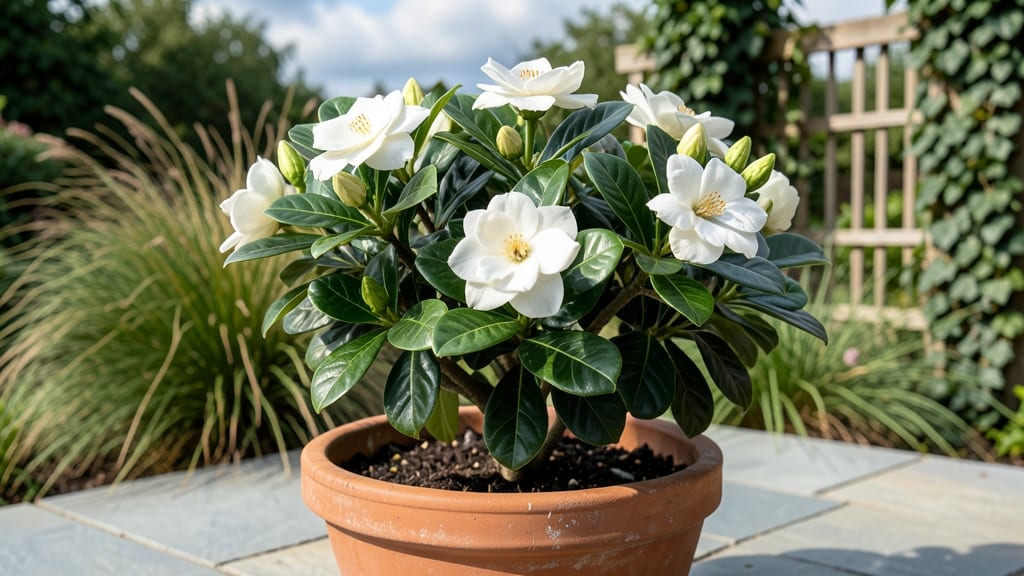
A gardenia plant size can range from a compact 1-foot dwarf to a towering 6-foot shrub, depending on variety and care—so picking the right one for your space is everything.
If you’re dreaming of fragrant white blooms but wondering whether a gardenia will dwarf your patio—or your backyard—you’re not alone. Many gardeners assume all gardenias grow into sprawling giants, but the truth is far more flexible.
From the Kleim’s Hardy variety, which stays under 3 feet, to the classic Gardenia jasminoides that can reach 6 feet, your garden design depends on choosing the right type—and knowing how to prune it.
Below, I’ll break down how size affects planting, pruning, and even blooming, so you can keep your gardenia thriving without it taking over your yard.

How tall gardenias grow by variety: dwarf vs. standard sizes
Choosing a gardenia variety isn’t just about fragrance—it’s about size control. Some varieties top out at 2 feet, while others stretch to 6 feet, making placement decisions critical. The difference often comes down to rootstock and cultivar selection, which I’ll break down for you.
Dwarf gardenias are perfect for containers or small gardens, while standard varieties thrive in landscapes or hedges. Understanding these differences helps you avoid overcrowding or underutilizing space. For example, 'Radicans' stays compact, while 'Kleim’s Hardy' reaches towering heights.
The rootstock determines whether a gardenia stays small or grows tall. Dwarf varieties like 'Radicans' are grafted onto stunted rootstock, while standard types use vigorous rootstock for rapid growth. This is why two plants from the same species can look completely different in your garden.
If you’re planting near a walkway or fence, opt for 'Radicans' or 'Fortuniana' to avoid overgrowth. For privacy hedges, 'Kleim’s Hardy' or 'Veitchii' deliver height and density. Always check the spread too—some varieties widen as much as they grow tall.
Pruning plays a huge role in controlling gardenia size. Even standard varieties can be kept smaller with regular trimming, while dwarf types may need minimal pruning to maintain shape. I’ll cover pruning tips in the next section, but for now, remember: size at maturity is your best guide.
Gardenias also respond to container size. A 5-gallon pot limits 'Radicans' to 1–1.5 feet, while a 15-gallon pot lets 'Kleim’s Hardy' reach 3–4 feet. Root-bound plants grow slower, so upgrade containers every 2–3 years for healthy expansion.
For fragrance lovers, dwarf varieties pack a punch in small spaces. 'Radicans' blooms heavily despite its size, while 'Veitchii' delivers heavier blooms but requires more room. If you love the scent but hate the mess, dwarf types are your best bet for easy cleanup.
One common mistake? Assuming all gardenias grow the same. I’ve seen 'Kleim’s Hardy' reach 7 feet in ideal conditions, while 'Radicans' in poor soil stays under 1 foot. Always research your specific variety and match it to your garden’s layout.
Pro tip: Mix dwarf and standard varieties for layered fragrance. Place 'Radicans' near seating areas and 'Kleim’s Hardy' along property lines. This creates a scent gradient that’s both functional and beautiful.
🌸
Best pruning timing to control gardenia size: when & how to trim
Pruning your gardenia isn’t just about keeping it tidy—it’s the secret to controlling its size and shape. Whether you want a compact patio plant or a taller backyard statement, timing and technique make all the difference.
Most gardeners prune at the wrong time, accidentally stunting growth or triggering leggy stems. Let’s fix that with a clear seasonal plan.
Spring is the ideal time to prune gardenias for bushier growth. This is when new growth begins, and your plant can recover quickly. Focus on removing dead or crossing branches first, then trim back any overgrowth by one-third of the plant’s height.
Avoid heavy pruning in late spring, as this can delay blooming.
Fall pruning is trickier but useful for maintaining compact forms. Lightly trim any overgrown stems after blooming season ends (around October-November in warm zones). The goal here is to shape the plant without encouraging new growth that might not harden off before winter.
Never prune in winter or early spring—this can shock the plant and reduce flowering.
⚠️ Critical Mistake Alert: Pruning Too Late
Pruning gardenias after mid-summer (especially in Zones 9b-11) can trigger soft new growth that won’t survive winter. This leads to stunted growth and fewer blooms next season. Always finish pruning at least 6 weeks before first frost (or 6 weeks before winter rains in frost-free zones).
Pro Tip: Use sterilized pruners and seal cuts with pruning paste to prevent disease in tropical climates.
To encourage bushier growth, prune just above a leaf node (the bump where leaves grow). This promotes branching. For taller plants, trim selectively—focus on the top third to maintain an upright form. Always use sharp, clean tools to avoid tearing branches, which invites pests and disease.
After pruning, your gardenia needs extra care to recover. Water deeply every 3-4 days for the first 2 weeks to encourage root regrowth. Apply a balanced fertilizer (10-10-10) in early spring to support new growth. Avoid heavy feeding right after pruning—this can burn tender new shoots.
Check your gardenia’s growth rate after pruning. If it’s too leggy, prune again lightly in early summer to redirect energy. If it’s too compact, reduce pruning next year.
With consistent timing, your gardenia will stay the perfect size for your space—whether that’s a container on your patio or a privacy screen in your yard.