
Tools
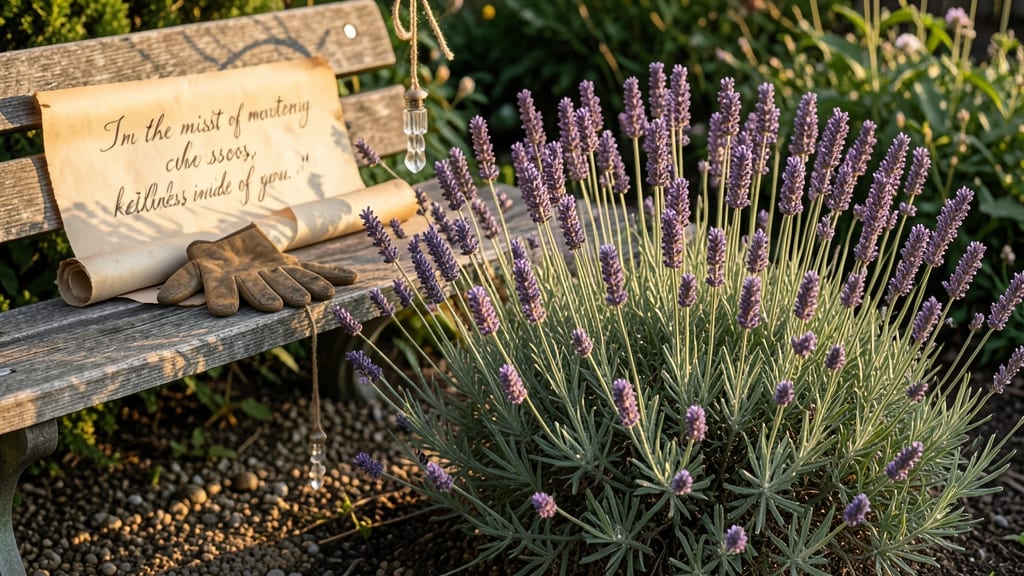
Gardening spirituality quotes help cultivate a sacred bond with nature, growth, and inner peace by weaving practical gardening with profound wisdom, showing how nurturing plants mirrors the nurturing of our souls through patience and intentional care.
These quotes often draw from ancient traditions where gardening wasn't just work—it was a spiritual act. 🌱 Think of Buddhist temple gardens designed for meditation or Native American seed-saving ceremonies that honored the earth's cycles.
The beauty lies in how they remind us that every seed planted holds potential, just like every intention we nurture. I've found that repeating them while tending my garden transforms the chore into a mindful ritual, connecting me to something much larger than myself.
You'll also discover how these quotes can become daily anchors. Whether you place them near your garden path, jot them in a journal before planting, or use them as meditation prompts, their words help shift perspective from productivity to presence.
The key is choosing ones that resonate with your current journey—whether you need resilience during a drought or gratitude for a bountiful harvest.
💡 In This Article
- How Ancient Cultures Viewed Gardening as Sacred Ritual
- Modern Ways to Use Spiritual Gardening Quotes Daily
How ancient cultures viewed gardening as sacred ritual
Ancient civilizations treated gardening as a sacred act, weaving spiritual meaning into every seed planted and harvest reaped. In Buddhist temple gardens, meticulously designed landscapes served as meditative spaces where monks cultivated both plants and mindfulness.
The Japanese Zen gardens, with their raked gravel and carefully placed stones, symbolized impermanence and the interconnectedness of all life—each element representing mountains, water, or the passage of time.
These gardens weren't just decorative; they were living metaphors for enlightenment, where tending to nature mirrored the tending of one's inner self.
The Indigenous peoples of the Americas held equally profound views, seeing gardening as a reciprocal relationship with the earth. Tribes like the Cherokee and Lakota practiced seed-saving as an act of reverence, ensuring future generations could continue the cycle of life.
Their Three Sisters planting method—corn, beans, and squash—wasn't just agricultural; it embodied community, sustainability, and gratitude. The act of planting seeds became a ritual of trust, acknowledging that growth required patience, just as spiritual awakening does.
Even the Egyptians associated gardens with the afterlife, believing that tending to plants in this world prepared the soul for eternal renewal in the next.
What unites these traditions is the idea that gardening is a sacred science—a practice where physical labor and spiritual growth intertwine.
The Hindu concept of Karma Yoga teaches that selfless action, like tending a garden, purifies the soul, while Chinese Taoist gardens were designed to harmonize with natural energy flows (Qi).
The soil itself became a metaphor: dark, rich earth symbolizing the unknown depths of the human psyche, while sprouting seeds represented hope and potential. This duality—visible growth and invisible transformation—is why these cultures saw gardening as both a daily discipline and a spiritual path. 🌿
Consider the Mayan milpa system, where cornfields weren't just food sources but sacred spaces for ceremonies. The three sisters weren't just crops; they embodied the trinity of life, death, and rebirth.
Similarly, the Persian gardens of the Achaemenid Empire were designed with four quadrants, representing the four elements (earth, water, fire, air) and the four seasons—a physical manifestation of cosmic order. Even the arrangement of plants carried meaning: fragrant herbs like lavender symbolized clarity, while thorny roses represented protection.
These weren't random choices; they were intentional acts of alignment with the natural world's rhythms.
The mechanism behind this spiritual connection lies in the repetitive, rhythmic nature of gardening. Digging, planting, watering, and harvesting create a cycle that mirrors the human experience—struggle, growth, harvest, and renewal.
Neuroscientifically, this repetition triggers the release of serotonin and dopamine, chemicals linked to calm and motivation, which deepens the meditative state. Ancient cultures intuitively understood this: by making gardening a ritual, they turned a practical task into a sacred dialogue with the divine.
The soil under your hands becomes a canvas for both creation and reflection, a physical reminder that you're part of something far greater than yourself.
Today, we can still tap into this wisdom by recognizing that every garden—whether a window herb planter or a half-acre farm—holds the potential for spiritual growth.
The act of pressing a seed into earth is an affirmation of trust, just as the first sprouts breaking through soil are a promise of resilience. Ancient cultures didn't separate the sacred from the practical; they saw them as two sides of the same coin.
That's the power of these traditions: they remind us that every seed planted is a prayer, and every harvest is an answer. 🌱