
How To
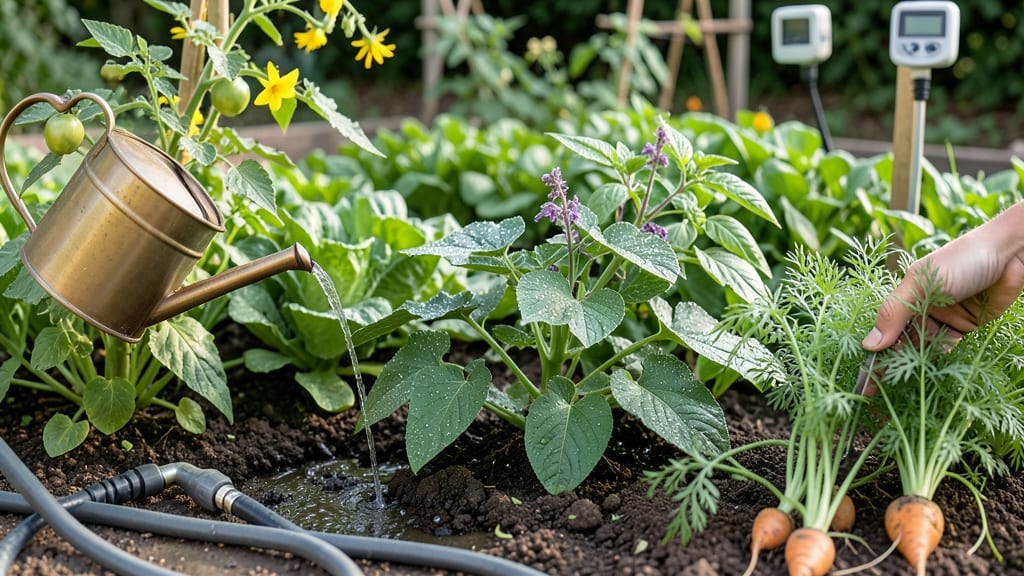
Watering your vegetable garden for the right length of time ensures strong roots and bountiful harvests 🥕 — but guessing can mean wasted water or stunted growth.
Overwatering or underwatering your vegetable garden can kill your plants before they even reach harvest time—so how do you know when to stop? The answer lies in the soil, not the clock.
Most vegetables thrive with 1-2 inches of water per week, but timing matters just as much as depth. A quick soil check in the morning can save you from overdoing it, especially in Zone 6 where spring rains can quickly turn to drought.
Below, I’ll break down how long to water based on plant type, soil conditions, and weather—plus the soil-moisture test method that keeps your garden perfectly hydrated without a guess.
The soil-moisture test method: how to determine when vegetables need water
One of the biggest mistakes gardeners make is guessing when their vegetable plants need water. But here's the secret: healthy soil holds the answer. Instead of sticking to a rigid schedule, I check the moisture level in the top 1-2 inches of soil—this tells me exactly when to water.
This method works for leafy greens, root vegetables, and everything in between.
Why focus on the top layer? Because that's where most plant roots absorb water. Leafy greens like lettuce and spinach have shallow roots, while tomatoes and carrots need deeper moisture.
The soil-moisture test adapts to both. Plus, it saves water and prevents overwatering, which can drown roots and invite fungus.
🌱 Step-by-Step Soil-Moisture Test
- Step 1: Choose a representative spot in your garden—avoid areas near irrigation lines or mulch piles.
- Step 2: Insert your index finger (or a soil moisture meter) into the soil 1-2 inches deep.
- Step 3: Feel for moisture. If it feels dry and crumbly, it's time to water. If it's cool and damp, wait a day or two.
- Step 4: For sandy soil, check daily—it drains fast. For clay soil, check every 3-4 days.
- Step 5: Water until moisture reaches 6 inches deep for most vegetables (use a probe or dig a small hole to check).
For leafy greens, I aim to keep the top 1 inch of soil consistently moist. These plants wilt fast when thirsty—don’t wait until leaves droop to water. Root crops like carrots and beets, however, prefer slightly drier conditions.
Overwatering them can cause forked roots or rot. The soil-moisture test helps me strike the right balance for each type.
Signs you're overwatering include yellowing leaves, moldy soil, or plants that feel mushy when touched. Underwatering shows up as wilting, crispy leaf edges, or soil pulling away from pot sides.
Both extremes stress plants, so I always check moisture before watering. A soil moisture meter ($15-$25) takes the guesswork out of it—just insert the probe and read the digital display.
Timing matters too. I water in the early morning (between 6-10 AM) to reduce evaporation and fungal growth. Evening watering can leave foliage damp overnight, inviting blight. Stick to the soil-moisture test in the morning, and you’ll avoid common pitfalls.
Pro tip: Keep a gardening journal to track when you water and how your plants respond—this helps fine-tune your schedule over time.
Different vegetable types have unique needs. Herbs like basil and cilantro prefer slightly drier soil, while peppers and eggplants thrive with consistent moisture. The soil-moisture test adapts to all of them.
For example, if my tomato plants need water every 2-3 days in summer but my zucchini only needs it every 4-5 days, the test reveals those differences clearly.
Don’t rely on rainfall alone—even a heavy downpour might not penetrate deep enough. I once thought my carrots were getting enough water after a storm, but the top layer stayed dry.
The soil-moisture test showed me I needed to water again. Mulch helps retain moisture, but it’s not a substitute for checking the soil. Aim for 1-2 inches of mulch around plants to slow evaporation.
If you’re using drip irrigation or soaker hoses, the soil-moisture test helps you calibrate run times. For instance, my lettuce might need 10-15 minutes of watering per session, while my tomatoes need 20-30 minutes.
Adjust based on the test results—especially during hot, dry spells or after heavy rains. Consistency is key for even growth and high yields.
Remember, the soil-moisture test is your best friend in the garden. It’s free, foolproof, and works for every vegetable variety. Start with this method, and you’ll soon notice healthier plants, fewer pests, and a bountiful harvest. Happy gardening! 🌱
Watering duration by plant type: how long to water for optimal growth
Determining how long to water your vegetable garden depends entirely on the plant type and root depth. Shallow-rooted greens like lettuce and spinach need quick, frequent watering, while deep-rooted vegetables like tomatoes and peppers require longer, deeper sessions.
The key is matching your watering duration to the plant's natural growth patterns and soil absorption rate.
Your irrigation method also plays a critical role. A sprinkler system may need 15-25 minutes for even coverage, while a drip irrigation system can deliver the same moisture in just 10-15 minutes with less waste.
Always adjust based on your soil type—sandy soil drains faster than clay, so you may need to extend watering times by 30-50% in heavier soils.
Weather conditions demand flexibility. During hot, dry spells, extend watering by 20-30% to compensate for evaporation, while rainy periods may reduce your duration to just 50% of normal. Always check the top 2-3 inches of soil—if it's dry, your plants need more water; if it's damp, you're overdoing it.
For container-grown vegetables, cut watering times by 50% since pots dry out faster. A 5-gallon container of basil might need just 5-10 minutes, while a large raised bed could require 30+ minutes. Use a moisture meter to avoid guesswork, especially for high-value crops like tomatoes and peppers.
Pro tip: Water in the early morning (before 8 AM) to minimize disease risk from prolonged leaf wetness. If you're using a sprinkler, avoid overhead watering for leafy greens—they wilt faster when wet leaves dry in the sun.
For drip systems, slow, consistent flow mimics natural rainfall and reduces runoff.
Remember, the goal is deep, infrequent watering that encourages strong root growth. Overwatering weakens plants just as much as underwatering, so trust your soil and your plants' signals. When in doubt, check the soil moisture and adjust your timer accordingly.