
Watering
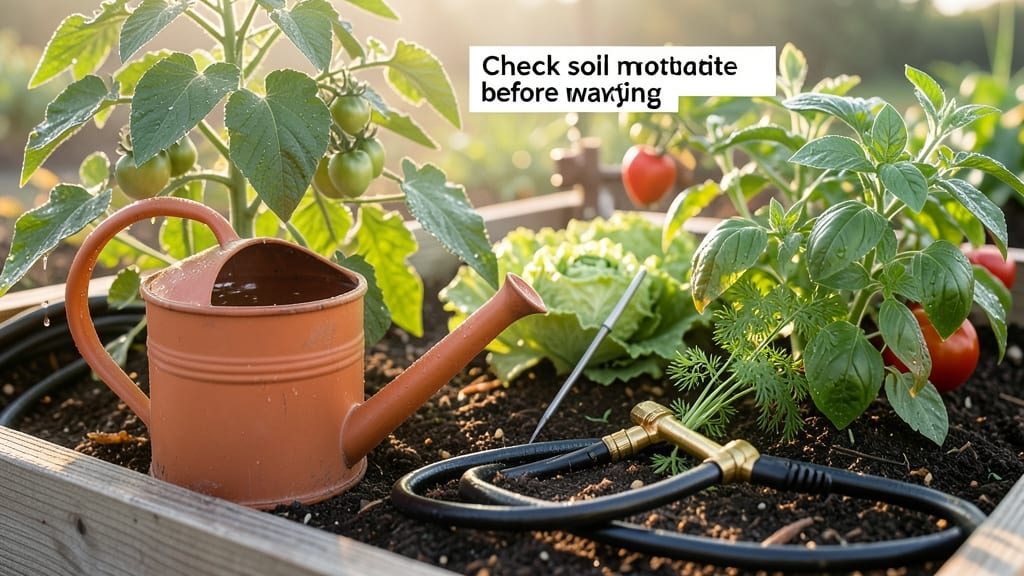
Watering your vegetable garden the right amount keeps roots happy and your 🥕 harvest thriving—but most gardeners either drown their plants or leave them parched, both of which sabotage growth.
Overwatering or underwatering your vegetable garden can mean the difference between a bountiful harvest and wilted disappointment, yet most gardeners struggle to find the perfect balance, especially when soil types vary dramatically.
Here’s the game-changer: soil type dictates everything. Clay holds moisture for days, sandy drains in hours, and loamy soil strikes that sweet spot—knowing yours means you’ll never guess again.
I’ll walk you through exactly how much to water for each, plus pro tips to cut waste and keep your plants perfectly moist.
By the end, you’ll master the 1-inch rule for measuring depth, spot common mistakes before they ruin your crop, and adjust for heat, rain, or containers—no more soggy soil or crispy leaves.
Soil-type watering rules: how much to water based on clay, sandy, OR loamy soil
Your vegetable garden's soil type determines how often and how deeply you should water—clay soil holds moisture for days, while sandy soil drains within hours. Understanding these differences prevents root stress and fungal diseases while maximizing your harvest.
Let's break down the watering rules for each soil type to keep your plants thriving.
First, identify your soil type by performing a simple DIY soil test. Grab a handful of damp soil and squeeze it—if it forms a tight ball that cracks when dropped, you have clay soil.
If it crumbles easily, it's sandy soil. Loamy soil (the gold standard) holds shape loosely and feels rich. Knowing your soil type helps you adjust watering schedules to match your plants' needs.
For clay soil, water deeply but infrequently—this heavy soil can suffocate roots if overwatered. Aim for 1-1.5 inches per week during dry spells, allowing water to penetrate at least 6 inches deep.
Use a soaker hose or drip irrigation to avoid surface runoff. Mulch heavily to reduce evaporation and prevent crusting.
In sandy soil, water becomes a daily task because it drains faster than a sieve. Apply ½ to 1 inch of water every 1-2 days, focusing on the root zone rather than wetting the leaves.
Early morning watering minimizes evaporation, and organic matter like compost improves moisture retention over time.
If you're lucky enough to have loamy soil, you're in the sweet spot! This balanced soil retains moisture well while allowing excess to drain. Stick to 1 inch of water every 2-3 days, adjusting for rainfall.
Loamy soil supports consistent root growth, making it ideal for most vegetables like tomatoes and peppers.
| Soil Type | Watering Frequency | Depth per Watering | Best Method | Key Tip |
|---|---|---|---|---|
| Clay | 1-1.5 inches/week | 6+ inches deep | Soaker hose | Mulch heavily to prevent crusting |
| Sandy | ½-1 inch every 1-2 days | 4-6 inches deep | Drip irrigation | Add compost to improve retention |
| Loamy | 1 inch every 2-3 days | 5-7 inches deep | Morning watering | Ideal for most vegetables |
To avoid overwatering, check soil moisture by sticking your finger 1 inch deep—if it's damp, wait before watering again. For root crops like carrots, ensure consistent moisture to prevent splitting, while leafy greens tolerate slightly drier conditions.
Adjust your schedule based on weather patterns; hot summers may require daily watering in sandy soil.
For container gardens, sandy soil drains even faster, so water every 1-2 days regardless of type. Use pots with drainage holes and monitor soil moisture closely. Mulching with straw or shredded leaves helps retain moisture and regulates soil temperature, reducing the need for frequent watering.
Pay attention to your plants' visual cues. Wilting leaves in the morning indicate underwatering, while yellowing or moldy stems signal overwatering. Adjust your routine accordingly—clay soil may need less water in humid climates, while sandy soil demands more during heatwaves.
Balance is key to a thriving vegetable garden.
Regularly test your soil's moisture retention by digging a small hole near your plants. If water pools at the bottom, your soil is too dense; if it disappears instantly, it's too sandy. Amend the soil with organic compost to improve structure and water-holding capacity over time.
Remember, deep watering encourages roots to grow downward, making plants more resilient. Shallow watering leads to weak, shallow roots that struggle in dry conditions. Aim for slow, deep soaks rather than quick sprinkles to build a robust root system in your vegetable garden.
The 1-Inch rule: how to measure perfect watering depth for vegetables
Mastering the 1-inch rule is your secret weapon for healthy vegetable growth. This simple method ensures water reaches the root zone where plants truly thrive, preventing shallow roots and fungal diseases.
Instead of guessing, you'll learn to check moisture at the exact depth where most vegetable roots absorb water—just 1 inch below soil surface.
Why does depth matter? Most vegetables develop their primary root systems within the top 2-3 inches of soil. When you water too shallowly, roots stay near the surface, making plants vulnerable to heat stress and poor nutrient access.
The 1-inch rule helps you deliver water where it counts, saving time and resources while boosting yields.
- 1
- 2
- 3
- 4
- 5
For drip irrigation systems, set emitters to deliver 1 inch of water per week (adjust for rainfall). Place a tuna can under emitters to measure output—fill marks equal 1 inch. This method eliminates guesswork and ensures even distribution, especially for tomatoes and peppers that hate wet leaves.
Remember, soil type changes the game. Sandy soil drains faster, so check the 1-inch depth twice daily in summer heat. Clay soil holds moisture longer—test every 3-4 days unless plants show wilting. Mulch with straw or wood chips to slow evaporation and keep that 1-inch zone consistently moist.
Start today by grabbing a wooden dowel or your finger and testing your garden's moisture. Within days, you'll notice fewer wilting leaves, healthier roots, and plants that tell you exactly what they need—no more, no less. Your future harvest will thank you!