
Light Requirements
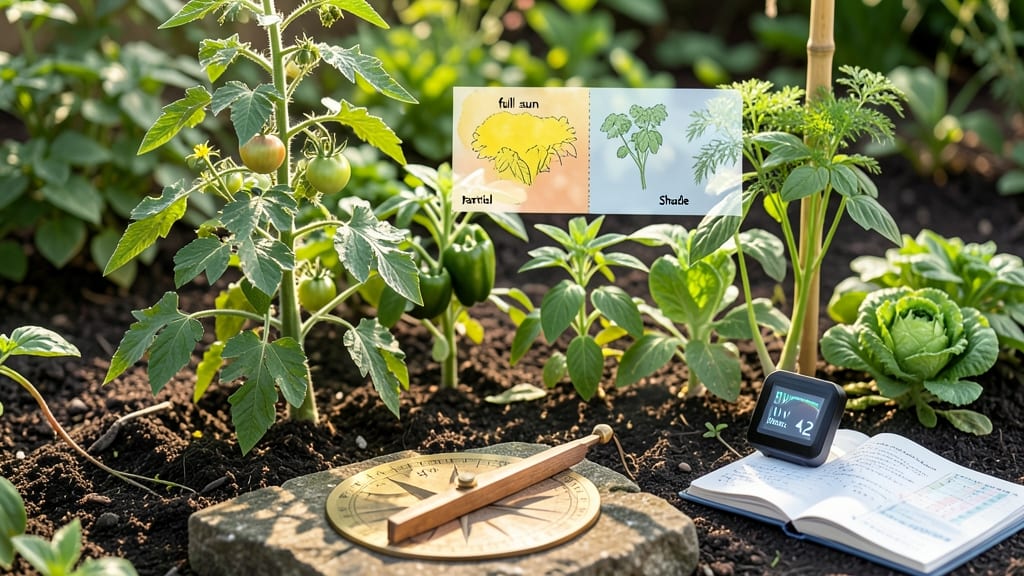
A vegetable garden needs 6 to 8 hours of sunlight daily for most crops to thrive, but the exact amount depends on what you’re growing—leafy greens tolerate less, while tomatoes and peppers demand more.
Struggling to get your vegetable garden thriving? Sunlight is the #1 factor separating lush harvests from disappointing yields—but how much is really enough? Get the science-backed ranges for every plant type to maximize your garden’s potential.
Too little light and your plants stretch thin, while too much can scorch tender leaves. I’ll break down the ideal sunlight ranges for common vegetables, how to adjust for partial shade, and when seasonal changes throw off your timing.
By the end, you’ll know exactly how to position your garden for peak yields, whether you’re working with a sunny backyard or a shadier spot. Let’s make sure your hard work pays off with a bountiful harvest!


Sunlight requirements by vegetable type: full sun vs. partial shade breakdown
Sunlight is the lifeblood of your vegetable garden—without enough, your plants will struggle to grow, produce fewer yields, and may even fail entirely.
But not all vegetables need the same amount of light. Tomatoes, peppers, and cucumbers thrive in 6-8+ hours of full sun, while leafy greens like spinach and kale can handle 3-6 hours of partial shade. Understanding these differences is key to planning a productive garden layout.
Most gardeners assume "full sun" means any sunny spot, but the truth is more nuanced. Full sun typically means 6+ hours of direct sunlight daily, while partial shade ranges from 3-6 hours.
Some vegetables, like broccoli or cauliflower, can even tolerate low-light conditions (3 hours or less) in cooler climates. Let’s break down the exact sunlight needs for your favorite crops to ensure you’re placing them in the perfect spot.
For full sun vegetables, like tomatoes and peppers, placing them in the southernmost part of your garden ensures they get the most sunlight throughout the day. These plants need intense light to produce fruit, and even 5-6 hours can lead to smaller yields or poor-quality produce.
If your garden lacks full sun, consider container gardening on a sunny patio or balcony.
Vegetables that tolerate partial shade, such as leafy greens and root crops, are perfect for areas with morning sun but afternoon shade.
These plants often bolt (go to seed prematurely) in hot, direct sunlight, so providing some relief during peak afternoon heat is crucial. Spinach and lettuce are classic examples—plant them where they get 3-4 hours of morning light and shade the rest of the day.
If you’re working with low-light conditions, focus on cool-season crops like broccoli or cauliflower, which can thrive with as little as 3 hours of sunlight. These plants grow best in cooler temperatures and won’t scorch in minimal light.
Pair them with tall plants like sunflowers or corn to create natural shade for heat-sensitive varieties.
One common mistake is assuming all vegetables need the same amount of light. Over-sunning shade-loving plants can cause them to wilt or bolt, while under-sunning full-sun plants leads to weak stems and poor fruit production.
Always match your plant selection to your garden’s sunlight map—use a sunlight tracker or observe your space for a few days to identify the sunniest and shadiest spots.
Pro tip: If your garden has mixed sunlight, use shade cloth to create microclimates. For example, drape 30-50% shade cloth over full-sun plants during the hottest part of the day to prevent stress. Conversely, move partial-shade plants to sunnier spots as they mature, giving them more light as needed.
Remember, sunlight needs can shift with the seasons. In summer, days are longer, so even partial-shade areas may receive more light. Adjust your garden layout accordingly—rotate crops or use seasonal shade solutions to keep conditions ideal. With the right placement, you’ll maximize your harvest and minimize wasted effort.
🌱
How to adjust sunlight exposure for different garden zones and seasons
Not all garden spaces receive the same amount of sunlight, and seasonal changes can dramatically alter your plants' growing conditions. If your vegetable garden isn't thriving, it might be due to insufficient sunlight—but don't worry, there are practical solutions to optimize light exposure year-round.
Understanding how to adjust sunlight for your specific garden zone and seasonal shifts can transform underperforming areas into productive growing spaces.
Even the most experienced gardeners face challenges with partial shade or short daylight hours, especially in early spring or late fall. The key is knowing which adjustments work best for your plants' needs.
Whether you're dealing with a north-facing plot, urban containers, or winter sunlight limitations, these strategies will help you maximize growth without sacrificing yield or plant health.
- 1. Use shade cloth (30-50%) on south-facing areas to reduce excess light for heat-sensitive crops like lettuce or spinach during peak summer.
- 2. Plant fast-growing crops like radishes or bush beans in early spring when sunlight is limited, then replace them with sun-loving tomatoes as days lengthen.
- 3. Position tall plants (like corn or sunflowers) on the north side of your garden to create natural micro-shade for shorter crops below.
- 4. Extend the growing season with reflective mulch (like white gravel) to bounce extra light onto low-light areas during winter months.
- 5. Choose companion plants like bush beans or peas that fix nitrogen and thrive in partial shade, freeing up sunnier spots for more demanding crops.
Seasonal sunlight shifts can be just as challenging as fixed shade issues. In winter months, days are shorter, and sunlight is weaker, which can stunt growth for sun-dependent crops. To compensate, I recommend rotating containers or raised beds to follow the sun’s arc throughout the day.
A simple trick is to place them on casters or adjust their position every few hours for maximum exposure.
For urban gardeners with limited space, vertical gardening is a game-changer. Install trellises or wall-mounted planters on south-facing walls to capture reflected light. This not only maximizes space but also increases sunlight exposure for plants that might otherwise struggle in shaded corners.
Pair this with light-colored containers, which reflect more sunlight than dark ones, to boost growth in tight spaces.
Don’t overlook the power of seasonal crop rotation. In early spring, when sunlight is still weak, prioritize cool-season crops like kale, peas, or carrots. As summer approaches and daylight hours increase, transition to heat-loving vegetables such as peppers, eggplants, and zucchini.
This strategic approach ensures your garden remains productive regardless of sunlight fluctuations.
If you're still struggling with low-light conditions, consider investing in a portable grow light for critical stages like seedling growth. Even a few extra hours of artificial light can make the difference between healthy transplants and leggy, weak seedlings.
For larger gardens, solar-powered lights or reflective surfaces can help distribute light more evenly.
Remember, every garden is unique, and what works for your neighbor might not suit your space. Experiment with these techniques, monitor your plants' responses, and adjust as needed.
With the right sunlight adjustments, you’ll be well on your way to a thriving, year-round vegetable garden—no matter your zone or season! 🌱