
Light Requirements
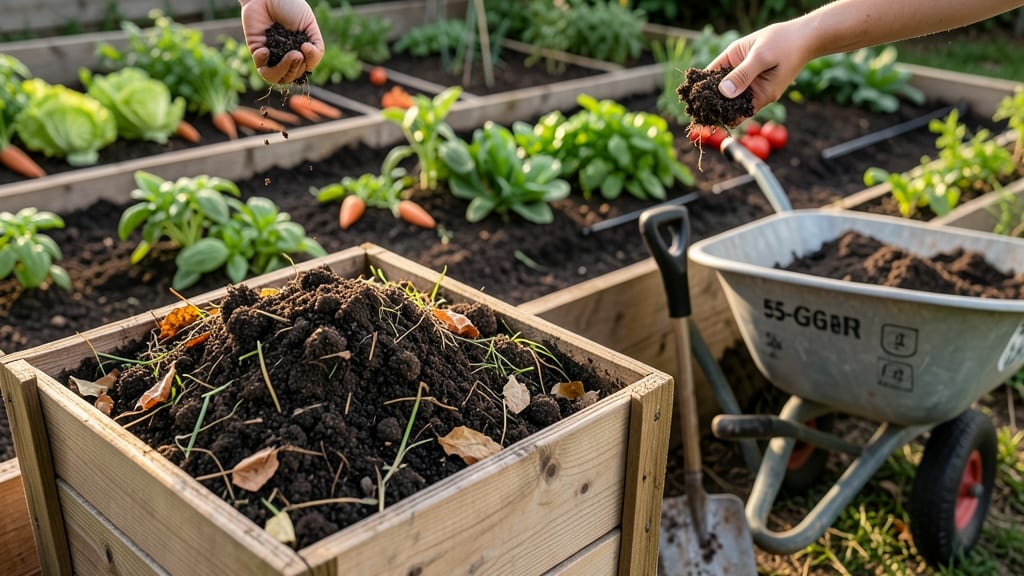
To determine how much compost you need for your garden, calculate based on your garden's size and type: spread 1-3 inches over established beds, mix 50% compost to 50% soil for new planting areas, and use 2-4 pounds per square foot for containers. Adjust these ratios depending on your soil composition to optimize nutrient levels and drainage.
Compost needs vary dramatically depending on what you're growing. 🌱 For example, heavy feeders like tomatoes and peppers thrive with 2-3 inches of compost per season, while delicate flowers often only need 1 inch annually to prevent over-fertilization.
The key is matching your compost type to plant needs—nitrogen-rich blends for leafy greens versus phosphorus-heavy mixes for root crops. I always recommend starting with a soil test to avoid overdoing it, especially in clay-heavy areas where too much compost can create compaction issues.
For container gardens, the 20-30% compost mix rule prevents root burn while still providing essential nutrients. The trick is blending thoroughly—never just dumping compost on top.
In my experience, pre-mixing compost with potting soil in a wheelbarrow ensures even distribution, which is especially critical for herbs and succulents that hate soggy roots. Remember, you can always add more compost later, but you can't undo over-fertilization!
💡 In This Article
- Calculating Compost Needs by Garden Type and Plant Requirements
- DIY Compost Mix Formulas for Different Soil Conditions
Calculating compost needs by garden type and plant requirements
Vegetable gardens demand the most compost—typically 2-3 inches per season—because they're heavy feeders that deplete nutrients quickly. Leafy greens like spinach and kale benefit most from nitrogen-rich compost (look for a 2:1 carbon-to-nitrogen ratio), which promotes lush foliage.
Root crops such as carrots and potatoes, however, need phosphorus-heavy compost (with a 1:1 ratio) to encourage strong root development. The difference becomes obvious in your harvest: nitrogen-deficient plants yellow at the edges, while phosphorus-starved plants develop stunted roots.
For flower beds, 1-2 inches annually is usually sufficient, but delicate perennials like peonies often thrive with just 1 inch to prevent over-fertilization. The key is observing plant response—too much compost can cause leaf burn or excessive foliage growth at the expense of flowers.
Annuals like marigolds, however, can handle up to 2 inches when planted, as they have faster nutrient uptake cycles. 💐 What I've noticed is that bulbs (like tulips) actually prefer minimal compost—just enough to loosen soil without smothering their roots.
Lawns require the lightest touch: a 0.5-inch top-dressing spread evenly in early spring and fall. The goal here isn't nutrition but soil structure—compost helps break up thatch and improve water infiltration. For container plants, the 20-30% compost mix rule prevents root burn while maintaining moisture.
I always pre-mix compost with potting soil in a wheelbarrow to ensure even distribution, which is especially critical for herbs and succulents that hate soggy roots. The texture difference is noticeable—compost-amended soil holds moisture longer without becoming compacted.
Here's where soil type becomes critical: sandy soils need more compost (up to 50%) to retain moisture and nutrients, while clay soils benefit from less (20-30%) to prevent compaction. The visual difference is dramatic—sandy soil with compost becomes dark and crumbly, while clay soil with compost develops better aeration pockets.
For raised beds, I recommend 3 inches of compost mixed into the bottom layer before planting, creating a nutrient-rich foundation that lasts the growing season.
Container gardens present unique challenges because space is limited. A 5-gallon pot needs about 2-3 pounds of compost mixed with potting soil, while a 15-gallon container can handle 5-7 pounds. The trick is monitoring moisture levels—compost-heavy mixes dry out faster.
I've found that adding 1-2 inches of compost annually to containers maintains fertility without overwhelming the plant. The sensory difference is immediate: plants in properly composted containers have richer foliage and more vibrant flowers.
Remember that compost quality matters just as much as quantity. Fresh, well-aged compost (with a dark brown, earthy aroma) works best—avoid manure-based composts for edible plants unless fully composted (6-12 months). The visual test is simple: good compost should crumble easily between your fingers without leaving clumps.
For maximum efficiency, I recommend working compost into the top 6-8 inches of soil where most roots grow—this creates a nutrient-rich zone without overwhelming surface plants. 🌱