
Watering
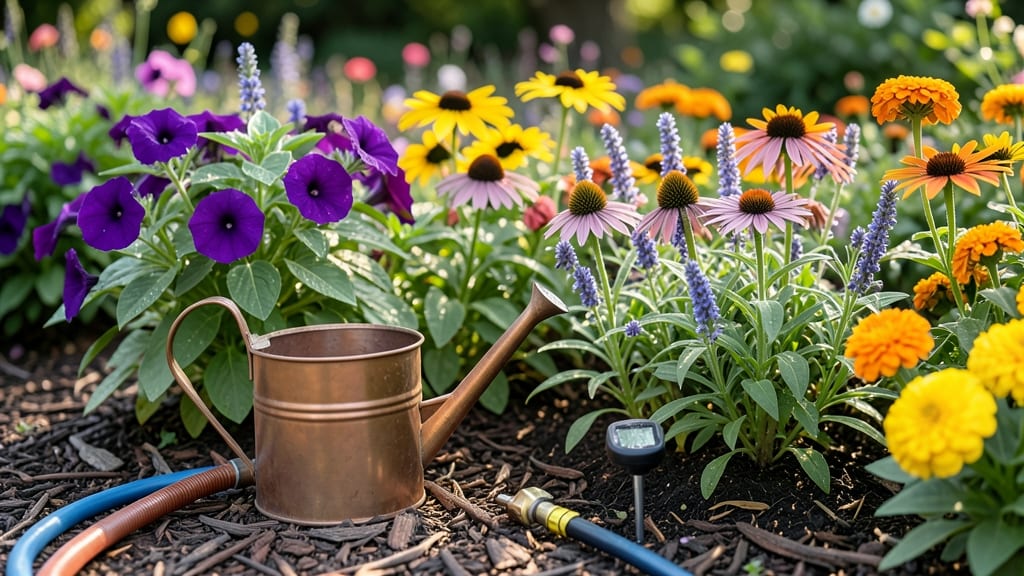
Watering your flower garden the right way means giving blooms just enough moisture to thrive—not drowning or drying them out.
Overwatering or underwatering your flower garden can mean the difference between vibrant blooms and wilted disappointment—so why guess when you can follow a science-backed schedule?
Most gardeners struggle with timing, especially when rain mixes with heat waves or drought. The secret? Checking soil moisture before reaching for the hose. Sandy soil drains fast, while clay holds water like a sponge—both need different care.
In this guide, I’ll break down exactly how often to water by soil type, season, and plant needs, plus how to spot when you’ve got it wrong. No more guesswork—just lush, happy flowers.
Soil-based watering schedule for flower gardens by type
Your flower garden's soil type determines how often you should water—sandy soil drains quickly while clay soil holds moisture longer. Understanding these differences prevents root rot or wilting and ensures vibrant blooms.
Let's break down the ideal watering schedule for each soil type, including seasonal adjustments that keep your flowers thriving year-round.
For sandy soil, water daily in summer but reduce to every 2-3 days in cooler months. This soil drains so fast that roots can dry out between waterings. In contrast, clay soil retains moisture longer, requiring watering every 3-5 days in summer and weekly in spring or fall.
The key is to adjust based on rainfall and temperature.
Most gardeners overlook loamy soil, which is the gold standard for flower gardens. It balances drainage and moisture retention, needing watering every 2-4 days in summer and every 5-7 days in cooler seasons.
If you're unsure about your soil type, a simple jar test can reveal its composition in minutes.
Peat-based soils, often used in container gardens, dry out faster than most gardeners realize. Water every 1-2 days in summer and every 3-4 days in spring/fall. These soils can become compacted, so always water deeply to encourage root growth downward.
Seasonal changes dramatically affect your watering schedule. During summer months, when temperatures soar and evaporation increases, most flowers need deep watering 2-3 times per week, regardless of soil type. In spring and fall, reduce frequency to every 5-7 days as cooler temps slow moisture loss.
Winter care varies by climate. In mild winters, water every 10-14 days to prevent dehydration. In frozen ground conditions, hold off until soil thaws to avoid compacting roots. Always check for frost heave—a sign your soil needs better drainage.
For container gardens, which dry out faster than in-ground soil, increase frequency by 30-50%. Place pots in saucers to catch runoff and water until it drains from the bottom. This mimics natural rainfall and prevents root suffocation from sitting water.
Monitor your garden's response to watering. Yellowing leaves or drooping stems signal underwatering, while mushy stems or fungal spots mean overwatering. Adjust your schedule based on these visual cues rather than sticking rigidly to a calendar.
Pro tip: Use a moisture meter to check soil depth. Insert it 2-3 inches deep—this is where most flower roots thrive. If the meter reads dry, it's time to water. This simple tool eliminates guesswork and keeps your blooms healthy.
Remember, consistency is key. Flowers thrive on routine, so establish a watering rhythm that matches your soil type and seasonal conditions. With this schedule, you'll enjoy lush, vibrant blooms all season long. 🌸
Signs your flower garden needs water (or too much water)
Knowing when your flowers are thirsty—or drowning—can be tricky. Wilting leaves and dry soil are obvious clues, but subtle signs like yellowing petals or mushy stems often signal deeper problems. The key is learning to read your plants' cues before damage sets in.
For instance, morning wilting that recovers by afternoon usually means thirst, while evening wilting could indicate overwatering or root stress.
Don't rely on a rigid schedule—soil type and weather patterns change everything. Sandy soil drains fast, while clay holds moisture too long. Even mulch thickness affects evaporation rates.
That's why I always check the soil moisture with my finger: stick it 1-2 inches deep. If it feels dry, it's time to water.
Rule of thumb: 1-2 inches per week (adjust for rain).
Morning watering (6-10 AM) is ideal—it reduces evaporation and fungal risks.
Deep watering (soak roots) beats frequent light sprinkles.
Seasonal shifts: Water 2-3x weekly in summer, weekly in spring/fall, and bi-weekly in winter.
Watch for leaf color changes—dull green or grayish hues often mean underwatering, while yellowing leaves (especially lower ones) can signal overwatering. Another red flag? Fungal spots or white mold on stems, which thrive in soggy conditions.
If you see these, pull affected plants immediately and let the soil dry out before watering again.
Root rot is a silent killer. Mushy, black roots or a sour smell near the base mean your flowers are drowning. To test, gently tug on a plant—if it slides out easily, the roots are rotting. Drainage issues (like compacted soil or no mulch) often cause this.
Amend clay soil with compost or perlite to improve airflow.
For container-grown flowers, lift the pot—if it's light as a feather, it's dry. Drip irrigation or self-watering globes help maintain consistency. Pro tip: Group containers together to create a microclimate with more stable moisture levels. This works especially well for heat-loving varieties like petunias or geraniums.
Remember, consistency is key. Uneven watering stresses plants, making them vulnerable to pests and disease. Use a rain gauge to track weekly totals and adjust your watering accordingly. When in doubt, check the soil—your plants will thank you with healthier roots and bigger blooms! 🌸