
Pests
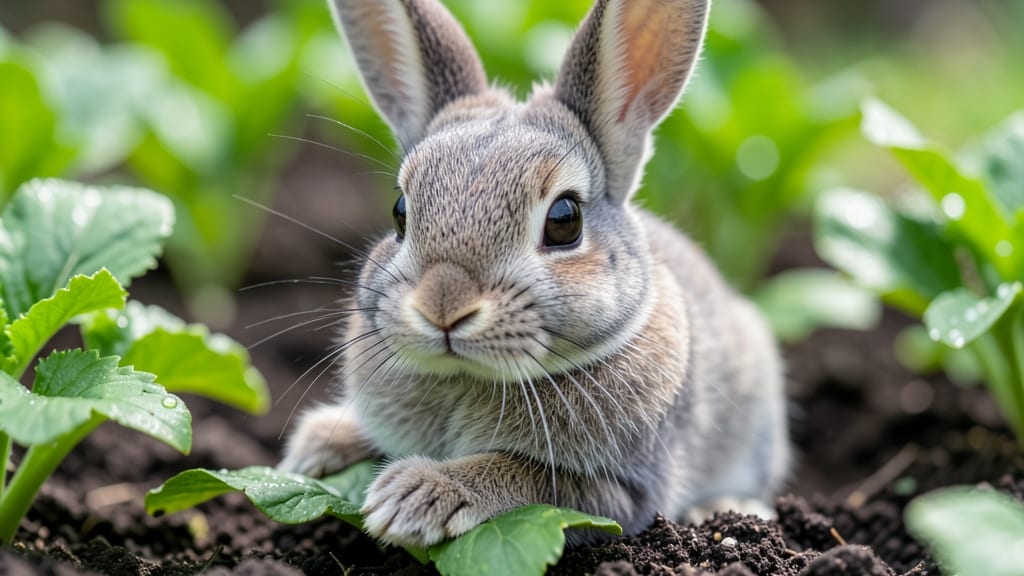
Mr. McGregor’s garden in Peter Rabbit illustrates how unprotected vegetable gardens become easy targets for pests like rabbits, which ravage tender crops such as lettuce, carrots, and radishes—while teaching gardeners the critical role of physical barriers, vigilance, and natural deterrents to safeguard their harvests.
Beatrix Potter’s classic tale isn’t just a children’s story—it’s a masterclass in organic pest management. 🌱 The garden’s unprotected layout lets rabbits feast on young, vulnerable plants, but Potter subtly shows how simple changes (like fences or companion planting) could have saved the harvest.
Modern gardeners can apply these lessons today by using raised beds, chicken wire, or even predator scents to mimic the garden’s natural defenses without chemicals.
What makes this story so timeless is how it balances real-world ecology with storytelling. Rabbits naturally gravitate toward tender greens and root vegetables, but Mr. McGregor’s lack of boundaries turns his garden into an all-you-can-eat buffet.
The lesson? A well-planned garden—with physical barriers and smart plant placement—can outsmart pests while keeping wildlife in harmony.
💡 In This Article
- How Beatrix Potter’s Garden Reflects Real Pest Management Challenges
- Modern Gardening Lessons from Peter Rabbit’s Escape Tactics
How beatrix Potter’s garden reflects real pest management challenges
Beatrix Potter’s depiction of Mr. McGregor’s garden reveals a critical ecological truth: rabbits and similar pests target young, tender plants because they’re packed with water and nutrients. 🌱 Lettuce, radishes, and carrots—three of the garden’s most vulnerable crops—are particularly appealing because their soft stems and leaves offer minimal resistance.
Studies show that rabbits prefer plants with a moisture content above 85%, which is why newly sprouted greens become their prime target. The garden’s open layout, with no physical barriers, turns it into an easy buffet, demonstrating how unprotected spaces invite pest exploitation.
Potter’s portrayal mirrors historical organic pest control methods that were widely used before synthetic chemicals became common. The garden’s lack of fences or raised beds reflects 19th-century gardening practices, where gardeners relied on manual labor, crop rotation, and companion planting to deter pests.
For example, planting onions or garlic near vulnerable crops releases sulfur compounds that rabbits find unpleasant, a technique still used today. The story also highlights how seasonal planting affects pest behavior—spring and early summer, when plants are most tender, are peak vulnerability periods for gardeners.
What makes Mr. McGregor’s garden a perfect case study is how it illustrates the psychology of pest control. Rabbits are creatures of habit, often returning to the same feeding spots if they find success.
This is why Potter’s garden becomes a repeated target for Peter Rabbit—once he discovers the unprotected lettuce patch, it becomes a predictable food source. The lesson here is that consistency in deterrents (like fences or mulch barriers) is just as important as the initial setup.
A single wire mesh barrier around the garden could have disrupted this pattern entirely.
The garden’s layout also teaches us about the role of physical boundaries in pest management. Open gardens without clear edges create inviting pathways for pests, while enclosed spaces force them to work harder for access.
Potter’s garden lacks these boundaries, making it an ideal demonstration of how garden design impacts pest pressure.
Modern gardeners can apply this by using raised beds or containers, which elevate crops above ground level where rabbits can’t reach, or by creating layered plantings that disrupt easy access to food sources.
Another key insight is how the garden’s monoculture planting (growing single crops in large patches) makes it more susceptible to pests. In nature, plants grow in diverse mixes, confusing pests and reducing their ability to find food efficiently.
Mr. McGregor’s neat rows of lettuce and carrots create a pest magnet, whereas interplanting with herbs or flowers would scatter the food sources and make foraging less efficient for rabbits. This principle is foundational in modern organic gardening, where polyculture systems are often used to naturally deter pests.
Finally, Potter’s story subtly highlights the importance of vigilance and timing in pest control. Rabbits are most active at dawn and dusk, and young plants are most vulnerable during their first 4-6 weeks of growth.
Mr. McGregor’s garden suffers because he’s not monitoring these critical windows—something modern gardeners can prevent with regular inspections and protective measures during high-risk periods. The tale serves as a reminder that prevention is always easier than reaction when it comes to pest management.