
Tools
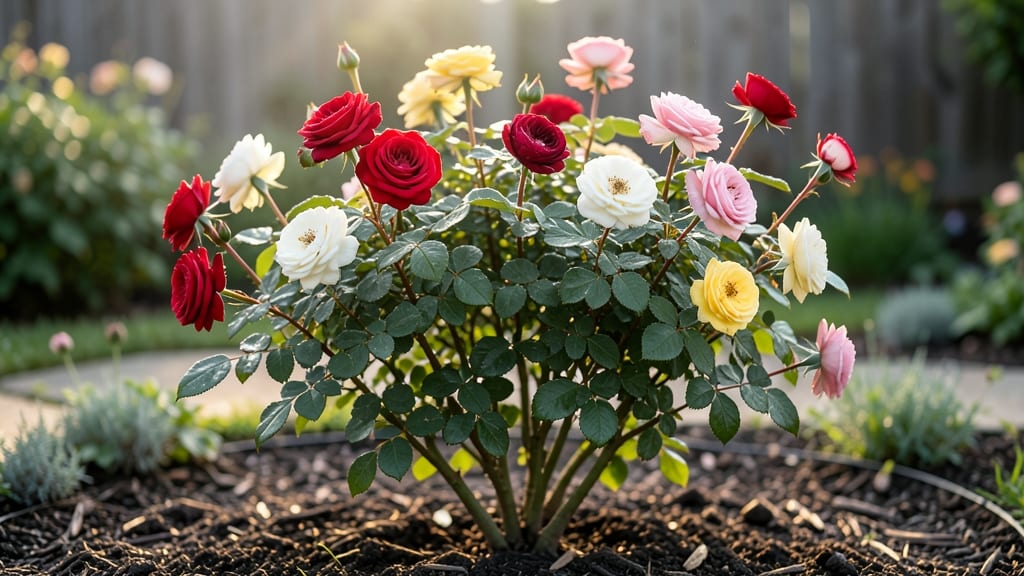
Creating a successful rose garden in Seattle means choosing hardy varieties like David Austin English roses or Knock Out roses, preparing well-draining soil, and positioning your garden to catch sunlight while shielding from Pacific Northwest winters.
Seattle's unique climate—cool, wet winters and mild summers—demands roses that can handle zone 7-9 conditions without succumbing to fungal diseases like black spot. 🌸 The right placement is key: south-facing slopes capture maximum sun while windbreaks protect delicate blooms from the frequent coastal breezes.
I've found that amending soil with compost and a 5-10% sand mixture prevents waterlogging, which is critical during Seattle's rainy seasons.
For year-round color, mix early bloomers like 'Iceberg' with repeat-flowering varieties such as 'Knock Out Red'. Mulching with 3-4 inches of cedar chips in fall retains moisture and insulates roots through winter.
Seattle's mild but unpredictable weather means staying vigilant—prune in late winter before buds swell, and watch for aphids that thrive in the damp air.
💡 In This Article
- Best Rose Varieties for Seattle’s Climate
- Seattle-Specific Rose Garden Design Tips
Best rose varieties for Seattle’s climate
Seattle’s USDA zones 7b-9a create a challenging but rewarding environment for roses, where cold snaps below 20°F can damage tender varieties. The key is selecting roses with high cold hardiness and disease resistance—especially to fungal issues like black spot, which thrives in the region’s damp springs.
David Austin English roses, bred for mildew resistance, often survive Seattle winters with minimal damage, while Knock Out roses (Rosa 'Radrazz') thrive due to their disease-resistant foliage and ability to rebloom even after frost.
The seasonal bloom cycles of Seattle’s climate also matter. Early bloomers like 'Iceberg' (white floribunda) open in late May, capitalizing on the region’s mild spring, while late-season varieties such as 'The Fairy' (David Austin) extend blooms into October, aligning with Seattle’s dry, cooler fall.
Shrub roses like 'John Cabot' (zone 3-9) are another top pick—their arching canes handle wind better than climbing roses, and their disease-resistant leaves stay healthy despite frequent rain.
What sets Seattle’s best roses apart is their adaptability to moisture. Varieties like 'Home Run' (Knock Out series) feature thick, waxy leaves that repel water, reducing fungal risks, while 'Fragrant Cloud' (a hybrid tea) blooms prolifically even in partial shade—a common necessity in Seattle’s densely wooded backyards.
The trade-off? Some fragrant varieties (like 'Mister Lincoln') may need extra winter protection due to their more delicate canes.
For low-maintenance options, consider 'Double Knock Out' roses—their compact growth (3-4 feet tall) makes them ideal for Seattle’s urban gardens, where space is limited. These roses bloom continuously from May through frost, offering near-year-round color with minimal pruning.
However, they require full sun (6+ hours daily), so placement near south-facing walls or fences is ideal to maximize warmth.
One common misconception is that all Seattle roses need heavy mulching. While 3-4 inches of cedar chips in fall helps insulate roots, over-mulching can suffocate plants in the region’s wet winters.
Instead, focus on well-draining soil (amend with 50% compost, 30% topsoil, 20% sand) to prevent root rot—a frequent issue in Seattle’s clay-heavy native soil.
Pro tip: Plant roses in early spring (March-April) when soil is workable but before aphids become active. Seattle’s mild winters mean dormant roses can be planted even in late fall (November), but always cover newly planted roses with burlap wraps during the first winter to protect against 20-25°F dips.