
Tools
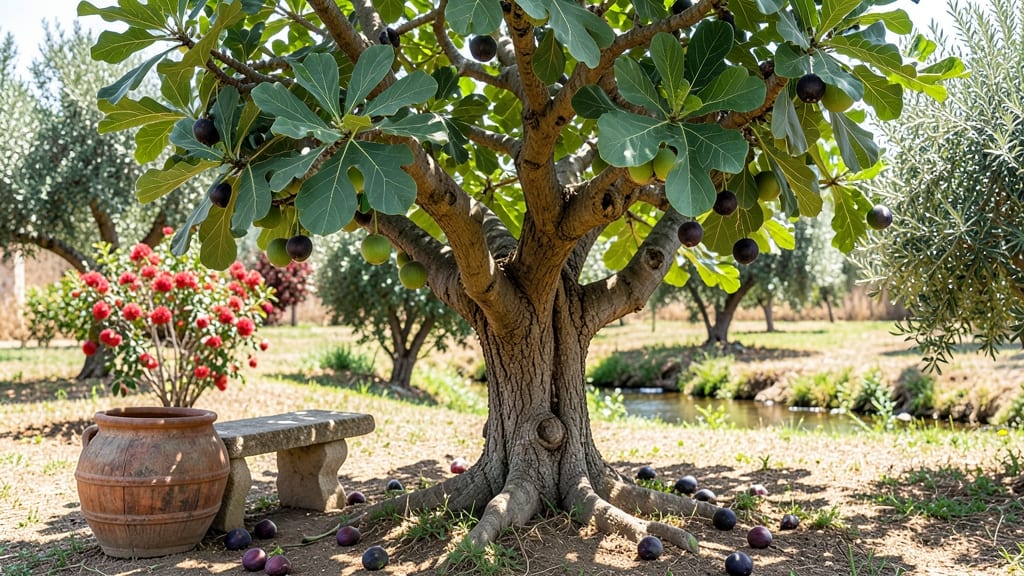
The garden in the Bible represents Eden, the sacred paradise where God placed Adam and Eve, designed as a place of perfect harmony, divine provision, and spiritual connection through its abundant vegetation and symbolic trees like the Tree of Life and Tree of Knowledge.
The biblical garden of Eden isn't just a physical location but a profound symbol of humanity's original purpose and relationship with God. 🌿 In Genesis, it's described as a lush paradise with four rivers flowing from it, representing abundance and divine care.
This sacred space reflects God's creative intent—a place where humans were meant to thrive in harmony with nature and their Creator before the Fall disrupted that balance.
Beyond its literal description, Eden serves as a blueprint for stewardship, showing how humans were created to care for and cultivate the earth. The garden's themes of provision and harmony continue to inspire modern gardening practices, particularly in organic and permaculture movements that emphasize sustainable, life-giving environments.
💡 In This Article
- Biblical Names and Descriptions of Eden’s Garden
- Symbolism of Biblical Gardens in Modern Gardening
Biblical names and descriptions of Eden’s garden
The Hebrew term for Eden, עֵדֶן (Eden), appears only twice in the Bible (Genesis 2:8, 10:10), yet carries immense weight. Linguists trace it to the Akkadian word edinu, meaning "plain" or "steppe," suggesting a fertile, flat landscape.
The Greek Septuagint translates it as Paradeisos, which evolved into our word "paradise"—a term now synonymous with Eden’s idealized perfection. 🌱 This linguistic journey reveals how ancient cultures perceived Eden as both a physical paradise and a spiritual ideal.
Genesis 2:8-14 describes Eden’s geography with striking precision: a well-watered garden in Eden (likely the Tigris-Euphrates valley in modern-day Iraq), with four rivers branching out—Pishon (possibly the Gihon in Ethiopia), Gihon (the Nile), Hiddekel (the Tigris), and Euphrates.
Archaeologists link these rivers to Mesopotamia’s fertile crescent, where annual floods deposited nutrient-rich silt, creating conditions for lush vegetation. The text emphasizes fruit-bearing trees and beautiful plants, painting a picture of a self-sustaining ecosystem where humans could thrive without labor.
What makes Eden unique isn’t just its beauty but its divine design. The Tree of Life (Genesis 2:9) symbolized eternal sustenance and communion with God, while the Tree of Knowledge of Good and Evil represented the boundary of human autonomy.
The garden’s four rivers likely mirrored the Tigris-Euphrates system, where agriculture first flourished. This layout wasn’t arbitrary—it reflected God’s intention for humanity to tend and keep the garden (Genesis 2:15), a mandate echoing modern ecological stewardship.
The garden’s botanical abundance is often overlooked, but it’s critical. Ancient Near Eastern gardens, like those in Babylon, featured date palms, figs, and pomegranates—all mentioned in biblical texts. Eden’s lushness contrasts sharply with the cursed ground after the Fall (Genesis 3:17-19), highlighting how sin disrupted God’s original design.
Even today, botanists study these texts to reconstruct ancient agricultural practices, proving Eden’s influence extends beyond theology into real-world horticulture.
Consider this: Eden’s four rivers may have inspired later biblical descriptions of paradise, like the River of Life in Revelation 22:1-2. The parallel suggests Eden wasn’t just a historical garden but a prototype for divine order—a place where nature and spirituality intertwined seamlessly.
This duality explains why Eden remains a touchstone for discussions about creation, sin, and redemption across centuries. 🌿
For deeper insight, compare Eden’s rivers to modern permaculture designs, which mimic natural water flow to create self-sustaining ecosystems. The biblical garden’s principles—abundance, harmony, and divine provision—still shape how we think about sustainable living today. This connection isn’t coincidental; it’s a testament to Eden’s enduring relevance.