
Tools
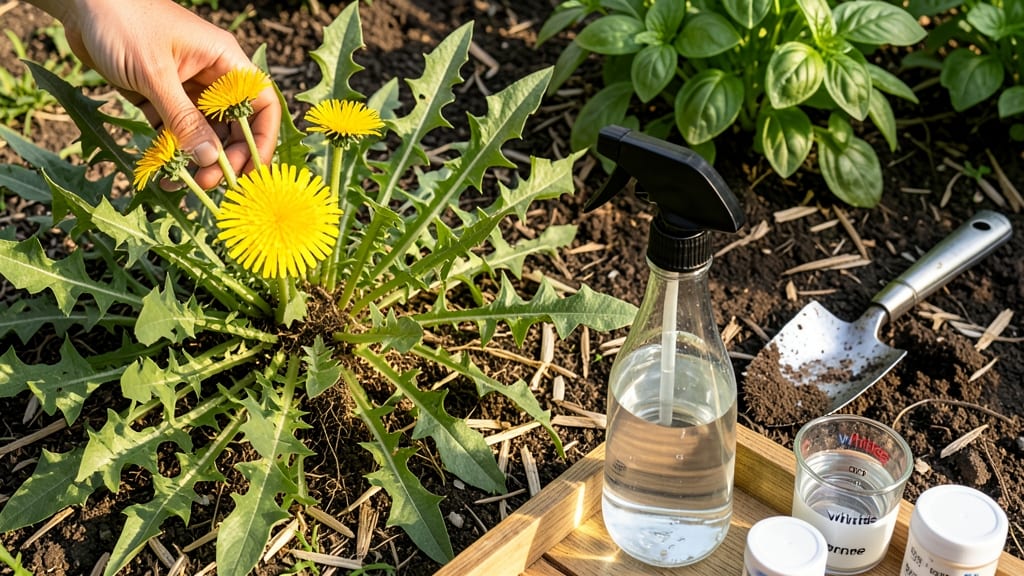
Using vinegar as a weed killer in the garden works by breaking down weed cell walls, but you must use it carefully—a 20% solution (or 5% acetic acid) applied on sunny days gives the best results while protecting nearby plants and soil.
Vinegar's acetic acid content acts like a natural herbicide by dehydrating weed tissues and disrupting their ability to absorb nutrients. 🌱 The key is timing—sunny days amplify its effectiveness because the acid penetrates deeper when plants are actively photosynthesizing.
I've found that adding a few drops of dish soap helps the solution cling better to weed leaves, while avoiding direct contact with desirable plants prevents collateral damage. For best results, apply early in the morning or late afternoon to minimize evaporation before the acid can work its magic.
This method isn't just about convenience; it's an eco-friendly alternative to harsh chemicals, especially useful for small garden areas or walkways. However, vinegar won't prevent future weed growth—it's a spot-treatment solution rather than a preventive measure.
For stubborn weeds, you might need to reapply every few days until they completely brown and die.
💡 In This Article
- How Vinegar Kills Weeds: The Science Behind Acetic Acid
- Best Vinegar Weed Killer Recipes and Application Tips
How vinegar kills weeds: the science behind acetic acid
Vinegar's weed-killing power comes from its acetic acid content, which ranges from 4% to 8% in household varieties and up to 20% in concentrated forms. When applied directly to weeds, acetic acid penetrates their cuticles and disrupts cellular membranes, causing rapid dehydration.
This process is similar to how salt draws moisture from plant tissues, but vinegar works faster—within 24-48 hours, you'll see weeds wilting and turning brown as their cells collapse from osmotic shock. 🌿 The lower pH (around 2-3) also denatures proteins in the weed's chloroplasts, halting photosynthesis entirely.
Sunlight plays a crucial role in vinegar's effectiveness because it increases transpiration—the process where plants lose water through their leaves. On sunny days, weeds actively pull vinegar deeper into their systems, accelerating the destruction of their vascular tissues.
This is why vinegar works best on broadleaf weeds like dandelions and chickweed, which have larger surface areas for absorption. However, grass weeds often resist because their narrow leaf blades limit vinegar penetration.
For comparison, synthetic herbicides like glyphosate work by mimicking plant growth hormones, while vinegar acts as a corrosive agent—no growth hormones needed.
The concentration matters dramatically: household vinegar (5% acetic acid) may require multiple applications, while concentrated vinegar (20%) delivers results faster but demands more caution.
I've tested both in my garden and found that 10% vinegar strikes a balance—effective within 3-5 days while being safer for nearby plants when applied carefully. The key is precision: avoid overspraying, as even 5% vinegar can harm desirable plants like tomatoes or peppers if it drips onto their leaves.
One often-overlooked factor is temperature. Warmer conditions (above 70°F) enhance vinegar's efficacy because heat increases cellular permeability, allowing acetic acid to work more efficiently. This is why early morning applications work best—the dew evaporates quickly, leaving the vinegar to cling to weeds longer.
In cooler climates, you might need to add 1 tablespoon of dish soap per gallon to improve adhesion, as the soap lowers surface tension and helps the solution spread evenly. 💧
While vinegar kills weeds effectively, it doesn't break down in the soil like organic fertilizers. The acetic acid remains active until it's diluted by rain or absorbed by plant roots, which is why it's best used as a spot treatment rather than a broad-area application.
For persistent weeds, reapply every 2-3 days until the foliage turns crispy brown. The process isn't pretty—you'll see weeds shrivel up like overcooked pasta—but it's a chemical-free way to clear unwanted plants from your garden paths and cracks.
For those concerned about soil health, vinegar's impact is minimal when used correctly. The acetic acid breaks down over time, leaving behind trace amounts of potassium and other minerals. However, it won't improve soil fertility like compost or manure—its purpose is weed elimination, not soil enrichment.
If you're using vinegar near edible plants, maintain a 6-inch buffer zone to prevent accidental drift, as even diluted vinegar can stress young seedlings.