
Blooming
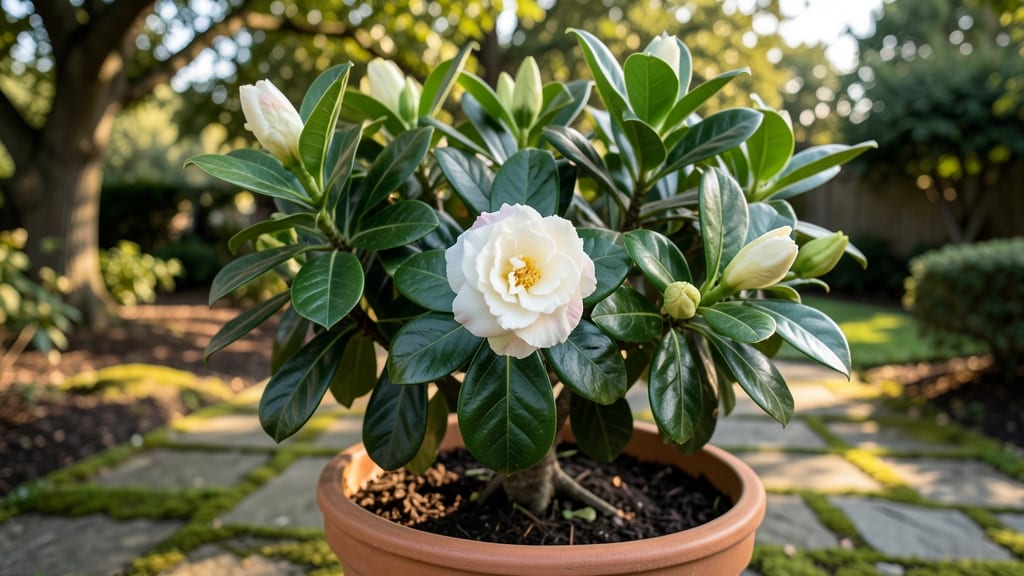
Gardenias bloom in late spring to early summer, typically between May and July, though timing varies by climate and variety. Proper sunlight, humidity, and pruning encourage earlier, more abundant flowering.
Gardenias are famously sensitive to seasonal cues, with their blooming cycles triggered by a combination of daylight length and temperature shifts.
In warmer climates like Florida or Hawaii, you might see flowers as early as April, while northern gardeners often wait until June or even July. 🌸 The key is creating ideal conditions—think of them as tropical natives that thrive when humidity stays above 50% and they receive morning sun with afternoon shade.
I’ve found that varieties like G. jasminoides (common gardenia) tend to bloom slightly earlier than larger species such as G. augusta, which often wait for full summer warmth.
What’s fascinating is how these plants "read" their environment. Gardenias detect changes in photoperiod (daylight hours) and respond by producing buds when days start shortening—this is why late spring/early summer is their prime window.
However, if you’re dealing with a finicky plant, a little strategic pruning right after flowering can reset its cycle for a second bloom later in the year, especially in mild climates.
💡 In This Article
- Climate and Variety Factors Affecting Gardenia Blooming Seasons
- Tips to Encourage Gardenias to Bloom Earlier or More Abundantly
Climate and variety factors affecting gardenia blooming seasons
Gardenias are tropical plants at heart, and their blooming cycles are deeply tied to temperature patterns. In regions with mild winters like Southern California or the Gulf Coast, gardenias often begin flowering as early as April, when daytime temperatures consistently reach 70-75°F.
However, in colder climates like the Pacific Northwest or New England, blooms typically don't appear until June or July, when soil temperatures stabilize above 65°F. The critical threshold is 55°F—below this, buds may fail to open or drop prematurely due to chilling injury.
Humidity plays an equally vital role, with gardenias requiring levels above 50% to thrive. In arid regions like Arizona or Nevada, growers often use humidifiers or misting systems to replicate tropical conditions.
The plant's large, glossy leaves transpire heavily, releasing moisture that helps maintain internal hydration—when humidity drops below 40%, buds may shrivel before opening.
Varieties like G. jasminoides (the most common type) are slightly more adaptable to drier air than G. augusta, which prefers the lush, steamy environments of its native Southeast Asia.
Daylight hours act as a biological switch for gardenias. As days shorten in late spring, the plant's photoperiod receptors detect this change and trigger bud formation.
This is why gardenias in Zone 8-10 (like Florida or Texas) often bloom 2-4 weeks earlier than those in Zone 5-7 (like Ohio or Colorado).
The transition from 14+ hours of daylight to 12-13 hours signals the plant to shift resources from foliage growth to flower production—a process regulated by the hormone florigen, which accumulates in response to these light cues.
Even within the same climate, gardenia varieties exhibit distinct timing. G. jasminoides typically blooms first, with fragrant white flowers appearing in late May, while G. augusta (with its larger, darker blooms) often waits until June or early July.
Dwarf varieties like 'Radicans' may flower slightly later than standard bushes because their compact growth requires more energy to support the heavier flower clusters.
What's fascinating is how these timing differences align with pollinator activity—gardenias in warmer regions bloom when bees are most active, while northern varieties time their flowers to coincide with the arrival of hummingbirds.
One often-overlooked factor is soil temperature. Gardenias have shallow root systems that thrive when soil stays above 60°F. In cooler climates, gardeners sometimes use black plastic mulch or heat mats to warm the root zone, which can advance blooming by 1-2 weeks.
The roots' sensitivity to temperature explains why container-grown gardenias often bloom later than in-ground plants—the pots cool more quickly at night. For example, a potted G. jasminoides in a Zone 6 garden might not flower until mid-July, while one planted in the ground could bloom by early June.
Finally, the plant's age and maturity influence timing. Young gardenias (under 3 years old) often produce fewer blooms and may delay flowering until they establish a robust root system.
Mature bushes, especially those 5+ years old, can develop two bloom cycles per year in mild climates—one in spring and another in fall—thanks to their ability to store energy in thick, fibrous roots.
This is why established gardenias in Zone 9-10 sometimes produce flowers year-round, with peak displays in May and September.