
Fertilization
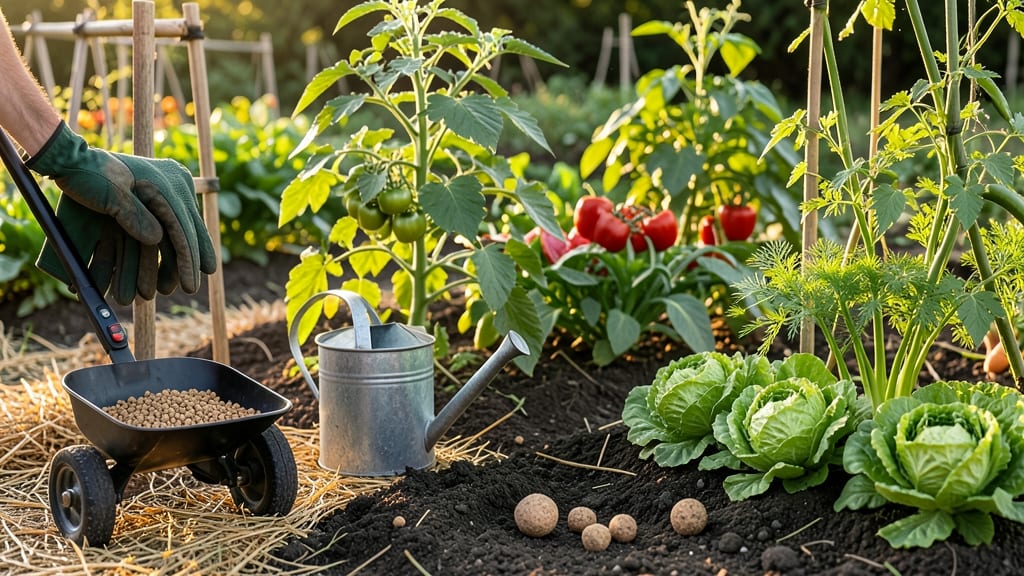
Fertilizing your veg garden at the wrong time can mean wasted nutrients—or stunted plants.
Timing matters more than you might think. Too early, and you risk burning tender roots; too late, and your tomatoes might never set fruit. The key is matching fertilizer to each plant’s growth stage—whether it’s seedlings, leafy greens, or fruiting crops.
In this guide, I’ll walk you through the best times to fertilize, from spring pre-planting to mid-season boosts, and how to adjust for organic vs. synthetic feeds. You’ll also learn how to spot over-fertilizing and avoid common pitfalls that sabotage your harvest.
By the end, you’ll have a clear schedule tailored to your 🥬 vegetable garden’s needs, ensuring stronger roots, bigger yields, and healthier soil all season long.
Fertilization schedule by vegetable growth stage: pre-planting to harvest
Vegetable gardens thrive when nutrients align with their growth stages. Pre-planting fertilization sets the foundation, while stage-specific feeding ensures plants get the right nutrients at the right time.
For example, leafy greens need nitrogen early, while tomatoes and peppers require phosphorus and potassium during flowering and fruiting. Let’s break down the perfect schedule for each phase.
Timing matters more than you might think. Applying fertilizer too early can cause nutrient burn, while waiting too long stunts growth. The key is matching fertilizer types (organic vs. synthetic) to each plant’s needs.
For instance, compost tea works well for seedlings, while balanced NPK fertilizers support fruiting crops. Let’s dive into the stage-by-stage guide below.
The pre-planting stage is all about soil prep. Work in compost or aged manure 2-4 weeks before planting to improve soil structure and provide a slow-release nutrient base. This is especially critical for heavy clay soils or sandy gardens, where nutrients drain too quickly or compact.
For example, tomatoes planted in soil amended with compost will develop stronger roots early on.
Once seedlings emerge, switch to a high-nitrogen fertilizer like fish emulsion or alfalfa meal. This supports leafy growth in crops like spinach and lettuce. Apply it lightly at transplanting to avoid shocking young plants.
For container gardens, use a water-soluble fertilizer diluted to half-strength to prevent root burn. Over-fertilizing here can lead to weak stems and disease susceptibility.
During the vegetative stage, plants focus on foliage and stem growth. A balanced fertilizer (like 10-10-10) keeps them thriving. For tomatoes and peppers, this is when side-dressing with compost or granular fertilizer every 4-6 weeks pays off.
Organic options like worm castings or kelp meal provide micronutrients without risking salt buildup in container soils.
When plants enter the flowering stage, shift to a phosphorus-heavy fertilizer (like bone meal) to encourage blooms. This is crucial for fruiting vegetables such as eggplant and squash. Apply it when you see flower buds forming, and avoid nitrogen-heavy feeds, which can delay fruiting.
For organic gardeners, crushed eggshells or wood ash (used sparingly) can boost phosphorus naturally.
The fruiting stage demands potassium to improve disease resistance and fruit quality. Use potassium-rich fertilizers like banana peel tea or greensand every 3-4 weeks. For tomatoes, this helps prevent blossom-end rot.
In container gardens, liquid fertilizers like seaweed extract work well because they’re absorbed quickly. Always water thoroughly after applying to prevent root damage.
One common mistake is over-fertilizing late in the season, which can lead to tender growth vulnerable to frost
Common fertilizer mistakes and how to avoid them in veg gardens
Fertilizing your vegetable garden is like giving your plants a power boost—but timing and amounts matter just as much as the fertilizer itself. Too much nitrogen can lead to lush foliage but few tomatoes, while overdoing phosphorus might stunt root growth.
Even well-meaning gardeners often make mistakes that waste nutrients or harm plants, especially in drought conditions or heavy clay soils.
One of the biggest mistakes is fertilizing at the wrong growth stage. For example, applying high-nitrogen fertilizer when your tomatoes are already flowering can delay fruiting. Similarly, over-fertilizing leafy greens like lettuce or spinach can cause bitter flavors and rapid bolting.
Understanding the NPK balance (nitrogen, phosphorus, potassium) is key to avoiding these pitfalls.
Another critical error is ignoring soil type. Container gardens dry out faster and need lighter, more frequent feedings, while heavy clay soils can lock out nutrients. Even organic fertilizers like compost or manure can burn plants if applied too concentrated or too often.
Let’s break down these common mistakes and how to fix them.
⚠️ When to Fertilize Your Veg Garden
Never fertilize when plants are stressed (wilting, diseased, or newly transplanted). Always water before applying fertilizer to prevent nutrient burn. For leafy greens, use nitrogen-heavy feeds early in growth. For fruiting plants, switch to phosphorus-potassium blends when flowers appear.
Signs of over-fertilizing include crispy leaf edges, yellowed tips, or stunted growth. If you see these symptoms, flush the soil with water to dilute excess salts. For drought-prone areas, reduce fertilizer strength by half and water deeply afterward to help roots absorb nutrients.
Container plants, in particular, need balanced fertilizers like 5-5-5 or 10-10-10, applied every 3-4 weeks during the growing season.
Adjust your schedule based on the season too. In summer heat, plants absorb nutrients faster, so light feedings every 2-3 weeks work best. In fall, avoid heavy fertilization to prevent tender growth before frost. Always test your soil first—most home gardens need less fertilizer than you think!
For heavy clay soils, mix in organic matter like compost or aged manure to improve drainage before fertilizing. If your soil is sandy, use slow-release fertilizers to prevent leaching. And remember: less is often more. Start with half the recommended dose, observe your plants, and adjust as needed.
By paying attention to these details, you’ll avoid wasted nutrients, healthier plants, and a bountiful harvest—without the guesswork. Happy gardening! 🌱