
Picking
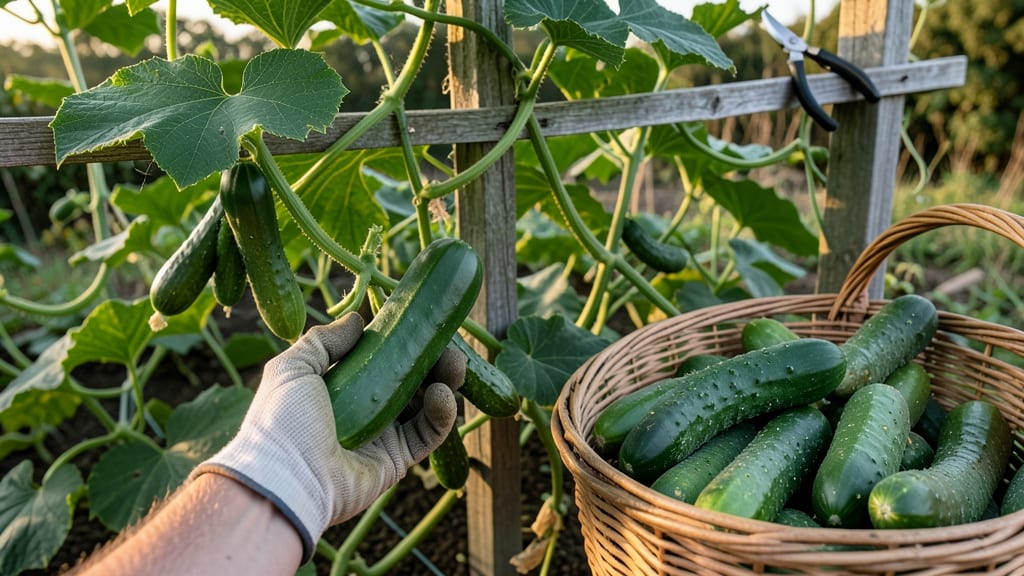
To pick cucumbers from your garden at the perfect moment means the difference between a crisp, sweet bite and a mealy, seedy disappointment — and the key lies in watching for three simple cues.
If you’ve ever pulled a cucumber too soon, only to find it underripe and tough, or waited too long and ended up with a bitter, wrinkled mess, you know timing is everything.
The good news? Mastering just three visual checks — size, color, and texture — will have you harvesting like a pro in no time.
Most gardeners in USDA Zone 6a (like me) start seeing cucumbers ready to pick in July, but the exact moment depends on your variety and local heat.
Slicing cucumbers, like 'Straight Eight,' are best when they’re 6-8 inches long with a deep, glossy green skin, while pickling types like 'Boston Pickling' should be harvested smaller and firmer.
Below, I’ll walk you through the exact ripeness signals, the best time of day to harvest, and how to keep your plants producing all season long without overloading you with cucumbers you can’t use. Let’s get started!


How to determine cucumber ripeness by size, color, and texture
Picking cucumbers at the perfect moment transforms your garden harvest from meh to magical. The key? Paying attention to three critical cues: size, color, and texture. Miss these signs, and you risk bitter, seedy cucumbers—no one wants that!
Let’s break down exactly what to look for, variety by variety, so you never harvest too early or too late again.
Most gardeners assume all cucumbers ripen the same way, but slicing types (like 'Straight Eight') and pickling varieties (like 'Boston Pickling') have different sweet spots. A 3-inch pickling cucumber is prime, while a 7-inch slicing cucumber might still be underripe.
Ignoring these differences leads to wasted effort—or worse, a garden full of overgrown, woody cucumbers that nobody can eat.
Here’s the golden rule: Harvest in the morning when cucumbers are cool and crisp. This isn’t just about convenience—it’s about preserving flavor. Heat during the day can make cucumbers soggy or bitter, so timing your pick matters just as much as the visual cues.
Pro tip: Check your plants every 2-3 days to catch them at peak ripeness.
Size is your first clue, but color is the tiebreaker. A dark green, glossy cucumber is usually ready, while pale or yellowing skin signals overripeness. For heirloom varieties like lemon cucumbers, watch for yellow or white stripes—these indicate sweetness.
And don’t overlook texture: Gently press a cucumber. If it feels firm but yields slightly, it’s perfect. If it’s rock-hard, it’s underripe; if it’s squishy, it’s past its prime.
Avoid these common mistakes that ruin flavor: Harvesting when cucumbers are too small (under 3 inches) or too large (over 8 inches), ignoring stem tenderness, or picking in the afternoon heat.
I once left a batch of slicing cucumbers on the vine for a week, and they turned into woody, bitter monsters. Trust me, you don’t want that drama in your garden.
Climate plays a sneaky role too. In hot, dry regions, cucumbers ripen faster—check them daily. In cooler climates, they take longer to mature, so extend your size range by 1-2 inches.
Always adjust based on your local growing conditions. For example, if you’re in Zone 9 with long summers, your cucumbers might be ready 2 weeks earlier than in Zone 5.
Pro move: Use a small knife or pruning shears to cut cucumbers from the vine, leaving a 1-inch stem. This prevents damage to the plant and makes future harvests easier. And here’s a secret: The first cucumbers of the season are often the tastiest.
They’ve had more energy to focus on flavor before the plant shifts to production mode. Save these for slicing salads or fresh snacks!
If you’re unsure, harvest smaller. It’s better to pick a 4-inch cucumber than wait for it to reach 6 inches and risk bitterness. Most cucumbers continue growing after you pick them, so you’re not missing out—you’re just ensuring quality.
And if you accidentally pick an overripe one? Don’t toss it! Use
Best practices for picking cucumbers to encourage continuous harvest
Picking cucumbers at the right time isn't just about getting a single great harvest—it's about keeping your plants productive all season long. When you harvest regularly and properly, you encourage more flowers, more fruit, and a longer harvest window.
My go-to rule is to check plants every 2-3 days during peak growing months, because cucumbers grow surprisingly fast when conditions are ideal.
Most gardeners make the mistake of waiting until cucumbers are fully ripe before picking, but this leads to bitter, seedy fruit and stresses the plant. The key is to pick when they're firm, glossy, and at their ideal size for your variety.
For slicing cucumbers, that's usually 6-8 inches, while pickling varieties can be harvested smaller at 3-4 inches. This consistent picking signal tells the plant to keep producing.
⚠️ WARNING: Overripe Cucumbers Can Ruin Your Harvest ⚠️
- Color shift: Yellowing or dulling skin means it's past prime—pick before this happens!
- Size limits: Exceeding 10 inches often signals overmaturity and bitter flavor.
- Texture test: If skin feels wrinkled or the stem is tough, harvest immediately.
- Seed development: Large, visible seeds = bitter cucumbers; pick before seeds darken.
💡 Pro Tip: Use clean pruning shears for hard-to-reach cucumbers to avoid damaging vines.
For harvesting, I always use clean hands or sharp pruning shears to avoid damaging the plant. Gently twist the cucumber until it separates from the vine—this prevents tearing that can introduce disease. If using shears, cut about 1 inch above the fruit to avoid leaving stubs that rot.
Always harvest in the morning when cucumbers are coolest and crispest, which also helps prevent sunscald on the vines.
To maximize production, I prune my cucumber plants weekly during peak growth. Remove any yellowed leaves or overcrowded vines to improve airflow and sunlight penetration. Focus on keeping the main vines strong and healthy, as this is where most of the new flowers will appear.
For bush varieties, a light trim of 10-15% of the foliage can boost fruit production by redirecting energy to existing flowers.
When cucumbers do become overripe, don't toss them! These can still be used for fermented pickles, soups, or even homemade vinegar. The key is to harvest them immediately and store in a cool, dark place.
For truly oversized cucumbers, slice them lengthwise and use the flesh in smoothies or juices—the skin becomes too tough for most uses. This zero-waste approach keeps your garden productive and your kitchen creative.
Remember that frequency matters more than perfection. Even if you miss the ideal size window occasionally, consistent harvesting keeps your plants focused on producing. My record was 12 pounds of cucumbers in a single season from just two plants—all thanks to regular picking and proper pruning.
With these techniques, you'll enjoy a longer harvest and healthier plants all season long. 🌱