
Picking
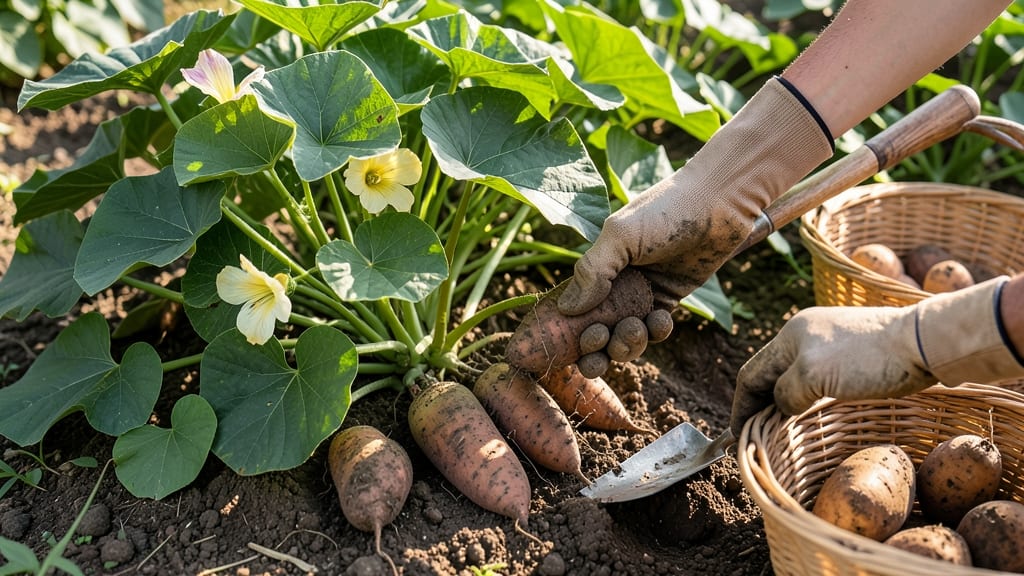
When to pick sweet potatoes from the garden means the difference between tender, flavorful tubers and tough, woody ones that lose their sweetness.
Sweet potatoes left too long in the ground turn woody and lose sweetness, while harvesting too early means small, underdeveloped tubers—getting the timing right is everything for a perfect harvest.
You’ll know they’re ready when the leaves yellow and die back, and the skin resists gentle scraping with no green underneath. This usually happens 90 to 140 days after planting, but frost risk and soil conditions play a big role.
Below, I’ll break down the exact signals to watch for—from leaf color shifts to soil checks—and how to adjust for your climate zone to avoid common harvest mistakes.


How to tell when sweet potatoes are ready: leaf color & plant signals
Sweet potatoes send clear signals when they're ready to harvest, but many gardeners miss the subtle cues. The most reliable indicators focus on leaf color changes and vine behavior, which vary slightly between early varieties (90 days) and late varieties (140 days).
In my Zone 6 garden, I’ve learned that timing is everything—harvest too early, and you’ll get small, underdeveloped tubers; wait too long, and they’ll turn woody and lose sweetness.
Start by observing your sweet potato vines. Healthy green vines signal active growth, but when they begin to yellow and wither, it’s your first clue that the tubers are maturing below ground.
For early varieties, this typically happens around 90–100 days after planting, while late varieties may take up to 140 days. In warmer climates (Zones 8–10), vines may yellow earlier, while cooler regions (Zones 4–6) might see delayed signals due to shorter growing seasons.
Another key visual cue is the stem end of the tuber. When ready, the stem end (the part still attached to the vine) will turn brown and woody, while the skin of the tuber will thicken and resist gentle scraping.
If you scrape a small area and see no green underneath, your sweet potatoes are ready. I always test a few tubers this way to confirm readiness—it’s a foolproof method that saves me from harvesting too soon.
Regional variations play a big role in harvest timing. In southern states (Zones 7–10), sweet potatoes often mature earlier due to longer frost-free periods, while northern growers (Zones 3–6) must act faster before the first frost.
For example, in my Zone 6 garden, I aim to harvest by mid-October to avoid frost damage, even if the vines aren’t fully yellowed. Always check your local frost dates and adjust accordingly.
Don’t overlook the soil conditions around your sweet potatoes. When the soil is dry and the vines have mostly died back, it’s a strong sign that the tubers are ready. I like to dig a small test hole near the plant to check tuber size and skin thickness.
If the tubers are 2–4 inches in diameter and the skin feels thick and firm, they’re ready to harvest. In my experience, tubers left in the ground too long can split or develop a tough, woody texture, which ruins their flavor and storage potential.
For early varieties, you can start harvesting as soon as the vines begin to yellow, even if they’re not fully withered.
These varieties are bred for quick maturity and often produce smaller tubers, but they’re perfect for immediate use in recipes like roasted sweet potatoes or mashed sweet potato casseroles. Late varieties, on the other hand, benefit from a longer growing season and should be left in the ground until the vines are completely dead and the soil has cooled slightly.
One mistake I’ve made in the past is waiting until the vines are completely brown and crispy before harvesting. While this might seem like the "perfect" time, the tubers can become overmature and develop a tough, fibrous texture.
Instead, I now harvest when the vines are 50–70% yellowed and the stem ends are turning brown. This gives me the best balance of size and sweetness. If you’re unsure, dig up one tuber to test—if it’s firm and fully sized, the rest are likely ready too.
In warmer climates, sweet potatoes may continue to grow well into fall, but the risk of fungal diseases increases as temperatures drop. If you’re in a humid region, harvest before the first signs of leaf spot or wilting, even if the vines aren’t fully yellowed.
In drier climates, you can wait longer, but always prioritize harvesting before the first frost. A light frost won’t kill the vines, but it will damage the tubers
The soil check method: digging vs. waiting for frost for perfect sweetness
Determining the perfect harvest time for sweet potatoes isn't just about watching the leaves—it's also about what's happening below the soil surface. The soil check method combines two key factors: soil looseness and temperature trends, especially as frost approaches.
This approach ensures you harvest when tubers are at their peak sweetness and storage-ready, rather than risking frost damage or woody tubers.
Many gardeners wait for the first frost to signal harvest time, but this can be too late in colder zones. Instead, I focus on soil temperature drops and vine dieback as my primary cues.
For example, in USDA Zone 6, I start checking soil conditions in early October, even if frost isn't expected for another 2-3 weeks. This gives me a buffer to harvest before temperatures plummet below 40°F (4°C), which can damage tubers.
One mistake I made early in my gardening journey was waiting for frost to harvest, thinking it would sweeten the tubers further.
What I didn't realize was that frost can actually convert starches to sugars in the wrong way, leading to a bitter, off-flavor rather than the sweet, creamy texture we love.
Instead, I now prioritize soil temperature as my final cue—it's a more reliable indicator of tuber maturity than frost alone.
For longer storage potential, aim to harvest when soil temps are consistently below 65°F (18°C) but before they drop to 50°F (10°C). At this stage, tubers have finished bulking up but haven't been stressed by cold.
Cured properly (by storing them in a warm, humid space (80-85°F/27-29°C) for 5-10 days), they'll keep for 4-6 months in a cool, dark place.
Pro tip: If you're unsure whether to harvest, dig up one tuber as a test. Cut it open—if the flesh is deep orange and firm (not mushy or fibrous), your sweet potatoes are ready.
If it's still pale or stringy, give them another 1-2 weeks in the ground. This simple test saves you from harvesting too early or too late.
Remember, the soil check method is all about balance. You want tubers to be fully mature but not overripe. By combining soil looseness, temperature trends, and vine condition, you'll consistently harvest sweet potatoes at their peak sweetness and storage potential—no guesswork required. 🍠