
Planting
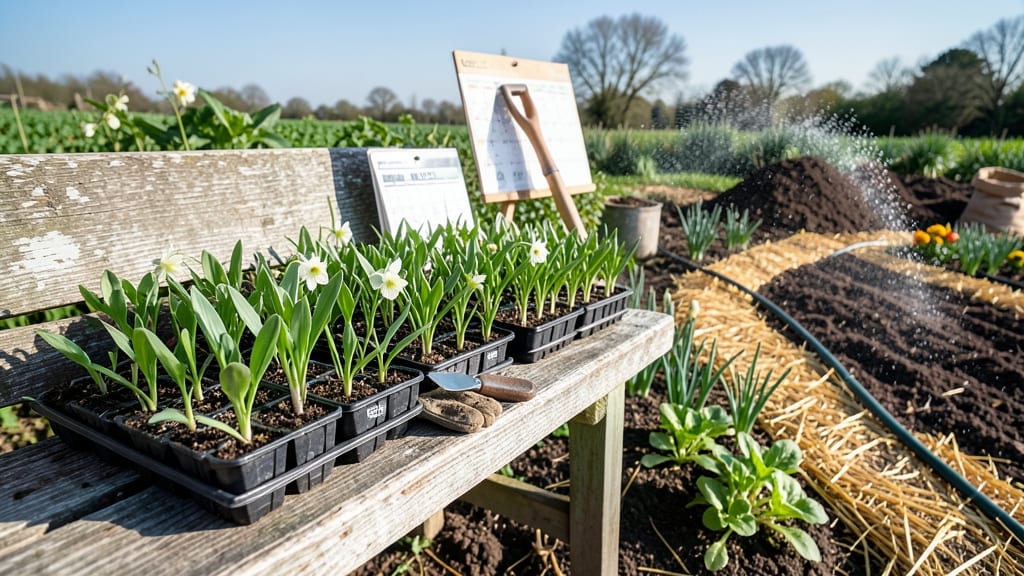
Plant a garden in Kentucky when the soil warms to at least 50°F and the last frost has passed — typically mid-April in most regions, but earlier in southern zones.
Kentucky’s unpredictable frost dates can make or break your garden’s success—planting too early risks frost damage, while waiting too long shortens your growing season. Timing is everything for maximizing yield, and knowing the exact frost-free windows for each plant type is your secret weapon.
Cool-season crops like lettuce and broccoli can go in as early as March, but warm-season favorites like tomatoes and peppers need to wait until the soil is consistently above 60°F. Even a few degrees matter when you’re growing a 6-foot tomato plant!
Below, I break down the best planting windows by crop, regional adjustments for USDA zones 5a-7a, and pro tips to stretch your season—so you can enjoy a bountiful harvest from spring through fall.
Kentucky’s frost dates by region: when to plant cool-season vs. warm-season crops
Kentucky spans USDA zones 5a-7a, meaning frost dates vary dramatically across regions. Northern areas like Paducah (Zone 6b) experience last frosts around April 15, while southern Bowling Green (Zone 7a) typically sees frost-free conditions by March 15.
These differences create 3-4 week planting windows that determine which crops thrive in your yard.
Your microclimate matters. Urban areas like Louisville often warm 1-2 weeks faster than rural farmland due to heat absorption from buildings. Meanwhile, high-altitude regions (like the Appalachian foothills) can delay spring planting by 10-14 days. Always check local weather patterns for the most accurate timing.
Cool-season crops like lettuce and broccoli need to be planted 4-6 weeks before your last frost date. Warm-season crops such as tomatoes and peppers require soil temperatures above 60°F—typically 2 weeks after your average last frost.
Fall planting follows the reverse logic, with cool crops planted 6-8 weeks before first frost.
Here’s your region-specific planting guide with frost-free deadlines and ideal planting windows for Kentucky’s most popular crops:
For cool-season crops, prioritize lettuce, spinach, and broccoli in early spring and late summer. These thrive in 50-65°F soil and can handle light frosts. In Zone 5a, plant kale as early as February 15 under row covers for a head start.
Warm-season crops like tomatoes and peppers demand consistent warmth. Wait until soil temperatures exceed 60°F—test with a soil thermometer—before transplanting. In Zone 7a, this often means April 15 or later. Squash and cucumbers are more forgiving and can handle 55°F soil.
Fall planting offers a second chance for cool crops. Seed radishes and turnips 6-8 weeks before first frost (typically September 1 in most regions). For broccoli and cabbage, aim for August 1 in Zone 5a or September 15 in Zone 7a.
Urban gardeners should watch for heat islands. Concrete and pavement can raise temperatures by 5-10°F, accelerating frost-free dates. Use shade cloth for heat-sensitive crops like leafy greens during summer. Rural areas may need row covers to extend early spring planting by 2-3 weeks.
Always verify with your local Cooperative Extension office—their 30-year frost data accounts for recent climate shifts. For example, Lexington’s last frost has shifted 2 weeks earlier in the past decade. Stay flexible and monitor weekly forecasts in April and October.
Pro tip: Plant fast-maturing varieties (like bush beans
Top 5 fast-growing Kentucky plants for stretched planting windows (and how to extend your season)
Kentucky’s short growing season doesn’t mean you’re stuck with a limited harvest. By choosing fast-maturing varieties and using smart season-extending strategies, you can push your planting windows to their limits.
These five quick-growing plants thrive in Kentucky’s transitional spring and fall weather, giving you fresh produce even when traditional planting windows feel too tight.
Whether you’re dealing with late spring frosts or early fall chills, these crops offer harvests in 30-60 days, perfect for succession planting or squeezing extra yields from your garden. The key? Cold-hardy varieties, row covers, and strategic timing to beat Kentucky’s unpredictable frost dates.
- Radishes (25-30 days): Plant 4-6 weeks before last frost or 8 weeks before first frost for fall harvests. Try 'Cherry Belle' or 'French Breakfast' for reliable speed.
- Bush Beans (50-60 days): Start seeds 2 weeks after last frost or use row covers to plant earlier. 'Blue Lake' and 'Contender' mature fast in Kentucky’s heat.
- Spinach (30-40 days): Sow 4-6 weeks before last frost or 60 days before first frost for fall crops. 'Bloomsdale Long Standing' handles light frosts.
- Lettuce (30-50 days): Plant 3-4 weeks before last frost or 70 days before first frost for late harvests. 'Black Seeded Simpson' bolts slowly in heat.
- Turnips (30-50 days): Direct-sow 4 weeks before last frost or 90 days before first frost. 'Purple Top White Globe' thrives in cool soil.
For fall planting, aim to harvest these crops 4-6 weeks before first frost. Use floating row covers to protect tender plants like beans and lettuce from light frosts, extending your harvest window by 2-3 weeks.
In my garden, I’ve added 3-4 inches of straw mulch around these plants to insulate roots and retain moisture during Kentucky’s unpredictable weather shifts.
Don’t overlook succession planting—this is how I’ve doubled my radish and spinach yields. After harvesting the first crop, I’ll immediately sow new seeds in the same space. For beans, I’ll stagger plantings every 2 weeks from late spring through early summer to ensure a continuous supply.
This works especially well in Kentucky’s USDA zones 5b-7a, where summer heat arrives abruptly.
Pro tip: Monitor your local Kentucky Mesonet station for real-time soil temperatures. Most of these fast growers need soil temps between 45°F-85°F to germinate properly. If your soil stays cold, try black plastic mulch to warm it up faster—it’s a game-changer for early spring plantings.
I’ve seen germination rates improve by 30% with this simple trick.
With these five powerhouse plants and a few strategic adjustments, you can turn Kentucky’s short growing season into a year-round harvest machine. The secret? Work with the climate, not against it—plant early, protect young plants, and keep sowing until the frost hits.
Your taste buds (and dinner table) will thank you!