
Planting
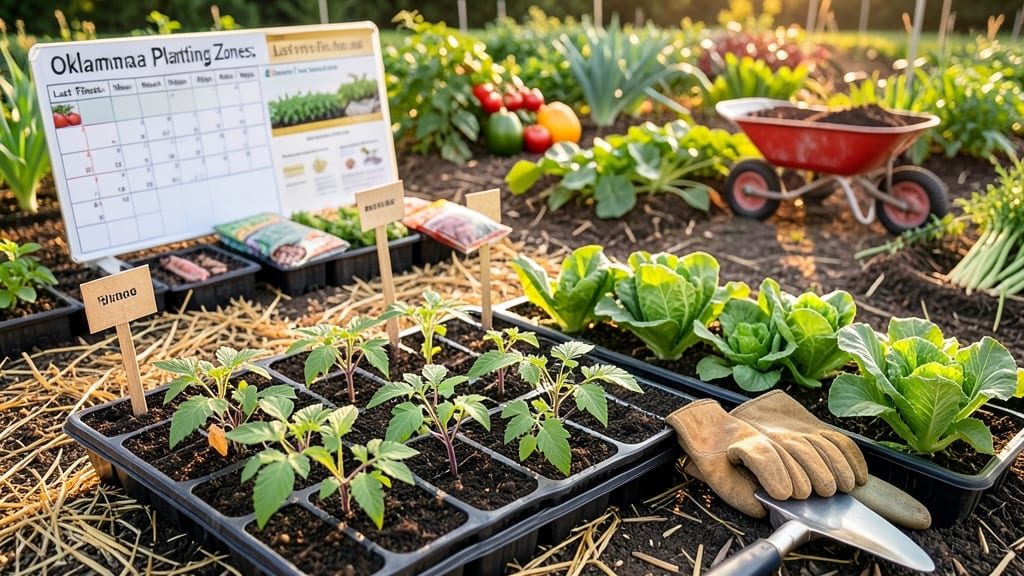
Planting a vegetable garden in Oklahoma at the right time means the difference between a thriving harvest and a wasted season—cool-season crops need to go in before March 15, while warm-season veggies wait until after the last frost, usually by April 15.
Oklahoma’s unpredictable frost dates can make or break your vegetable garden—plant too early, and a late freeze wipes out your hard work; too late, and you miss peak harvests.
Mastering the perfect planting timeline ensures a bountiful garden with minimal risk, whether you’re in USDA Zone 7a or the hotter Zone 8a.
Cool-season crops like lettuce and peas thrive when planted 4-6 weeks before your last frost, while tomatoes and peppers need warm soil—aim for 2-3 weeks after the final freeze. Oklahoma’s short growing season demands smart choices, like fast-maturing varieties or succession planting to stretch yields.
Below, I break down frost dates by region, the best crops for Oklahoma’s climate, and how to adjust planting times when weather throws curveballs. With these tips, you’ll avoid common mistakes and grow a garden that outlasts the heat and cold.
Oklahoma’s frost dates by region: critical planting windows for cool-season vs. warm-season crops
Oklahoma’s frost dates vary dramatically across regions, making precise timing essential for vegetable garden success. In central Oklahoma (USDA Zones 7a-7b), the average last spring frost occurs between March 1-15, while the first fall frost typically arrives November 1-15.
However, northern areas like Enid (Zone 6b) can experience frost as late as April 1, while southern regions like Lawton (Zone 7b) may see frost-free windows extending into mid-November. These variations mean your planting schedule in Tulsa differs significantly from Oklahoma City or rural western Oklahoma.
Understanding these microclimate differences is key to avoiding costly mistakes. For example, cool-season crops like lettuce and peas thrive when planted 4-6 weeks before your region’s last frost date, while warm-season crops such as tomatoes and peppers need to wait until 2-3 weeks after the last frost.
Rural areas often have earlier frosts than cities due to urban heat islands, so always check local historical data from sources like the Oklahoma State University Extension.
Below is a region-specific planting guide for 12 essential vegetables, tailored to Oklahoma’s frost dates. Use this as your planting calendar to maximize yields and avoid frost damage. For urban gardeners, consider microclimate adjustments—south-facing walls or raised beds can extend your growing season by 1-2 weeks.