
Planting
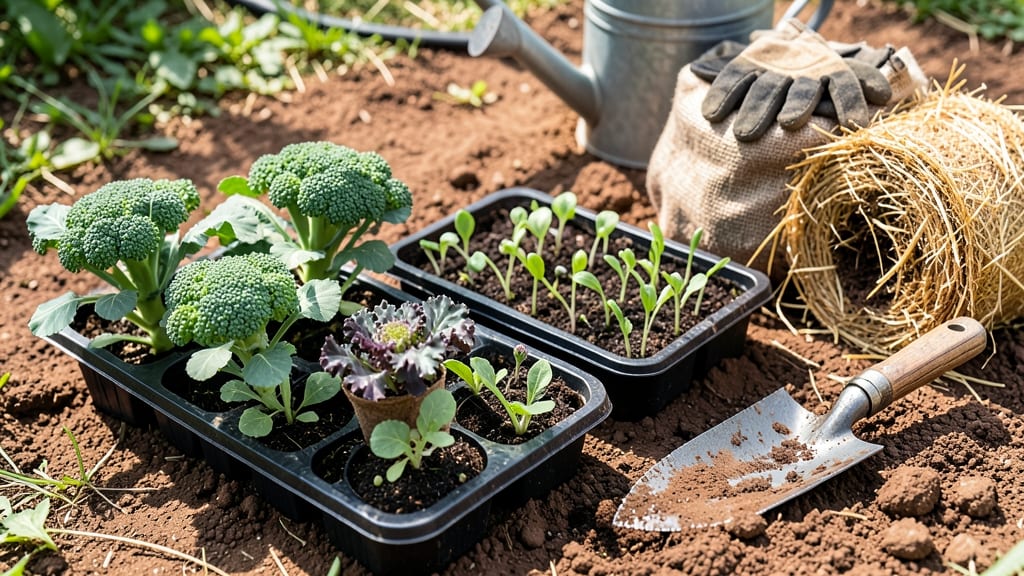
Planting your fall garden in Central Texas starts 60-90 days before the first frost—which, in zones 8a-9a, means mid-August through mid-October for most cool-season crops 🥕.
Central Texas gardeners know the fall season offers a second chance to grow thriving vegetables—but planting too early or late can spell disaster for your harvest. Timing is everything when the heat lingers into October and unpredictable frosts arrive.
If you’ve ever rushed to plant lettuce in late August only to watch it bolt in the lingering heat, or waited too long and missed your broccoli’s harvest window, you know how critical precise timing can be.
Below, I’ll break down the exact planting dates by crop type, how to adjust for your local microclimate, and the 5 biggest mistakes to avoid—so you can grow a fall garden that’s as productive as it is stress-free.
Central Texas fall planting calendar: exact dates by crop type
Central Texas gardeners face a unique challenge: long, hot summers that bleed into fall and unpredictable frost dates that can arrive as early as mid-November.
To succeed, you must time your fall planting window precisely—starting too soon risks bolting from residual summer heat, while waiting too long cuts your harvest short.
The key is understanding your local frost dates (typically November 15 for most of Central Texas) and selecting heat-tolerant varieties that thrive in our extended growing season.
For Austin, Waco, and San Antonio (USDA Zones 8a-9a), your fall planting season officially begins in mid-August for heat-loving crops and stretches until mid-October for cool-season favorites. This calendar breaks down the exact planting dates by crop type, accounting for Central Texas' microclimates and soil temperature fluctuations.
Pro tip: Use a soil thermometer to confirm temperatures are below 85°F before planting heat-sensitive crops like lettuce or spinach.
Your first frost date in Central Texas typically lands around November 15, but urban areas like Austin can experience frost as early as November 1, while rural areas near Waco may hold off until November 20.
To maximize your harvest, calculate your last planting window by subtracting your crop's
How to adjust planting dates based on Central Texas microclimates
Central Texas isn't one-size-fits-all when it comes to planting dates. Urban heat islands in Austin can delay frost 2-3 weeks compared to rural Hill Country, while elevated areas like Fredericksburg may see earlier cold snaps. These microclimate variations mean your neighbor's perfect timing might fail in your garden.
To get precise, start by identifying your local frost dates. The USDA Zone 8a-9a average first frost is November 15, but urban areas often push it to late November or December.
Use soil thermometers ($15 at garden centers) to verify when soil temps drop below 50°F—the threshold for most cool-season crops.
Here's how to adjust your planting timeline based on your specific microclimate:
| Microclimate Type | Adjustment Period | Key Factors | Example Cities |
|---|---|---|---|
| Urban Areas | Push back dates 2-3 weeks | Heat retention, concrete surfaces, limited airflow | Austin, San Antonio, Waco |
| Rural Farmland | Start 1-2 weeks earlier | Cooler nights, better airflow, natural shade | Hill Country, Temple, Bryan |
| Elevated Areas (1000+ ft) | Adjust 10-14 days earlier | Cooler temps, faster soil cooling | Fredericksburg, Llano |
| River Valleys | Delay 1 week | Heat retention from water bodies | San Marcos, New Braunfels |
| North Facing Gardens | Start 7-10 days earlier | Less direct sun, cooler microclimate | Any garden with north exposure |
For heat-sensitive crops like lettuce or spinach, urban gardeners should wait until late August or early September when soil temps consistently stay below 80°F. In rural areas, you can plant these same crops 2 weeks earlier—by mid-August—thanks to cooler nighttime temperatures.
Pro tip: Use black plastic mulch in urban areas to warm soil faster for slow-starting crops like broccoli. In cooler microclimates, opt for straw mulch to retain moisture and moderate temperatures. Always check soil moisture at 2-inch depth—if it's dry, your plants need water regardless of air temperature.
Remember that elevation changes can create dramatic shifts. A garden at 1,000 feet elevation in Fredericksburg might need kale planted by August 15, while the same variety in San Antonio (500 ft) should wait until September 1.
When in doubt, plant a test row of fast-growing radishes—they'll tell you if your timing is right.