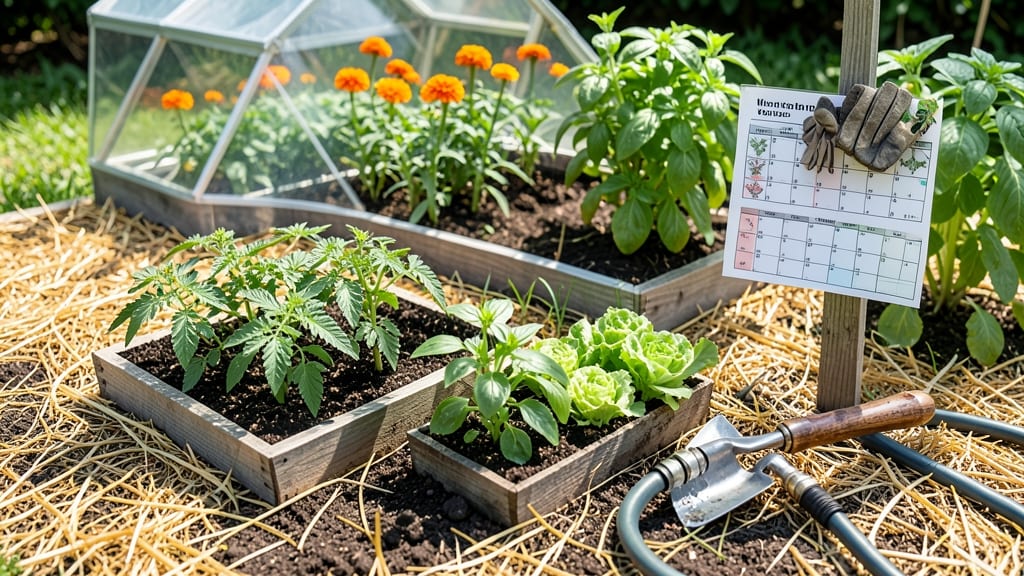
Planting your garden in Michigan at the right time means the difference between a thriving harvest and a frost-killed disappointment.
Michigan gardeners know timing is everything—plant too early and frost will wipe out your hard work, but wait too long and you’ll miss peak harvests. Avoid the guesswork with precise last frost dates tailored to your county.
From Detroit’s urban microclimates to the Upper Peninsula’s chilly stretches, Michigan’s USDA Zones 5-6 demand a smart approach. Whether you’re sowing cool-loving greens in early spring or heat-tolerant tomatoes in late May, knowing your exact planting window is the key to success.
Here’s how to align your garden with Michigan’s frost-free seasons—plus strategies to push your growing season earlier or later when Mother Nature throws a curveball.
🌱
When to Plant Garden
Jan
❄️
Feb
❄️
Mar
🌱
Apr
🌱
May
🌱
Jun
🌱
Jul
☀️
Aug
☀️
Sep
🍂
Oct
🍂
Nov
🍂
Dec
❄️
Michigan last frost dates by county: your planting timeline guide
Michigan's diverse geography means last frost dates can vary by over 3 weeks from the Thumb region to the Upper Peninsula. Knowing your county's average last spring frost and first fall frost is critical for timing plantings and avoiding frost damage.
These dates help determine when to plant cool-season crops like lettuce or warm-season crops like tomatoes.
Michigan spans USDA hardiness zones 4-6, with southern counties like Wayne (zone 6a) enjoying longer growing seasons than northern counties like Chippewa (zone 4b). The average last frost typically falls between mid-April in southern Michigan and early June in the Upper Peninsula.
For fall planting, first frosts range from mid-October in the north to early November in the south.
Use this county-by-county guide to plan your spring and fall plantings. I’ve included early, mid, and late planting windows for each region, along with USDA zone correlations to help you adjust for microclimates in your area. Always monitor local forecasts, as unpredictable weather patterns can shift dates by weeks.
🌱
Michigan Last Frost Dates by County
| County |
USDA Zone |
Avg Last Spring Frost |
Avg First Fall Frost |
Frost-Free Days |
Notes |
| Wayne (Detroit) |
6a |
April 25 |
October 20 |
148 days |
Urban heat islands delay frost |
| Berrien (SW Michigan) |
6a |
April 20 |
October 15 |
178 days |
Lake Michigan moderates temps |
| Oakland (Metro) |
6a |
April 28 |
October 18 |
143 days |
Early planting possible |
| Washtenaw (Ann Arbor) |
6a |
April 22 |
October 16 |
176 days |
University research station data |
| Grand Traverse (North) |
5b |
May 10 |
September 25 |
138 days |
Lake-effect delays frost |
| Chippewa (UP) |
4b |
May 25 |
September 10 |
98 days |
Shortest growing season |
| Kalamazoo (Mid) |
6a |
April 28 |
October 12 |
167 days |
Rural microclimates vary |
| Genesee (Flint) |
6a |
April 23 |
How to adjust planting dates for Michigan’s unpredictable weather
Michigan’s weather can shift faster than a summer thunderstorm, leaving gardeners scrambling to protect tender seedlings. The key to success? Flexible planting strategies that account for late frosts, early freezes, and everything in between.
By using season extenders and cold-hardy crops, you can safely push your planting windows earlier or later without risking your harvest.
Start by selecting cold-tolerant varieties like kale, spinach, and peas, which can handle light frosts and even thrive in cooler soil. These plants buy you extra time to establish roots before warmer weather arrives.
For heat-loving crops like tomatoes or peppers, use row covers or mini greenhouses to create a microclimate that mimics longer growing seasons.
Here’s how to adjust your planting timeline with confidence:
1
Use row covers to plant 2-3 weeks earlier for frost-sensitive crops like lettuce and cabbage. Remove covers when plants flower to prevent overheating.
2
Choose cold-hardy varieties like bush beans or radishes, which can survive 28°F temperatures. These let you plant 10-14 days before your average last frost.
3
Extend fall planting with low tunnels or hoop houses. These can push your harvest window 4-6 weeks later by trapping heat and protecting crops from early frosts.
4
Monitor soil temperature with a soil thermometer. Most seeds need soil at 50-60°F to germinate—waiting for this temperature saves you from failed sprouts.
5
Plan for succession planting with fast-growing crops like bush beans or radishes. Sow every 2 weeks to ensure a continuous harvest, regardless of weather delays.
Don’t let Michigan’s unpredictable spring derail your garden plans. I’ve planted spinach under row covers in early April and harvested fresh greens by May—proof that timing adjustments work! For extra protection, use black plastic mulch to warm soil faster or straw mulch to insulate roots during temperature swings.
Even if frost sneaks in unexpectedly, hardy herbs like parsley and cilantro often bounce back, giving you a second chance. The key is observation: watch your local weather forecasts and adjust your planting dates weekly if needed.
With these strategies, you’ll turn Michigan’s volatile climate into an advantage for a longer, more productive growing season.
🌱
★★★★★4.9(8 reviews)
|