Plants
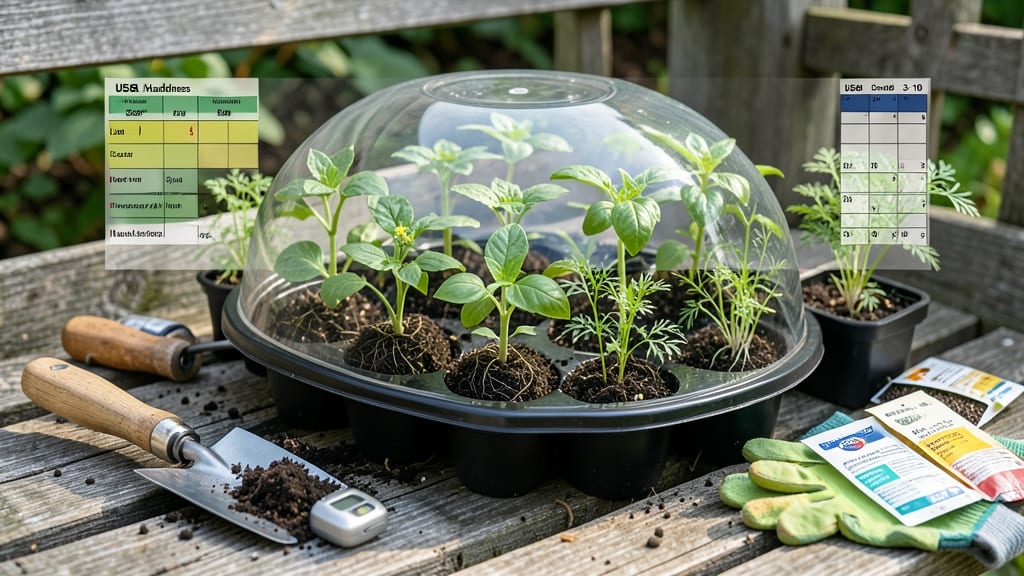
To plant garden plants at the right time means the difference between a thriving harvest and wasted effort—especially when your last frost date is just around the corner.
Planting your garden too early can leave tender seedlings vulnerable to frost, while waiting too long might shorten your growing season. In Zone 6a, where many gardeners live, timing is everything—miss it, and you could end up with stunted plants or even no harvest at all.
This guide breaks down exactly when to plant your General Garden Plants 🌱 by type, whether you're starting from seeds or transplants, and how to adjust for your specific region.
Discover the best months for planting, how to use frost charts, and pro tips to extend your season without risking damage. Let’s get those seeds in the ground at the perfect moment!
How to find your last frost date & planting zones
Timing your garden correctly starts with two critical pieces of information: your USDA hardiness zone and your last frost date. These determine when to plant everything from cool-season vegetables like spinach to warm-season favorites like tomatoes.
Without this info, you risk planting too early (and losing seedlings to frost) or too late (and missing peak harvests).
Your USDA zone (like Zone 5 or Zone 10) tells you which plants can survive your winter, while your last frost date marks the safe window for planting frost-sensitive crops.
For example, in Zone 5, the last frost might be May 15, while in Zone 10, you might plant year-round with minimal frost risk. Let’s break down how to find both.
To find your USDA hardiness zone, use the official USDA Plant Hardiness Zone Map. Simply enter your ZIP code on the [USDA website](https://planthardiness.ars.usda.gov/) (opens in new tab), and you’ll get your exact zone—like Zone 7b or Zone 9a.
This tells you which perennials and trees will thrive in your area, but it’s just the starting point for annuals.
Next, locate your last frost date using free tools like the National Oceanic and Atmospheric Administration (NOAA) frost calendar or local extension service websites.
For example, if you’re in Zone 5 (like Chicago or Minneapolis), your last frost is often around May 15, while Zone 10 (like Miami or Los Angeles) rarely sees frost. Bookmark these dates—your garden’s success depends on them!
Pro tip: If you’re unsure, check with your local cooperative extension office or gardening forums. They often have hyper-local frost data based on microclimates (like urban heat islands or valleys). For instance, a valley in Zone 6 might frost 2 weeks later than a hilltop just miles away.
Once you know your zone and last frost date, you can calculate your planting window. For cool-season crops (like broccoli or spinach), plant 4-6 weeks before your last frost.
For warm-season crops (like tomatoes or peppers), wait until 2 weeks after your last frost to avoid chilly soil shocking tender roots. Use a garden journal to track these dates yearly—they shift slightly each year!
Don’t forget about first frost dates too! These determine when to plant fall crops like kale or radishes. In Zone 5, first frost is usually October 15, so plant these 4-6 weeks before to ensure a harvest before winter sets in.
For Zone 10, you might have a year-round growing season with minimal frost risk.
For a foolproof method, use the Almanac’s Garden Planner or Gardenate’s frost calculator. These tools let you input your ZIP code and get customized planting dates for dozens of crops.
They even adjust for direct sowing vs. transplanting, which can differ by 2-4 weeks. For example, you can direct-sow lettuce earlier than transplanting tomato seedlings.
Finally, remember that soil temperature matters just as much as air temperature. Use a soil thermometer to confirm your soil is at least 60°F for warm-season crops
Best planting times by plant type (cool vs. warm season)
Timing is everything in gardening, and understanding the difference between cool-season and warm-season plants can mean the difference between a thriving garden and a failed harvest. Cool-season crops like lettuce and spinach thrive in cooler temperatures, while warm-season plants such as tomatoes and peppers need heat to flourish.
Knowing when to plant each type—whether direct sowing seeds or transplanting seedlings—is critical for success.
Your last frost date is the key reference point, but it’s not the only factor. Soil temperature, daylight hours, and even your local microclimate play a role.
For example, cool-season crops can often be planted 4-6 weeks before your last frost, while warm-season crops should wait until after the last frost and when soil temperatures reach at least 60°F. Let’s break it down by plant type so you can plan with confidence.
⚠️ NON-NEGOTIABLE: Always check your local frost dates and adjust for your specific USDA hardiness zone. For instance, Zone 5 gardeners will have a different timeline than those in Zone 9. Below is a comparison table to guide your planting schedule, whether you're growing vegetables, flowers, or herbs.
For cool-season crops, think early spring and late summer. These plants can handle—and even prefer—cooler temperatures, making them ideal for fall harvests or early spring growth. For example, spinach and kale can often be planted in late summer for a fall harvest before the first frost hits.
Meanwhile, warm-season crops like tomatoes and peppers need warmth to germinate and grow, so rushing them too early can stunt their development or even kill them.
One common mistake is planting warm-season crops too early, only to have them bolt or rot in cold soil. To avoid this, use row covers or wait until soil temperatures consistently stay above 60°F.
For cool-season crops, planting too late in the season can result in bitter flavors or bolting (flowering prematurely). For instance, lettuce planted in late summer may bolt quickly as days grow shorter and temperatures rise.
Pro tip: If you're in a warmer climate (like Zone 9 or 10), you can often plant warm-season crops in late winter or early spring, while cool-season crops may thrive year-round with minimal frost risk.
Always adjust your planting schedule based on your local conditions—what works in Zone 5 might not work in Zone 8. Experiment with succession planting to extend your harvests and make the most of your growing season!