Tools
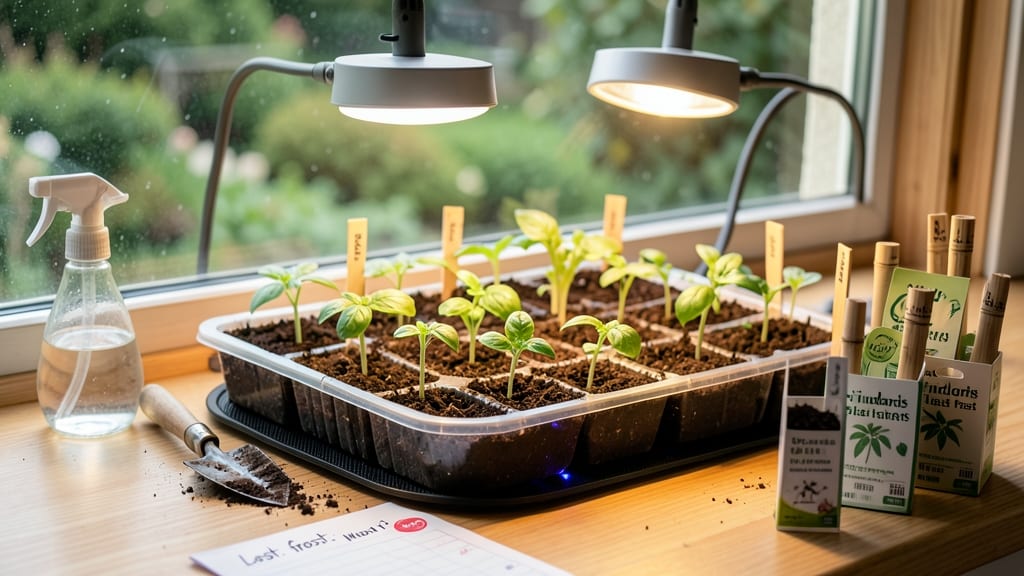
Starting garden seeds at the right time means the difference between a bountiful harvest and a season of disappointment — and getting it wrong is easier than you think.
Picture this: you’ve got your trays ready, the soil is prepped, and you’re eager to dive into the growing season. But if you start those seeds too early, they’ll get leggy and weak.
Too late, and you’ll miss the window entirely. The key is knowing when to begin indoors versus when to plant directly outside, based on your plants and your climate.
For most gardeners in Zone 6a, that means beginning cool-season crops like lettuce and peas indoors 4-6 weeks before your last frost — around early March for most regions.
Warm-season plants like tomatoes and peppers, however, need a later start, closer to late March or early April, to avoid transplant shock when the soil finally warms.
Below, I’ll break down the exact timing for indoor starts, outdoor sowing, and how to adjust for early or late seasons. You’ll also learn the common mistakes that derail even the best-laid plans — and how to sidestep them.
Indoor seed starting timeline by plant type and last frost date
Starting seeds indoors at the right time ensures you're not rushing plants that need warmth or missing the window for frost-sensitive crops. The key is matching your local last frost date with each plant's maturity timeline.
For example, tomatoes need 70-85 days to fruit, while lettuce matures in just 30-50 days. Let's break it down by plant type so you can customize your schedule based on your climate zone.
Most gardeners start seeds indoors 4-8 weeks before their average last frost date. However, this varies wildly—from February in Zone 10 to March-April in Zone 5. Use your region's frost dates as your starting point, then adjust based on the plant's days to maturity.
For instance, if your last frost is April 15, you'd start peppers (90-day plants) by February 15, but lettuce (30-day plants) could wait until March 15.
Below is a customizable chart for common vegetables, herbs, and flowers. Adjust the "Start Indoors" column based on your last frost date and the plant's days to maturity.
For example, if your frost date is May 1, subtract 6 weeks for a 60-day tomato variety to get your start date of March 15.
For regions with early last frost dates (like Zone 3 or 4), start warm-season crops like tomatoes and peppers indoors by February to give them enough time to mature.
In warmer climates (Zones 8-10), you might start seeds as late as March or even April, depending on your winter frost patterns. Always check seed packets for specific variety recommendations—they often include ideal start dates.
Pro tip: Use a seed-starting calendar to track your progress. Mark your last frost date, then count backward based on each plant's days to maturity. For example, if your frost date is May 1 and you're growing 60-day tomatoes, start them by March 15.
If you're in a shorter growing season, opt for faster-maturing varieties or consider a greenhouse to extend the season.
Adjust your timeline if you're using grow lights or a seedling heat mat. These tools can speed up germination and early growth, allowing you to start seeds slightly later. For instance, with a
Outdoor seed planting: direct-sowing rules for cool vs. warm-season crops
Direct-sowing seeds outdoors can save time and reduce transplant shock, but timing is everything. Cool-season crops like spinach and peas thrive in cool soil temperatures (40-65°F) and can handle light frost, while warm-season plants such as beans and cucumbers need warmer soil (60-85°F) to germinate properly.
Knowing these differences helps you avoid wasted effort and poor germination.
For cool-season crops, I recommend sowing seeds outdoors 2-4 weeks before your last frost date—often in early spring or late summer for a fall harvest. These hardy plants can even tolerate light frost after sprouting.
In contrast, warm-season crops should wait until after your last frost and only when soil temperatures consistently reach 60°F or higher.
🌱Regional adjustments are key—check your local USDA hardiness zone and average last frost date. For example, in Zone 5, cool-season crops might go in by mid-April, while warm-season crops wait until mid-May. In Zone 8, you could plant warm-season crops as early as March.
Direct-Sowing Cool-Season Crops
- ✅ Pros: Hardy to frost, faster growth
- ✅ Best for: Spinach, peas, lettuce, kale
- ✅ Soil temp: 40-65°F
- ✅ Time to sow: 2-4 weeks before last frost
Direct-Sowing Warm-Season Crops
- ✅ Pros: Thrives in heat, no transplant shock
- ✅ Best for: Beans, cucumbers, tomatoes, peppers
- ✅ Soil temp: 60-85°F
- ✅ Time to sow: After last frost, soil >60°F
Cons to Watch For
- ❌ Slow germination if soil is too cold
- ❌ Frost damage if planted too early
- ❌ Bolting risk in heat for cool crops
Cons to Watch For
- ❌ Poor germination in cool soil
- ❌ Stunted growth if planted too late
- ❌ Pest attraction in warm, moist soil
To test soil temperature, use a soil thermometer—it’s the best way to avoid guesswork. For cool-season crops, aim for 50-60°F at planting time, while warm-season crops need at least 60°F for 7+ days before sowing.
If your soil is too cold, consider using black plastic mulch to warm it up faster.
Another trick is to use row covers for early cool-season plantings. These lightweight fabrics protect young seedlings from light frost and wind damage while still allowing sunlight and water to reach the soil.
For warm-season crops, mulching with straw helps retain moisture and warmth, which is especially helpful in dry climates.
Finally, always check your seed packet for specific instructions—some varieties (like bush beans) are more forgiving than others (like delicate lettuce). With the right timing and a little patience, direct-sowing can give you a head start on a bountiful harvest without the hassle of transplanting! ☀️